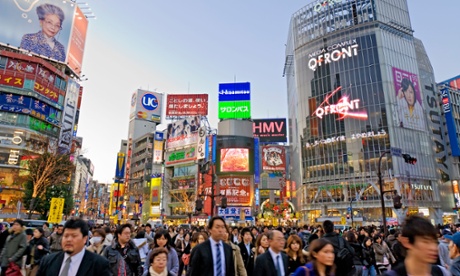
We now live in the age of the city. More than half of the world’s people live in urban areas and by 2050, it will be more like 70%. At the same time, we are using natural resources 1.5 times faster than the world can replenish itself. With city living set to continue rising, climate change and resource scarcity challenges are only going to increase.
One of the key challenges is to make existing buildings in cities more energy efficient, more water efficient and more renewable, using solutions ranging from the simple – such as insulation – to the more advanced, such as clean energy, building management systems and water recycling measures.
At the same time, if new buildings are not greener than what went before, it simply won’t work – and governments around the world are introducing new rules to make sure that they are greener than before.
The World Business Council for Sustainable Development predicts that by 2050, 90% of buildings will be zero net energy and fewer than 6% of buildings will use fossil fuels for heating or cooling. But it is about more than just the buildings on their own – city dwellers need smart buildings and smart cities, with smart grids, and smart transport networks.
As developers and city planners grapple with these trends and challenges, they are increasingly looking to their suppliers to help tackle them.
At AkzoNobel we are working to meet these needs through a strategy focused on radical resource efficiency, an approach we call Planet Possible – our commitment to doing more with less.
Resource efficiency for us is not only about reducing waste. It’s about working in collaboration with our customers and suppliers to reduce our impact across the whole value chain. It’s about using more renewable energy and raw materials where possible and developing new products that can help our customers do the same to make a positive influence on society. And we have a strong track record of developing such innovations for the built environment.
We have introduced paints with fewer VOCs so builders can meet environmental guidelines. Then there’s our light or heat reflecting coatings that cut the cost of cooling buildings; insulation materials that make buildings safer and cheaper to heat – the potential is huge, in all sorts of urban applications.
Another good example is our Rediset® WMX product. To get a good, compact road you need a mixture of stone, bitumen and an adhesive that makes the bitumen stick to the stone. Most asphalt is laid with a “hot mix” that is heated to 160C but we have developed a liquid adhesive that enables a “warm mix” that only needs to be heated to 130C, reducing the energy used in the process by 20-30%.
As well as cutting energy use and being good for the climate, the adhesive also eliminates the fumes involved in asphalt production, giving health benefits to road workers.
But we can offer more than just our products. We have expertise in the field of life cycle assessment and circular economy models and we believe that by sharing this knowledge we can play an even greater role.
Taking this further, we believe that companies can and should share their knowledge and expertise in an open way with mayors, architects, urban planners and other urban opinion formers. By working in collaboration we have the opportunity to rethink our city environments and ultimately make them more sustainable and liveable.
At AkzoNobel we have a long history of providing innovative products that make the world a better place. But we know there are times when we need to work with others to find those breakthrough innovative solutions. This thinking not only forms part of our Planet Possible approach to sustainability but also contributes to our Human Cities initiative to create more liveable cities.
Content on this page is paid for and provided by AkzoNobel, sponsor of the human cities series