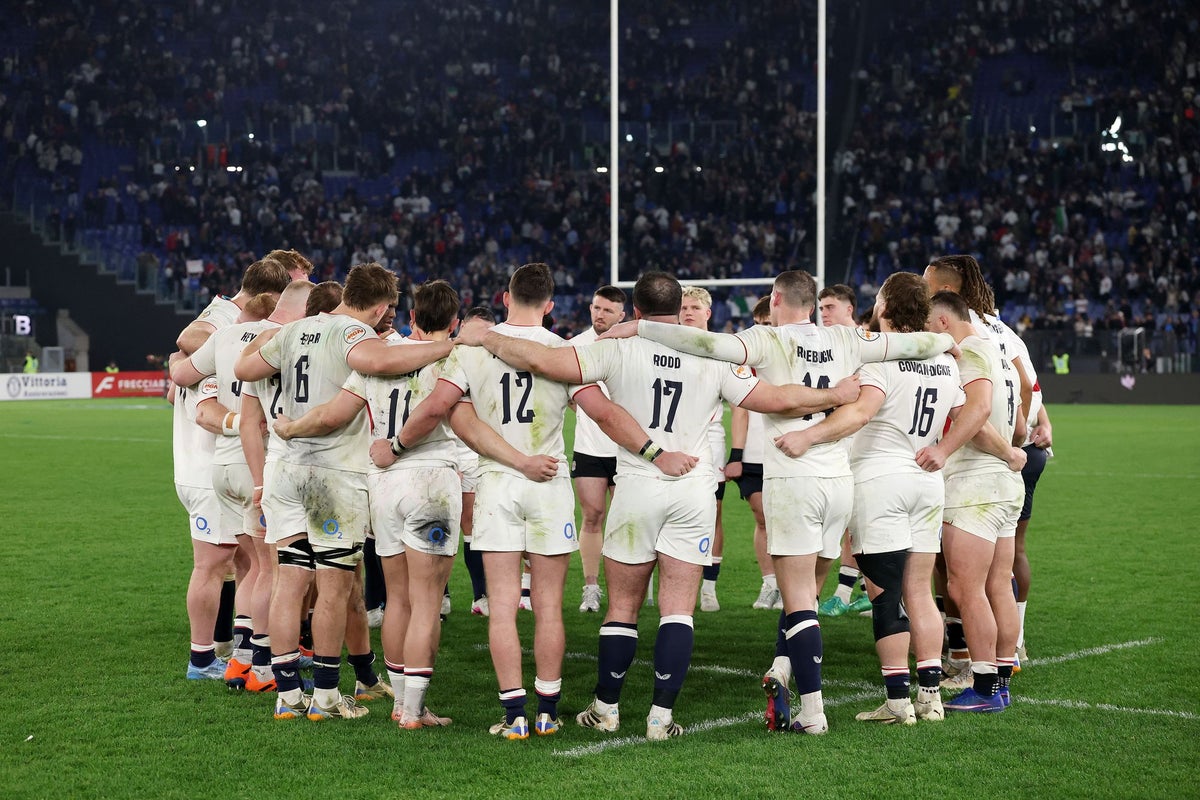
England’s Six Nations campaign may have ended with more questions than answers but there is one area in which their standards did not slip. If you are a social media user, the chances are that at some point you will have stumbled across a behind-the-scenes clip from camp showing Steve Borthwick’s squad tucking in to a veritable feast, hearty and healthy fare on offer wherever they go across the campaign.
It is no surprise that rugby players like their food but the broad and brilliant array forms a performance purpose, too. For elite athletes, fuelling is of vital importance to maintain muscle and ensure full fitness in one’s chosen craft. In rugby, with its bone-on-bone collisions and intense activity under extreme stress, that is all the more important.
“Some of these lads might be expending 4,000 to 6,000 calories on a given day,” explains England’s nutritionist Dr James Morehen, who has just concluded his third Six Nations with the side. “They have to eat that, to make sure that they aren’t dropping weight or muscle.
“Compared to the general joe, these are big lads from a skeletal muscle mass point of view. They are also turning over a lot of that mass, whether that is in camp in game. They can train a lot in the gym but you are not going to put muscle mass on unless you are in a calorie surplus and you are supporting it right. The beauty of rugby is that we’ve got this insane amount of exercise-induced muscle damage, the same as in football, but where these boys are in a league of their own is you’ve got all these high impact collisions. We have to support them to recover.”
Morehen began his professional life as a snowboard instructor in Canada – “everyone who works in elite sport is a failed athlete to some degree” – before taking up a place at Liverpool John Moores University. A master’s and PHD in applied physiology and sport nutrition followed, before stints in rugby league and with the Football Association at St George’s Park. But rugby union soon came calling, with Morehen working with Bristol Bears and the Red Roses before taking on his current role.
Part of a sprawling staff required now in high performance environments, Morehen works closely with England’s chef Thomas Kirby to prepare each and every meal the players will consume in camp. There can be no one-size-fits-all approach; with player weights ranging roughly from 74kg to 135kg, the needs of each individual can be drastically different.
“We have a spectrum of players from a personality and character point of view, and their emotional relationship with food,” Morehen says. “It may be their religion, their culture, their upbringing – it really is quite varied. One of the biggest things I’ve learned is understanding individually where they are at and how I can support them with individual strategies aligned to the nutritional research. You’ve got props and scrum halves with completely different attributes that they are trying to achieve.
“We have a really good set-up with a full-time chef in camp. We do quite a good job of controlling the environment when they are in camp. The nuance then becomes me sitting down with a player individually. They might say, ‘look, I haven’t come in to camp in the best shape’, or ‘I want to be a little heavier or lighter in the international game,’ and then that is where we work on that strategy together. I try to refrain from giving them a two-page PDF; I’d rather build a rapport and get them to understand why they need to consume X, Y, or Z. I’m a teacher or a coach, really.”
Beyond just the demands of their professional lives, there are certain conditions to consider, too. There are a handful of players with nut or shellfish allergies, while centre Henry Slade is a Type 1 diabetic. Slade tracks his glucose levels using a Dexcom monitor in his arm, and has forged a close relationship with Morehen. “Working with Henry has been incredible for me. I’d never worked with a diabetic athlete. I had to go back to the literature a little bit. Henry and I have had a really good couple of years together learning about how the sport of rugby, resistance training, adrenaline and different hormones affect his levels.”

Among recent squad members, Raffi Quirke is a noted foodie while Charlie Ewels has been known to seek out Michelin-starred restaurants while on tour. The in-camp critic, though, is hooker Luke Cowan-Dickie, who provides feedback from the group on any new foods or snacks – and can just as cutting as Grace Dent, it would seem. “LCD has got no problem in telling me the truth, which I absolute love – I want that feedback because I want to continually improve what I am doing for the boys.”
That experimentation is the fun part of the job; the tougher side is a logistical operation that requires considerable preparation. Morehen and Kirby do their planning four weeks in advance, sending menus to hotels that the team are visiting to ensure that all is ready when they arrive. While one set of induction hobs, pots and pans remains at the Pennyhill Park base, another travels ahead of the team. That lead time also helps Morehen source alternative supplementation or stock should a regular supplier encounter difficulties. A number of players eat less on a matchday than during the week.
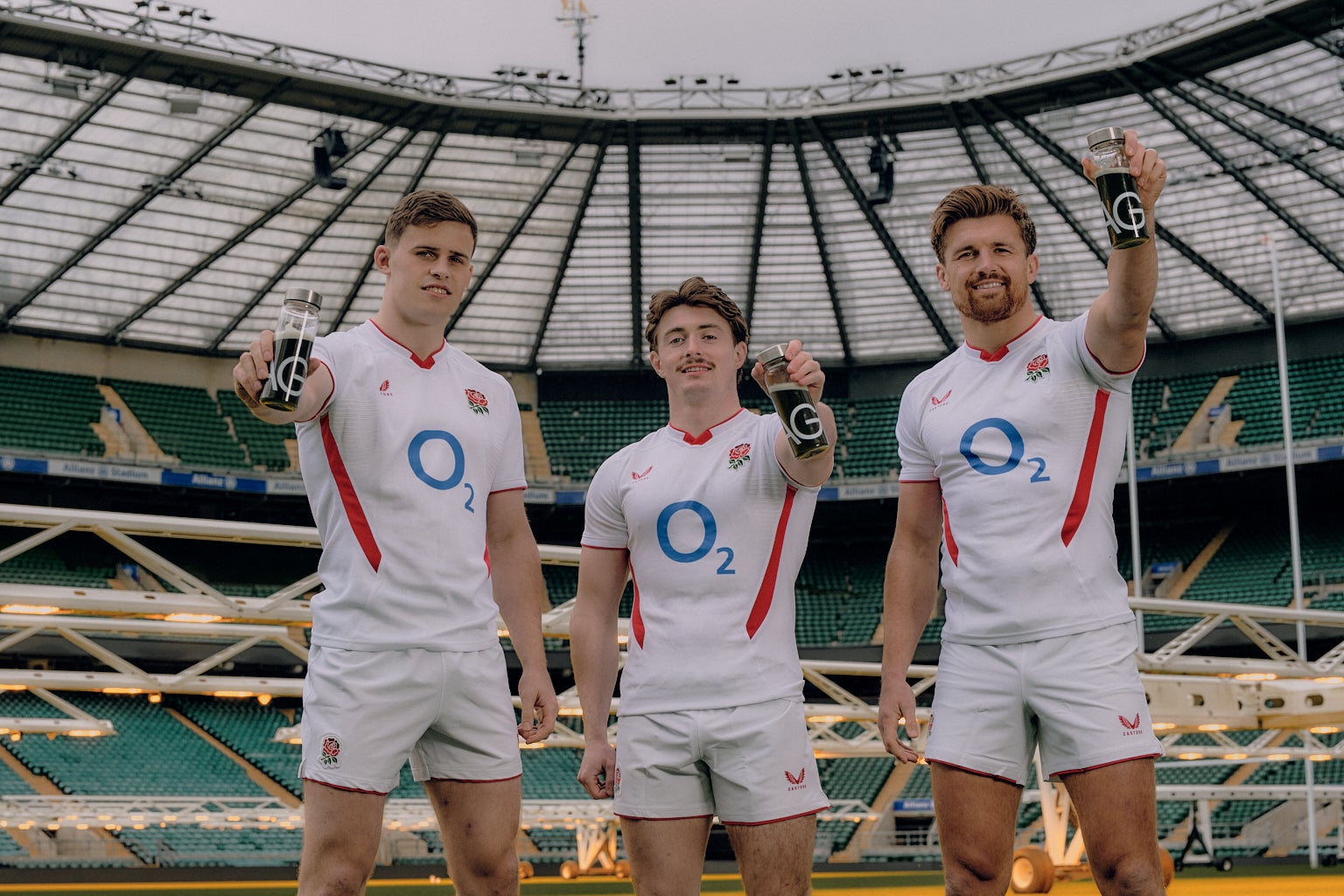
Beyond the food, those supplements can be key, too. AG1 is the official daily nutrition supplement partner to England’s men and women, and can be particularly valuable when they are on the move. “Any registered nutritionist in the world would try and advocate getting what you need from food,” Morehen stresses. “I’d much rather the players rip in to the menu and enjoy the food. But where products like AG1 might come into play are on these long flights or going into an environment where you don’t have a chef with you, or the food quality isn’t what you are used to. Then they can come to the fore.”
It can add up to a potent package. “Nutrition is very, very powerful when it is done right. We need to be looking at everything we do to make sure we are following the evidence-based guidelines so our players have the best chance as possible of winning the World Cup.”
AG1 is the Official Daily Nutrition Supplement Partner to England Rugby Men’s and Women’s teams. AG1 provides support and guidance through nutritional education and wellness leadership across the England Rugby ecosystem, from the grassroots game to the England Men’s and Red Roses teams, starting with the Guinness Six Nations.
England have a blueprint for the future – but something has to change after worst-ever Six Nations
How a vintage Six Nations revealed a truth about the future of Test rugby
England star opens up on comeback after brain inflammation diagnosis
Eddie Jones says it would be ‘foolhardy’ for England to sack Steve Borthwick
One thing each Six Nations side must do after captivating championship