
On Thursday, Bill Belichick will know the names of the Pro Football Hall of Fame class of 2026.
The class he should be part of. The class that will ultimately predate his by a year.
For Belichick, a man who spent part of his youth roaming around the Hall’s basement while learning about the game’s glorious past, it’s the ultimate indignity. It’s one that shouldn’t have been endured, but was, due to a system designed to succeed but doomed to fail.
Currently, for modern-era candidates (defined as players within their first 20 years of eligibility), there’s an annual process that reduces 25 semifinalists to 15 finalists. From there, the group is whittled from 15 to 10, and again from 10 to seven. Once there are seven candidates, the 50 voters cast their five choices. Any player receiving at least 80% of the votes earns induction. A minimum of three must be enshrined, with a maximum of five (if three players don’t get 80% of the vote, it’s the top three vote-getters who are enshrined).
Then there are the senior players, coaches and contributors, who are all in one bucket. Three players are put up for a vote, along with one coach and one contributor. The same 50 voters write down their top three choices. The same 80% threshold applies, with a minimum of one and a maximum of three needing to be enshrined.
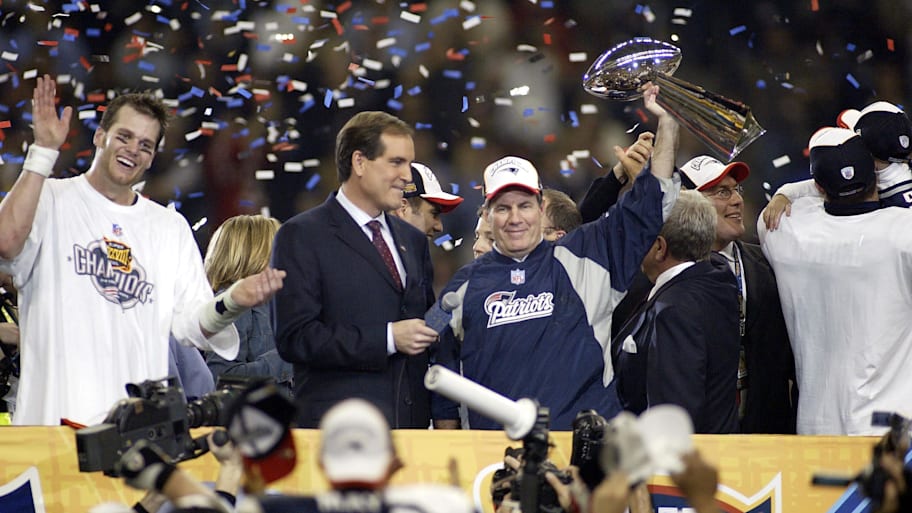
As evidenced by the stunning snub of Belichick and his eight Super Bowl rings (six as a head coach, two as a coordinator), the system doesn’t work. According to multiple voters I’ve spoken with in recent weeks on the condition of anonymity, the voting system has been a concern since it was implemented for the class of 2025. Some voters brought these concerns to the Pro Football Hall of Fame, but ultimately had their worries dismissed in favor of studies conducted by the Hall, which stated the math would work out.
Frankly, the math hasn’t worked for years. The backlog of deserving Hall of Fame players is growing increasingly and alarmingly long. With more teams and larger rosters over the past quarter century, it’s becoming more difficult to keep up.
Of course, as with everything, there’s a fix.
Starting in 2027, the Hall of Fame should allow four to six players from the modern-era pool to be voted into Canton, increasing both the minimum and ceiling by one. These players would be selected from a final group of eight, with the 50 voters tasked with naming their top six choices.
Instead of needing 80% of the vote, the threshold would be lowered to 65%. In theory, if there are three slam-dunk choices receiving unanimous support, there would be 150 votes remaining for the other five candidates, giving the voters a reasonable shot at inducting five players per class.
Additionally, instead of getting 20 years on the ballot, players would get 15. And, if they don’t achieve finalist status by the end of their eighth year of eligibility, they’re removed from the process.
The Hall of Fame also needs separate candidate pools for senior players, coaches and contributors. There should be at least one senior, with a limit of two. Each year, one coach and one contributor would be up for a vote. In all three of these pools, all 50 voters would be given a yes-or-no option. If a player, coach or contributor gets to 40 votes, they’re in. If not, they are eligible for one more year. If they don’t earn enshrinement, they are permanently off the ballot.
As for the backlog, look back to 2020. That year, the NFL celebrated its 100th anniversary by expanding the Hall of Fame class to feature 20 people, including two coaches, three contributors, 10 senior candidates and five modern-era players.
Instead of fixing the senior issue this time around, the modern-era should get attention.
Come the 2030 class, the Hall of Fame could have voters turn in their ballots with 10 choices on each, choosing from 25 finalists. Whichever 10 players receive the most votes earn induction. Some will argue it’s watering down the value of a gold jacket. In reality, it is helping clear the way for deserving candidates who haven’t gotten in for years, while also giving new names a better chance in future classes.
Another issue facing the Hall of Fame are the voters themselves.
While the voters are a dedicated group, some are doing the job well after retirement. Effective immediately, all voters should be active writers (not former players, executives and/or coaches) who have at least 15 years of experience covering the NFL. They should also be required to take an exam proving they are familiar with the game’s history, not only its present.
Lastly, each voter should be given a 10-year term limit. Once that term is up, they can no longer serve as a voter. New blood and new perspectives are a good thing.
This year, the Hall of Fame got it wrong. The voters were put in a bad spot, and it ultimately cost arguably the greatest coach in NFL history the claim of being a first-ballot Hall of Famer. Undoubtedly, something will be done to correct the process.
On Thursday, Belichick will see his snub become fact.
In the weeks and months ahead, he should also see his misfortune spark the sort of change that ensures something this egregious never happens again.
More NFL on Sports Illustrated
- The Origins of Mack Hollins’s Decision to Go Barefoot
- MMQB Staff Picks for Seahawks-Patriots in Super Bowl LX
- Jerry Rice: 'Darnold and JSN Remind Me of Montana and Me'
- Mac Jones Hopes to Follow Sam Darnold's Path, Land NFL Starting Job
This article was originally published on www.si.com as How to Fix the Pro Football Hall of Fame Voting Process.