
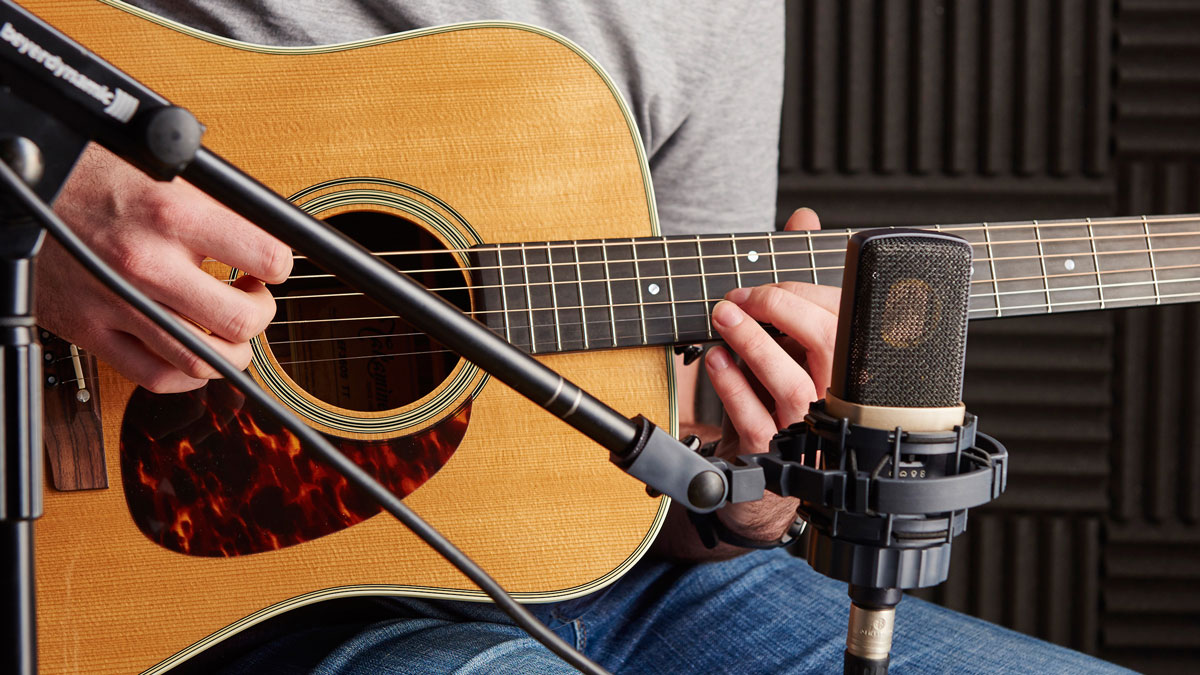
As designs go, the acoustic guitar is hard to beat. You can take it anywhere. You can play it anytime. You don’t need power from a mains outlet and an amplifier to make an appreciable level of noise. And yet, it has limits; there are occasions when we need to amplify it.
It could be in a live situation, in front of a crowd, in a band mix, and you need that acoustic to be heard. On such occasions, some players prefer not to use an acoustic guitar pickup and amp; they want as little as possible between their instrument and its tone. Or it could be at home or the studio, when it comes time to record your instrument. This is where choosing the right microphone is crucial.
Here, we are going to look at three types of microphone, and explain some of the pros and cons. Each type has its own sonic profile, its own advantages and disadvantages. One or all three might well be just what you’re looking for.
Ribbon
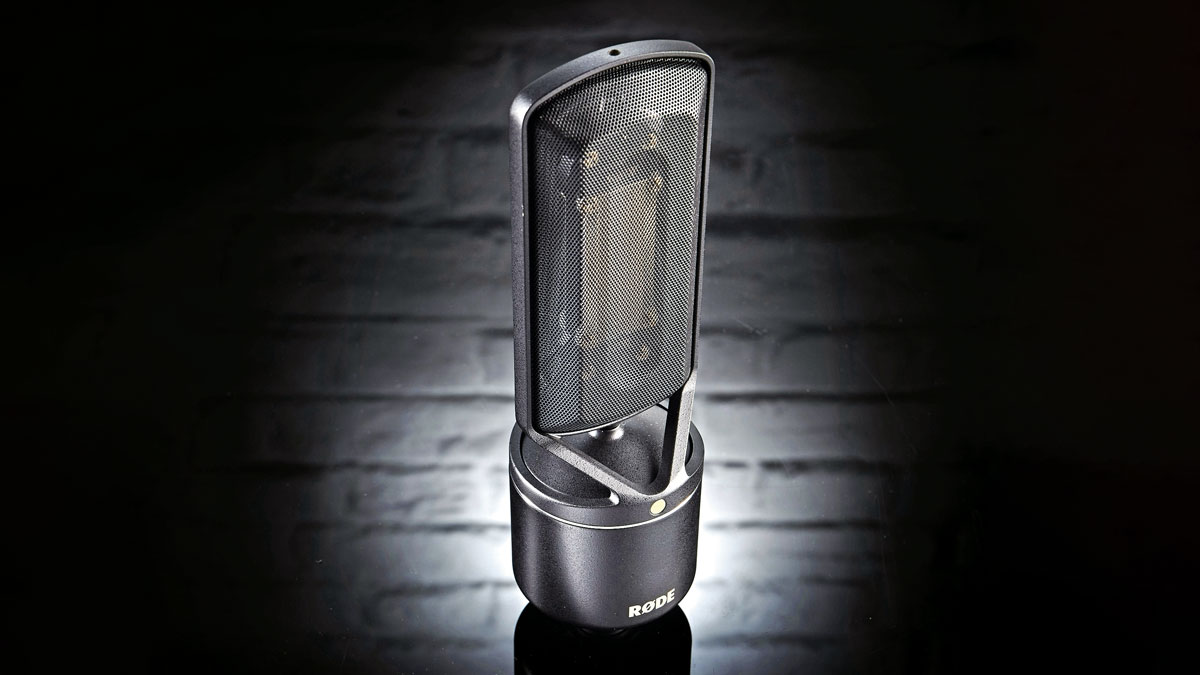
Fingerpicked acoustics are fairly quiet instruments so you’ll require a microphone preamp with a lot of gain and exceedingly low noise to make passive ribbon microphones a viable choice.
Active ribbon microphones, on the other hand, will be just fine and you’ll achieve a very natural and unhyped sound. Bear in mind that most ribbon microphones roll off in the upper frequencies, so you may need to add some treble and upper midrange using an equalizer to bring out the chime and sparkle.
Moving coil/dynamic
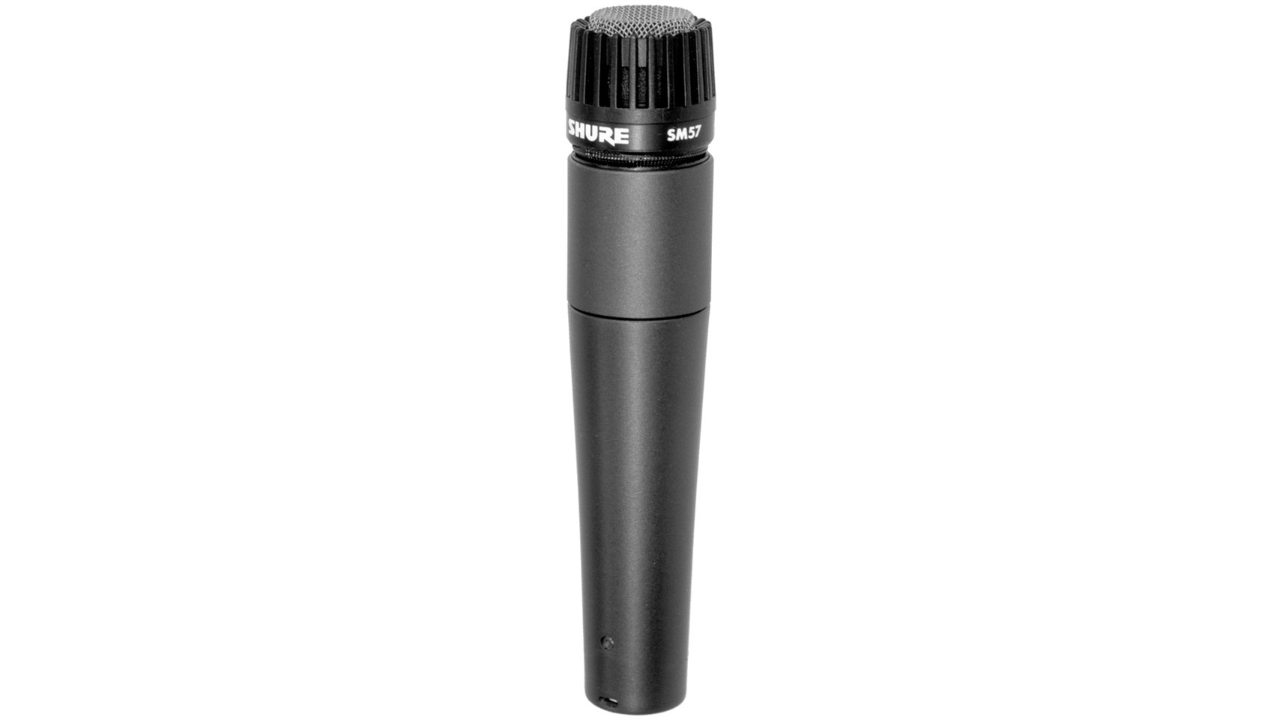
Recording engineers rarely use moving coils – more commonly known as dynamic microphones – on acoustics because they lack detail and the high frequencies roll off. Although they generate more output than passive ribbons, you’ll still need a high-gain/low-noise preamp.
Even so, an acoustic can sound pretty decent with a moving coil, especially when you need a strong midrange and don’t mind finessing things with an equalizer. Even if a moving coil can’t capture the true tone of an acoustic guitar, it will still outperform the vast majority of onboard pickup systems.
Condenser
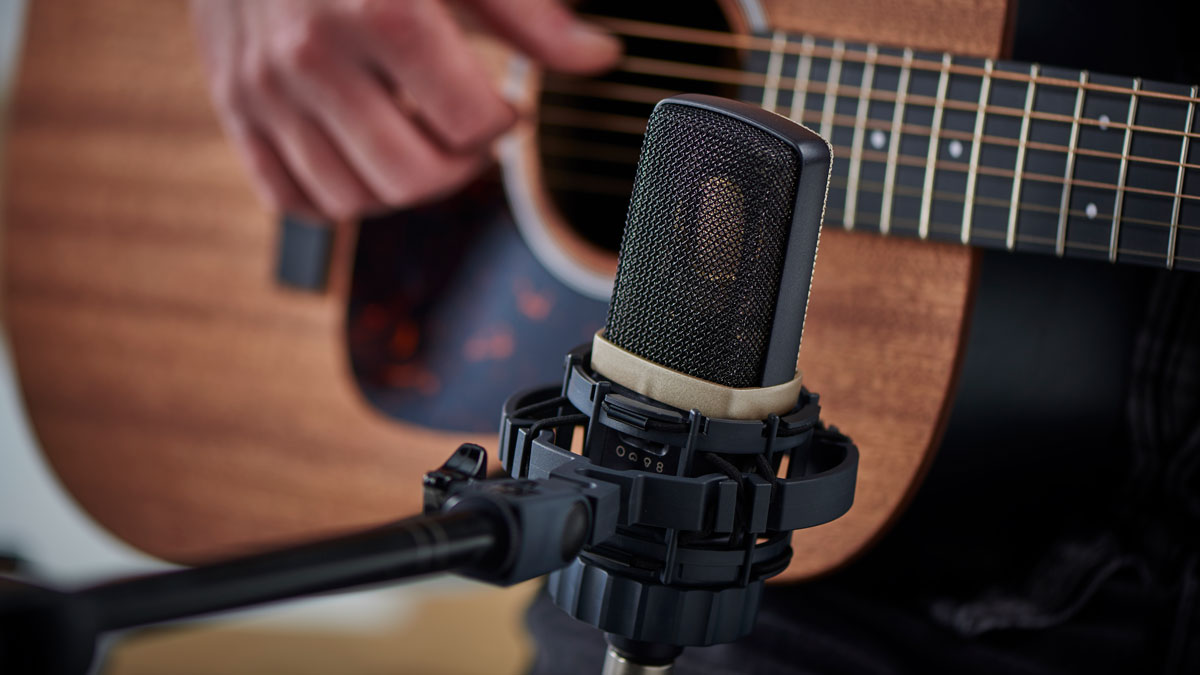
Large or small capsule condensers are the industry standards for recording acoustics. They are highly sensitive, capture subtle details and generate high-output levels.
A small capsule may be preferred when a natural tone with lots of high-frequency content is needed. Large capsule condensers often produce a fuller sound with a greater sense of scale, fatter low-mids and softer treble. If the microphone has bass roll-off switching, use it to eliminate rumble and boom.