Interior doors play a crucial role in defining the ambiance and functionality of your home. Selecting the perfect ones can transform your space into a harmonious and stylish haven. But with so many options available, how do you make the right choice?
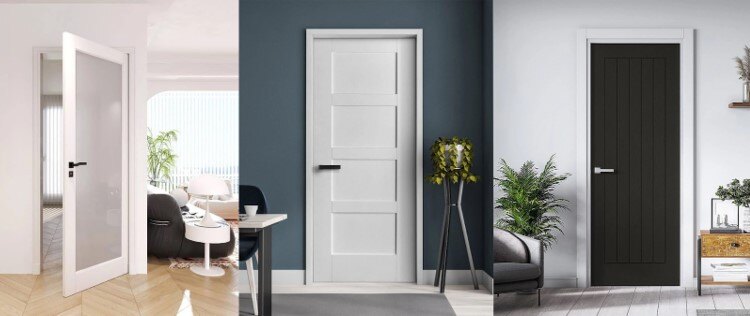
Match the Style of Your Apartment
The style of your interior doors should complement the overall design of your apartment. Whether you're going for a minimalist, modern look or a classic, cozy vibe, your doors should blend seamlessly with your décor.
- For modern interiors, choose sleek doors with clean lines and neutral colors.
- Rustic or vintage interiors pair well with wooden doors featuring intricate designs or carvings.
- If you love a Scandinavian aesthetic, opt for light wood or white-painted doors.
Your doors aren't just functional; they're a statement of your personal style.
Discover our exclusive collection of premium interior doors in Florida, designed to combine elegance, durability, and functionality. Whether you prefer classic charm or modern minimalism, IndigoDoors offers customized solutions to match your style and elevate your home.
Material Matters
The material of your doors influences both their aesthetics and durability. Here’s what you need to consider:
- Solid Wood
Offers timeless elegance and excellent sound insulation but can be pricier. - MDF (Medium-Density Fiberboard)
A budget-friendly option with good durability, often coated with a veneer for a premium look. - Glass Doors
Perfect for creating a sense of openness, especially in smaller apartments. Frosted or textured glass adds privacy while maintaining light flow. - Hollow Core
Lightweight and affordable but less durable and not ideal for high-traffic areas.
💡 Life Hack: If your budget is tight, choose MDF doors with a high-quality veneer finish. They mimic the look of real wood at a fraction of the cost.
Consider Space and Functionality
Think about the layout and purpose of each room before selecting door types.
- For tight spaces, sliding or pocket doors are excellent choices as they save floor space.
- French doors work wonders in living areas, adding elegance and enhancing light distribution.
- Bi-fold doors are ideal for closets or laundry rooms where space is limited.
- For bathrooms or bedrooms, prioritize doors with excellent soundproofing and privacy features.
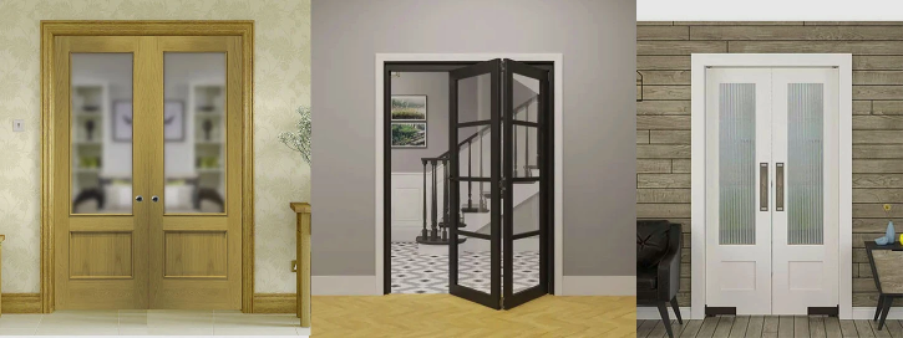
Small details, like how a door opens, can have a huge impact on your daily comfort.
Color Coordination
The color of your doors should harmonize with your apartment’s walls and floors. Neutral colors like white, gray, or beige work well in most settings, but bold choices like black or navy can create a dramatic effect.
Pro Tip: If you're unsure, match your doors to the trim or flooring for a cohesive look.
Pay Attention to Door Hardware
Handles, knobs, and hinges are often overlooked but can elevate the overall aesthetic of your doors. Choose hardware that complements the design of your apartment:
- Brushed nickel or chrome for a modern touch
- Antique brass or bronze for a classic look
- Matte black for a bold, industrial vibe
💡 Tip: High-quality hardware not only looks better but also ensures smooth operation for years to come.
Budget-Friendly Options
You don’t have to break the bank to get stylish doors. Look for deals at home improvement stores, consider DIY upgrades, or explore second-hand options.
- Paint old doors with trendy colors to give them a fresh look.
- Replace outdated handles with modern hardware for an instant upgrade.
- Add decorative moldings or panels for a custom feel.
Transforming your doors doesn’t always require a hefty budget—creativity is key.
Practical Checklist Before Buying
Before making a final decision, ensure you’ve considered the following:
- Measure doorframes accurately to avoid fitting issues.
- Check the swing direction—left or right—and plan accordingly.
- Think about maintenance. For example, glass doors require frequent cleaning, while wooden doors may need occasional polishing.
How to Measure a Door Frame Correctly Before Buying an Interior Door
Measuring a door frame might seem like a straightforward task, but even the smallest error can result in an ill-fitting door, wasted time, and unnecessary expenses. Whether you’re planning to replace an old door or elevate your interior design, accuracy is key.
Precision is the foundation of a perfect installation.
Start with a few basic tools: a reliable tape measure, a notepad to jot down numbers, and optionally a level for added accuracy. Begin by ensuring that your door frame is free from obstructions, such as molding or trim that may alter the true dimensions.
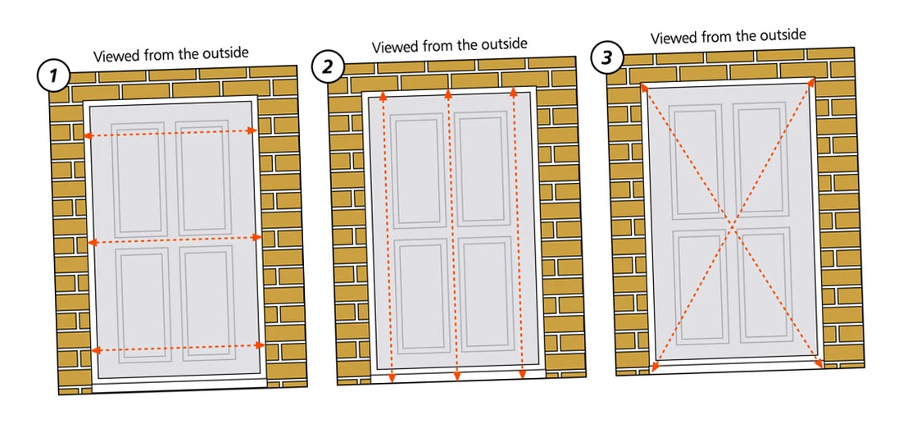
To measure the width of the door frame, start at the widest part. Typically, this is found at the bottom or middle of the frame. Stretch the tape measure from one side to the other, making sure the tape remains straight and taut. Repeat this process at three different points—top, middle, and bottom. Record all measurements and use the smallest one. This ensures the door will slide in effortlessly without requiring unnecessary adjustments.
When measuring the height, begin at the floor and extend the tape to the top of the frame. Do this on both sides and in the center, as older homes may have uneven floors that cause height variations. The smallest measurement is the most reliable for ensuring a snug fit.
Every millimeter counts when it comes to achieving a flawless result.
Another critical dimension is door thickness. Standard interior doors typically range between 1.25 to 1.75 inches thick. If replacing an existing door, simply measure the current one. If starting from scratch, consult the manufacturer for guidance on matching the frame and hardware.
Don’t overlook the depth of the door jamb—the section of the frame that extends from the wall to the interior edge. This dimension ensures your door and its frame will align perfectly with the wall, leaving no gaps or uneven edges.
When everything is measured and noted, check for potential obstacles. Will the door swing freely without hitting furniture or walls? Are the floors level, or will adjustments be necessary during installation? Even the trim around the door frame deserves attention to ensure it complements the final look of the space.
Proper measurements are about more than just appearances—they also impact functionality. A door that’s too tight can cause drafts, noise, and even damage over time. An overly large door may require expensive alterations to the frame.
A perfectly measured door saves not just time but also effort and money.
The process may seem tedious, but it’s worth every effort. Taking the time to measure your door frame carefully ensures the end result will be both beautiful and functional. When the installation is done, you’ll appreciate the smooth fit and polished look of your new interior door.
Measure twice, cut once, and enjoy the transformation of your space.