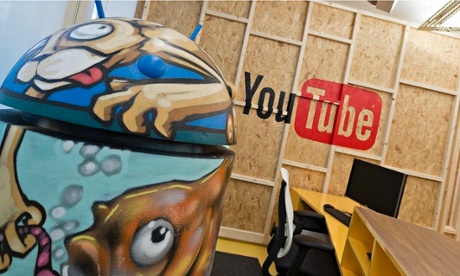
There are now more ways than ever to make money without setting foot in an office, thanks to the digital age. Bedroom developers became billionaires overnight, founding the current tech industry. YouTube now offers filmmakers the same opportunities; to be innovative, entrepreneurial, and make some money. In the process it is eroding the power of the broadcasters.
You’ve heard the stats before: 1bn unique users and 6bn hours of content watched each month, 100 hours of content uploaded in a minute and a greater 18-34 US adults reach than any cable network. Filmmakers no longer need someone else’s permission to connect to an audience. All they need to set up a TV channel is content, a computer and a broadband connection. YouTube is the killer app that broadcasters have feared. The barriers are down. Not only is the revolution being televised, it’s also being monetised.
Over the past 15 years YouTube has developed from a platform where a cute baby bit Charlie’s finger to an instant start-up broadcast platform. The business model and search algorithms have shifted towards encouraging more structured, engaging content, and away from one-off viral hits. At the heart of this has been its channel strategy. The audience for YouTube channels has grown exponentially over the past few years.
There are now significant numbers of users who are making a living out of YouTube, and a few are emerging as new media moguls. Freddie Wong’s Rocket Jump channel is one of the trailblazers, and is about to launch a third series of Video Game High School. With seven million subscribers, a 50:50 split with YouTube and an estimated income of $2m (£1.2m) a year, Freddie is doing pretty well for a recent film grad.
But, the internet can be fickle, so why do audiences lose interest, and what can be done to stop a mass exodus? How do you hold audience attention? Are web series even viable outside of Netflix and Amazon Prime?
How individuals with a background in film, or a film education, can use platforms like YouTube to their advantage
Individuals running their own channels are often referred to as predators, which is not as worrying at it sounds. It simply refers to a person who is a presenter, producer and editor all in one. Predators have a distinct advantage; they can make innovative content and are infinitely easier to engage with than their corporate counterparts. They can make content that most TV commissioning editors wouldn’t understand, and certainly wouldn’t approve.
They don’t need huge budgets. They can have fun and fail. They can learn from their mistakes and try again. They are the screen content equivalent of lean tech start-ups.
However, it can take a while to build up the necessary skills needed to engage an audience. So here are a few tips:
1. Authenticity
If you decide to start a channel, don’t be cynical. If your thing is gaming, set up a review channel or make spoof clips. If you want to set up a channel on cars, make-up, Disney merchandise or comedy, make sure you know your stuff. You will be caught out if you don’t. Authenticity is the key. Have a genuine reason for your sudden desire to post. This is your origin story. Every successful brand has one, and you need one too.
2. Tell a story
The best clips engage by telling a story with a point of view. The same principles of story apply regardless of the form: conflict, character and theme. Anything from a webisode, clip-show, to a makeup tutorial can have drama. A how-to makeup video is made more interesting with these principles applied. What would you rather watch? Someone deadpanning to cameras explaining how to change a bicycle tyre in a garage, or a clip that shows a rider in a bike race (character) get a flat (conflict) and have to change it quickly and keep going against all odds if they’re going to have any chance of winning (theme). One of the screen lecturers at the Australian Film, TV and Radio School uses the Susan Boyle BGT clip to teach classic story structure. People need to extract meaning from the mass of humanity around them, and stories are everywhere.
3. Be different
Understand these rules, but don’t be scared to break them. As long as you’re not spending a huge amount of money on your production costs, you can afford to fail.
4. Grab your audience quickly
Hit them with the subject of your clip immediately. A quick set up is incredibly important. This is a platform that gives advertisers five seconds to capture a viewer’s attention before they can skip their ad. Assume that you have the same timeframe. Do something different up front. Say something that will hook your audience in 5-4-3-2-1. Nothing? Too late.
5. Shareability
Why would an audience want to share your clip? How easy is it to share? Think about the hook. What would you write on Facebook to get your friends to open it? Your greatest asset for marketing your content is your audience.
6. Technical know-how
Although you don’t need a lot of expensive equipment, you do need to know how to use the equipment you have. The technical rules are simple: make sure that people can see what they need to see and hear what they need to hear. How to do that technically is in the manual, how to do that to capture the viewer’s attention is in the craft.
7. Competition is collaboration
If you know your stuff you’ll also know who your main rivals are on YouTube. However, rather than try to put them out of business, co-operate and collaborate. By creating a video with them you’ll have their audience on your page, and they will have your audience on theirs. It’s a win-win situation, and your only remaining challenge is convincing your newfound viewers to stay. Your shared enthusiasm will reinforce your credibility, authority and authenticity.
One of the biggest errors I see many users make is the failure to see YouTube as the potential professional venture it is. The exciting thing about YouTube is its lack of conformity with regards to broadcasting schedule, programme lengths and overbearing advertising. By creating and understanding your own branding, engaging appropriately with your audience and maintaining a consistent posting schedule, you may find the whole experience not only financially rewarding, but extremely enjoyable. If you want to know more, read YouTube’s playbook. Or just do it and try for yourself. You might fail, but you’ll have a lot of creative fun doing it.
Neil Peplow is chief operating officer at Met Film School
More like this:
• Local TV: the demand is there but will it survive?
• Advice from Vice: six lessons from a publishing outsider
• i100 and Quartz prove homepages are increasingly irrelevant
To get weekly news analysis, job alerts and event notifications direct to your inbox, sign up free for Media Network membership.
All Guardian Media Network content is editorially independent except for pieces labelled “Brought to you by” – find out more here.