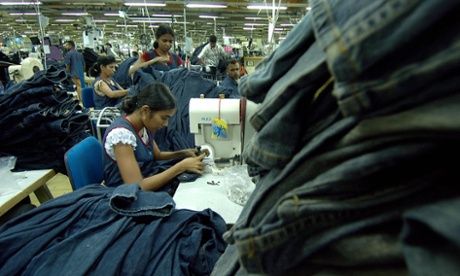
Over 18 months ago the collapse of the Rana Plaza garment factory in Bangladesh took the lives of more than 1,100 people. In July this year, two Swansea shoppers presented messages sewn onto labels in their Primark purchases that read “Forced to work exhausting hours” and “Degrading sweatshop conditions”.
In September during London Fashion Week, anti-poverty charity War on Want dropped a 30 metre wide banner reading “Don’t mention the garment workers” over London’s Waterloo Bridge. And, just a few weeks ago, the Mail On Sunday exposed the working and living conditions of the Mauritian women making £45 T-shirts for Whistles.
While Primark conducted an investigation that suggested the labels were a hoax, all four events have managed to put the fashion supply chain in the spotlight.
Phil Bloomer, executive director at the Business and Human Rights Resource Centre squares the cause of low wages with three causes: companies pushing risk down to the weakest in the supply chain in the pursuit of short term profit; an absence of freedom of association and the right to collective bargaining for workers; and the failure of the state to protect human rights.
We asked experts from business, trade unions and campaign groups what needs to happen to ensure that those making the clothes that wind up in wardrobes in the west are paid enough to afford decent food, housing and healthcare. Opinions varied, with some experts putting more emphasis on the responsibility of brands than on government and vice versa, but all were bound in agreement that achieving a fair wage demands a co-ordinated approach from players across the global apparel industry.
Join the experts for a live chat
Experts will join us in the comments section on Wednesday 26 November from 1.30pm GMT to take your questions on points including:
- Consumers have become accustomed to low-cost fashion. Who should take responsibility for paying more for fairer wages: factories, brands or consumers?
- The fashion industry provides jobs for millions, and often a job at a garment factory is preferable to the alternatives. Will brands move production away from countries in which a fair wage has been introduced?
- What are the pros and cons of setting a wage benchmark?
- What are the pros and cons of negotiations between workers and unions?
On the panel
Daniel Vaughan-Whitehead, senior economist at the International Labour Office and founder of the Fair Wage Network
Gustav Lovén, social sustainability manager at the H&M Group. Prior to joining the sustainability department Gustav worked in H&M’s supply chain organisation in east Asia based in Shanghai
Danielle McMullan, researcher, Business & Human Rights Resource Centre
Monika Kemperle, assistant general secretary of IndustriALL Global Union
Sabita Banerji, Knowledge and Learning Advisor, Ethical Trading Initiative. Sabita leads ETI’s work on cross-cutting issues including living wages, working hours and gender.
Felix Poza Peña, CSR director, Inditex
How to join
The live chat is completely text based and will take place on this page in the comments section below, kicking off on Wednesday 26 November, from 1.30pm GMT. You can submit any questions in advance by tweeting them to @GuardianSustBiz using #askGSB or using the form below and we’ll put them to the panel on the day.
Read more like this:
- The feminist T-shirt scandal is not an ethical problem; it’s an economic one
- How to achieve fair wages in the fashion industry - we ask the experts
- To respect human rights, fashion needs business, unions and governments
-
Brought to you by: H&M’s roadmap to a fair living wage in the textile industry
The sustainable fashion hub is funded by H&M. All content is editorially independent except for pieces labelled ‘brought to you by’. Find out more here.
Join the community of sustainability professionals and experts. Become a GSB member to get more stories like this direct to your inbox