Fashion week has been hijacked by the real world. For decades, “the shows” existed in a champagne bubble, a parallel universe in which celebrities were jammed together on long benches, as if for a very glamorous school photo, and where mysterious diktats – Navy is the New Black; Minimalism is Dead – were pronounced six months ahead of time, as if by a cabal of fortune tellers.
But this is 2016, and identity politics has trumped everything else. From Brexit to the presidential election, public debate centres on issues not of policy, or economics, but of class, race and gender. On social media, if you are not cooing over cute panda videos you are probably debating a hashtagged identity issue – Kim Kardashian and the politics of nude selfies, or diversity at the Oscars. The most striking image of summer 2016 was of a woman in a burkini, surrounded by armed police. On 4 September, Kanye West caused a furore with a casting call requesting “multiracial women only” for his Yeezy catwalk show. On 8 September, the day New York fashion week opened, Lionel Shriver wore a sombrero on stage during an instantly controversial speech about cultural appropriation. In other words, this season’s fashion headlines were never all that likely to be about the sleeve shapes.
What’s more, this is a moment of structural change in fashion. This London fashion week marked the beginning of a new era of immediacy in fashion, with Burberry leading the charge of straight-to-consumer shows. The cultural import of See Now Buy Now fashion is that the clothes on the catwalk relate not to the theoretical world of six months’ time, but to the world as it is now. The new business model is still only embraced by a minority of designers, but its mindset is impacting everybody. Fashion week has simply become more relevant. In a world where you can order a delivery of milk on Amazon Prime and put the kettle on to make tea pretty much straight away, our relationship with time is shifting. “Speed is everything,” said Christopher Bailey after his See Now Buy Now Burberry show on Monday evening. “It’s changing how we think.”

You can tell fashion week has changed, because the people in its orbit look different. Look at the front row of any fashion show right now, and you will see oversized hoodies, tracksuit bottoms, flat shoes. The front-row look – high heels, sample-size dresses, everything dry clean only – was once all about signalling elite status. By contrast, this season’s must-have pieces – jeans with raw, lopsided hems and sweatshirts whose extra-long sleeves give the impression of having been borrowed from a flatmate in a scruffy student house – present an uncompromising vision of outsider chic. (Some aspects of fashion, however, do not change. A pair of jeans from Vetements, the flagship label for this look, costs around £800.)
Fashion’s shift towards democracy, with catwalk streams livestreamed and increasingly open to consumers, is reflected in the clothes themselves, as a broader vision of what aspiration looks like. At London fashion week, Christopher Kane, one of the standout LFW talents of his generation, has made “Outsider Art” a theme of his recent collections. At his show at Tate Britain on Monday, pencil skirts in what he dubbed “road kill fur” represented “the alchemy of making something out of the humble and the discarded”. Richard Malone’s collection, part of the Fashion East show, was based on the aesthetic of workers’ uniforms. Tunics were elevated, tailored versions of those worn by hospital cleaners. “I wanted to integrate [workwear] into fashion, to make it a respected, beautiful thing,” Malone said.

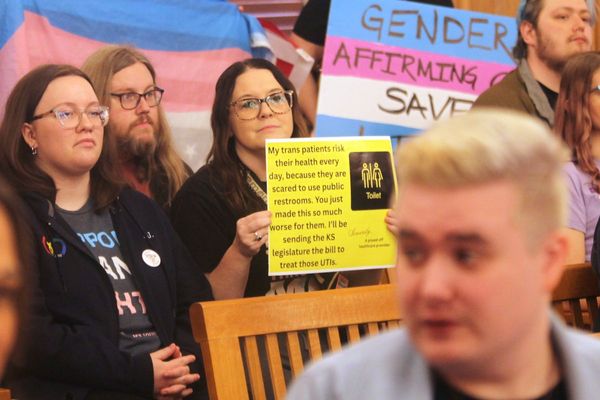
Fashion week’s intersection with identity politics is most high-profile where it is most photogenic. Gender fluidity is a talking point in public debate; fashion has turned it into a trend. London fashion week’s current It girl, Adwoah Aboah, a model who walked for her friend Ashley Williams’ show and sat front row at Burberry, has a staggering buzzcut beauty which does not conform to feminine tropes. What started with a menswear influence on womenswear has evolved into Gucci’s aesthetic of velvet, pearls, rainbow colours and tumbling curls for both men and women, a look that is almost post-gender. Orlando was the inspiration for Burberry this week, where the clothes for men and women were an interchangeable collage of silk pyjama shirts, blazers, and – of course – trenchcoats. Backstage after his JW Anderson show this week, designer Jonathan Anderson talked about an “urban cultural reappropriation of Tudor silhouettes” and borrowing “something of that masculinity and aggression” of Henry VIII’s wardrobe for modern womenswear.

Most significantly, gender neutrality is influencing designers strongly associated with traditionally feminine modes of beauty. At the presentation for her Victoria Victoria Beckham secondary line in London this week, Beckham showed loose trousers with oversized jackets, an anti-bodycon look that is very different from the corset dresses that were the starting point for her main line. “Soft tailoring is what I wear myself, most of the time, these days,” she said.

A fashion-show audience typically numbers around 500; two million people watched livestreams of the most recent New York fashion week. The exploding audience figures mean fashion week is being held to account on issues to which the fashion industry has for a long time been wilfully blinkered. Model health and body image was the first flashpoint, and continues to be a touchpaper issue, the glacial pace of change reflecting the resistance by an industry which has long played by its own rules to accept accountability. Those who have watched fashion shows for decades and long ago stopped registering the size of the models are bewildered by this new audience, who see jutting collarbones as something more significant than a handy clothes hanger. Who look at models and see not just “girls”, as they are always known, but people.

On the same night that the prime minister hosted Christopher Bailey and Vivienne Westwood at a Downing Street reception for British fashion, Marc Jacobs walked into a furore by putting pastel woollen dreadlocks on white models on his New York catwalk. Jacobs’ initial response to criticism – “I don’t see colour or race” – displayed an insensitivity, for which he has since apologised. In the year of Black Lives Matter, not seeing colour is hardly a defensible position. Coco Chanel’s line about fashion reflecting the world we live in has been reproduced more often than her boucle tweed jacket, but, a century later, many designers are still slow to recognise that if fashion wants to be taken seriously in the real world, it has to play by grown-up rules. With cultural power comes responsibility, after all.

While some designers are still struggling to navigate their place in the newly accountable fashion industry, a generation is emerging who have an instinctive grasp of fashion’s place in a connected world. Grace Wales Bonner, the British winner of this year’s LVMH prize – the most valuable and prestigious in the global fashion industry – explores ideas of black male identity. “I feel like I’ve seen enough images of black men looking really aggressive, very hypersexualised or “street”. That’s not how I think about men at all. That’s not the men in my life,” she said last year of her ultra-elegant menswear.
The key trends of this London fashion week were a speeded-up business model, gender-fluidity, and outsider chic. Which is all very well, except it doesn’t really explain what to wear. The more interesting fashion week becomes, the less significant the trends on the catwalk feel. My tip for the standout look as seen at this London fashion week? Forget Burberry’s Cavalry jacket, or Christopher Kane’s Roadkill skirt. I’m calling it for the asymmetric white party shirt, as seen at Downing Street on Theresa May.