When Michael Flynn, President Donald Trump's short-lived national security adviser, resigned last month, Mark Levin was outraged.
Not because Flynn had falsely denied speaking with the Russian ambassador about U.S. sanctions before Trump took office. Rather, the conservative talk radio host was furious that U.S. surveillance had picked up Flynn's venture into freelance diplomacy.
"How many phone calls of Donald Trump, if any, have been intercepted by the administration and recorded by the Obama administration?" Levin demanded on his program, which reaches millions nationwide. "This, ladies and gentlemen, is the real scandal."
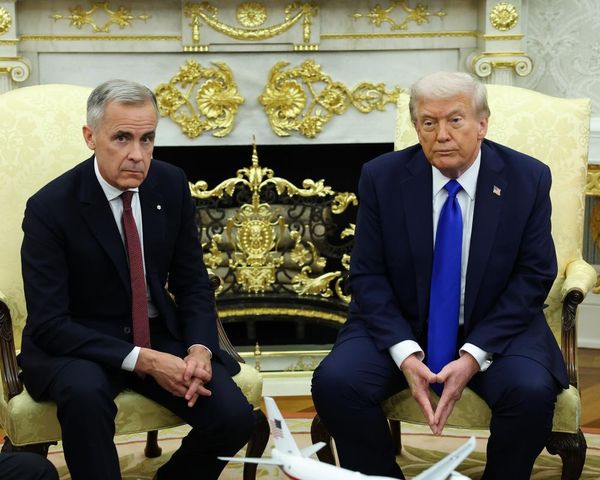
With that, what began as rumors and unverified accounts percolating through right-wing media coalesced into a wild conspiracy theory adopted by a president with an itchy Twitter finger, a penchant for intrigue and an eagerness to embrace information _ however sketchy _ that reinforces, rather than tests, his beliefs.
Trump's unfounded claim that President Barack Obama had wiretapped his telephone ricocheted throughout the country, shook Washington and stunned disbelieving U.S. allies. The fallout continues to rattle the embryonic Trump White House.
The president's own Justice Department, the head of the FBI and the bipartisan leaders of two congressional oversight committees have all said they've found no evidence to substantiate the outlandish assertion.
But the president and his chief spokesman, White House press secretary Sean Spicer, have refused to back down, aligning themselves with Levin and others operating in what amounts to a hall of mirrors, where the unproven claims of one media outlet are cited as evidence by another and facts are twisted, misdirected or ignored in the service of political propaganda.
"We're living in a world in which people are making false assumptions that because something exists in print and is circulating, it has a legitimacy that it otherwise wouldn't merit," said Kathleen Hall Jamieson, a communications professor at the University of Pennsylvania who has spent decades studying the intersection of media and politics.
"Someplace along the line," she said, "we failed to teach some people how to evaluate evidence and how to recognize legitimate versus illegitimate."
It's all the more startling when the president of the United States is the one trafficking in falsehoods.