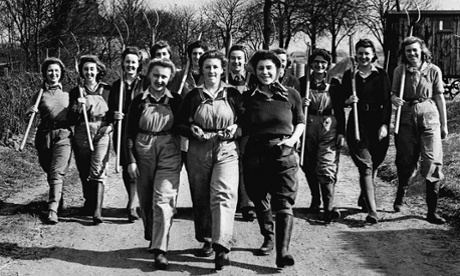
Women in the Land Army were trouser pioneers
Although women who worked in mines before the war wore trousers, they would cover them up with skirts during time off. Those in the Land Army didn’t have trousers as regulation uniform, despite the practical advantages – they were more likely borrowed from male members of the family. It was decades before trousers became acceptable for women away from the tennis court.

Makeup became more established during the war
Maybelline started in 1915, and it coincided with makeup – or the appearance of wearing makeup, anyway – becoming more acceptable, particularly as working-class women who could now afford it. Powder, kohl eyeliner and mascara were popular, and Helena Rubenstein reported an upsurge in demand for face creams from wealthier women volunteering as nurses on the front.
Body hair was on its way out
Women’s uniforms had shorter skirts than were customary in 1914 – they were now at six to 10 inches off the ground. The reveal of a bit of leg was part of the change in perception of body hair, from something erotic to something unsightly. Gilette introduced Milady Decolletee razors in 1915. Shaving legs became part of standard female grooming.
Jewellery in wartime was creative
While peacetime jewels were considered frivolous, sweetheart jewellery – given from a soldier to his bethrothed – was permitted. Marcel Proust also noticed a fashion in Paris for rings and bracelets made from fragments of shells or ammunition.

Coco Chanel’s rise began during World War One
Her frills-free designs chimed with the straitened times. Her first shop opened in Deauville in 1913 and became a favourite with wealthy women who bought her reworked sportswear. Another store opened two years later in Biarritz and by 1916, news of her work had reached the American press. Her rise had begun in earnest.
-
Dressed for War: Uniform, Civilian Clothing & Trappings, 1914 to 1918 by Nina Edwards is available now from Palgrave Macmillan.