When people think about gender equality and women’s empowerment, storytelling may not be the first step they envisage.
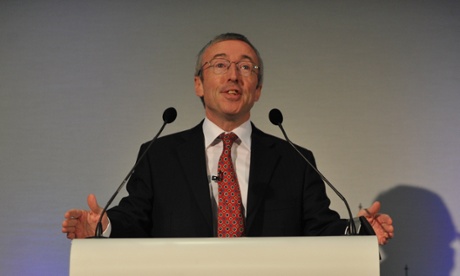
But on 20 April, the nine most senior leaders in the Department for Business, Innovation and Skills (BIS) took what their permanent secretary Martin Donnelly describes as a “whole precious day” to work with executive coaches from the Royal Academy of Dramatic Art (Rada) on storytelling and other techniques.
Why? Closing the pay gap; flexible working arrangements; tackling unconscious bias in recruitment and promotion; mentoring and coaching: these are the more usual steps towards gender parity in most organisations. They are sensible, practical and have been proven to work.
So it’s something of a surprise to be told by one of the most senior female managers in the Department for Business, Innovation and Skills that breathing – yes, breathing – has played an important part in embedding gender parity into senior departmental management.
“Being grounded. How you speak, how you breathe: this all feeds into having a sense of one’s own confidence,” explains Ruth Hannant, director of higher education at BIS. Hannant, who works as one half of a well-established senior Whitehall job-share team, has been taking part in an innovative training programme at BIS with experts from Rada. It’s just one of a whole series of practical changes, including flexible working and mentoring, over the past four years that is changing the way people lead the department.
The results speak for themselves. BIS now has gender parity – a 50/50 split – in its leadership team. This knocks corporate UK into a cocked hat, making the voluntary target of 25% female representation on the boards of the biggest 100 UK companies this year look pretty feeble.
So why is the department whose business it is to promote UK enterprise so set on gender parity in its own senior levels? Departmental permanent secretary Martin Donnelly is clear. “Gender is not a minority issue,” he points out. “This is not a nice-to-have, it is a key part of your job. That is the message this department makes very clear. This is how we do things here and if you don’t want to do things this way, please go somewhere else.”
It’s fair to say that Jeremy Clarkson shouldn’t bother applying for a job. “The idea you can say someone may occasionally shout at people because of a bad mood or being under pressure, but has delivered all these things – we are very clear that is not a trade-off,” explains Donnelly.
This isn’t just about gender – it’s about changing a culture in an organisation which, he acknowledges, has previously sometimes been a bit macho among people keen to rise to the top. Now, Donnelly says, he tells anyone joining the senior civil service at BIS that they need to think more about teamwork. “I don’t put it negatively, but I tell people one-on-one that I want them to be clear about it, because this is how they will be measured.”
For Donnelly, gender parity is aligned with the goals of his department. “Our mission is to open up the British economy, to connect people with prosperity across the country,” he says. “How we do so matters as much as what we do.”
Building what Donnelly describes as a more trusting, less hierarchical culture has been vital. He says the experts at RADA have helped him and his leadership team go beyond what he describes as “our traditional, somewhat reserved civil service shells”, to be more honest, personal and open in talking and listening to staff. It has been a challenge, he acknowledges, but it’s been worth it. Which is why he, along with the other eight members of his senior management team, have spared the time in a hugely busy pre-election period to refresh their communications skills, including storytelling.
“It underlines how important this is. The point is, you can’t just say we’ve done all that diversity and leadership stuff but now it’s serious,” he says. “It’s precisely because the election is so serious that we’ve got to get really match fit, so that everybody knows this is how we are going to go on dealing with the challenges of whatever the election brings.”
One of the challenges will be greater uncertainty. Donnelly led BIS through major change early on, removing four levels of management and shaving £400m off its budget in 2011. The four years since then, he says, have been about rebuilding morale and changing the culture of the organisation.
He says no one knows what policy priorities will be after the May general election, nor how much money the department will have to deliver them. “But our values and behaviours will not change. This is not negotiable. We will give ministers of whatever colour the best possible civil service, with this personal, open leadership.”
Sign up for your free weekly Guardian Public Leaders newsletter with news and analysis sent direct to you every Thursday. Follow us on Twitter via @Guardianpublic