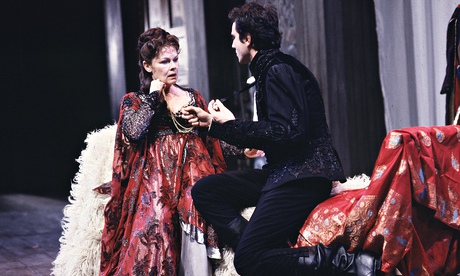
Understandably Polly Toynbee (End this assault on the arts, or our national life will suffer, 19 May) suggests that arts and politics are two disconnected worlds. I have been fortunate enough to act with Daniel Day Lewis and Judi Dench in Hamlet at the National Theatre and also to stand for parliament (14,000 votes) against Lord David Owen. I’ve been councillor George Urquhart in Coronation Street and a councillor in my own name in Kensington and Chelsea. What I have learned from these is that the arts and culture are the strongest influences on how a nation thinks of itself – and how good are the politics available.
For British politicians – they do things differently elsewhere – the arts are a boring distraction, a matter of how much or how little cash goes to the arts councils, or a minister’s stepping stone to a more important department. (There wasn’t a single politician at the first night of the Hamlet I mention at the National. Imagine that in France!) Yet we are culturally bombarded every hour of every day through the media, television, films, radio, music, fashion, print publications, advertising, the internet: we think the way we do because of our culture.
Toynbee is right about the neglect of the arts in education and the good work being done for young people by the Royal Shakespeare Company. I have played Mark Antony, professionally, for £25 a week in a main London venue. I would have done it for nothing because that’s what I do. We have had the most startling theatre tradition for the past 400 years, and yet our political barbarians (the majority, I’m afraid) have sidelined “the arts” and, worse, failed to make available the best of British work to most of the population – invaluable for the shaping of young tastes in particular.
We – the performers’ union, Equity, and many others – struggled to make an all-out Shakespeare United Festival in every part of the UK for the Olympic year, 2012. Any political help? Fat chance.
Ian Flintoff
Oxford



.png?w=600)