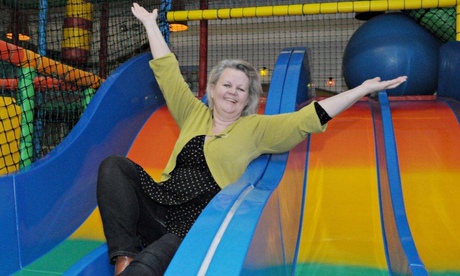
Company name: Helter Skelter Play Cafe.
Company age: five years.
Number of employees: two full time, two part time.
Elevator pitch: Helter Skelter is a small children's play centre and cafe for children ages 0-8, based in the heart of the beautiful seaside town of Broadstairs. Recently voted Britain's Friendliest Business, we run quality activities such as Baby Sensory, Toddler Time and fabulous parties.
How, when, where and why did you start out?
After a career in executive search, I wanted to find a new direction and to live by the sea, and moved to Broadstairs 10 years ago. Eight years ago, I started a small play centre in Ramsgate with a partner, then set out on my own five years ago, creating a quality business with a strong community ethos.
What are the challenges facing micro-enterprises in the UK?
Government policy needs to adapt to embrace the growth of this sector. It needs to understand that micro-enterprises range from freelancers to businesses employing up to nine staff, with business owners ranging from very sophisticated to less educated in business.
We need better access to finance, to enable businesses to invest and business owners to find competitive financial packages. For the less business savvy, we need less draconian measures. We are fined at the same level as SMEs with up to 50 employees.
As a micro-enterprise, what digital technologies and innovations have helped you to establish and grow your company?
We are quite basic – a customer marketing database – although our customer base is limited (children aged 0-8); Money Manager to manage cash flow and accounts; Dropbox for file sharing. We use Facebook and Twitter as our main marketing tools and need to move to a media management suite such as Hootsuite. Facebook and Twitter are the most valuable marketing tools for us.
What digital technologies do you not have access to that you wish you did?
As a business, we need to use better marketing and financial tools. There are some great free book-keeping apps for small businesses; Whatsapp to contact customers via text; some personal organisers. I would pay for training in a publishing tool – so we can make excellent posters and PoS information and for a great and easy accountancy package with book-keeping app. An instant cost-analysis app would be brilliant to help us reduce purchasing costs.
As part of the tourism mix, I'd like to see more connectivity in our town. The whole area needs to have its mobile, broadband, even TV signal upgraded; and I would like to see free Wi-Fi available to all.
Communication seems to be key here. How do you feel a lack of communication is holding you back?
We still find people haven't heard of us, despite using a range of media to advertise ourselves. When people are choosing where to hold their parties and where to spend their time, we need to be better placed to ensure they are aware of our excellent service.
How important is social media as a means to level the playing field for marketing your business?
We have created our brand through Facebook, and it was the vehicle for our being voted Britain's Friendliest Business and runner-up in Netmums Best Indoor Play Area, South East this year. A very small business in a very small town would not have achieved these accolades without social media. It enables us to reach our customers locally and attract visitors nationally.
We use Twitter as a campaigning tool and gain attention for our business through our other interests. Through Twitter, I have won prizes for our town, and some interesting personal invitations. I was invited to Bill Grimsey's launch of Vanishing High St at HoP last year. It gives us a national reach that we couldn't otherwise achieve.
What one piece of advice would you give to a micro-enterprise starting out in the UK?
Don't leave anything to chance; research your market well and don't be afraid to change your offering. I've seen shops come and go locally, and I am sad to see people lose their life savings.
Fiona Crawford is the founder of Helter Skelter Play Cafe.
To get weekly news analysis, job alerts and event notifications direct to your inbox, sign up free for Media Network membership.
All Guardian Media Network content is editorially independent except for pieces labelled 'Advertisement feature'. Find out more here.