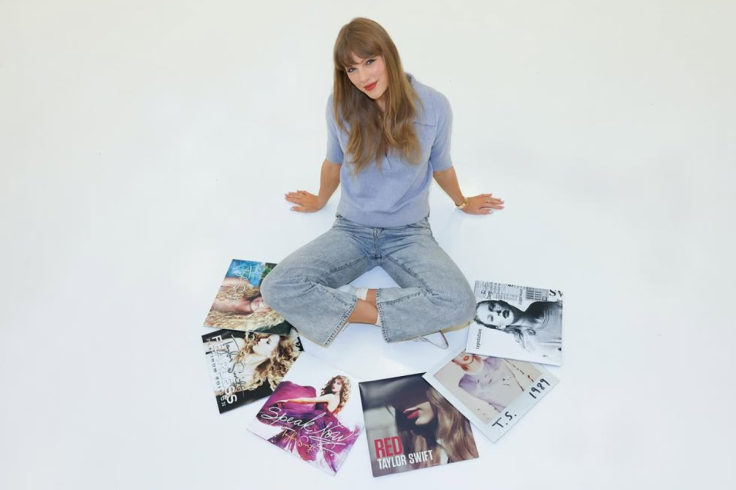
Taylor Swift has now spent 95 weeks at No. 1 on the Billboard 200 — just 37 weeks shy of The Beatles' record of 132 — while amassing a net worth of around $1.6 billion (£1.2 billion), making her the wealthiest woman in music.
Her latest album, The Life of a Showgirl, held the top spot for a ninth time on the 13 December Billboard 200 chart, adding to her impressive tally and cementing her status as the most successful solo artist and American act since the chart's inception nearly 70 years ago. Those observing how money flows in today's entertainment world see her ascent as proof that enduring financial success can be achieved solely through making music.
A Fortune Without Cosmetics Lines or Liquor Brands
What truly sets Swift apart from nearly every other billionaire entertainer is how she accumulated her wealth. According to Forbes, she is the 'first musician to make the billionaire ranking primarily based on her songs and performances,' rather than cosmetics lines, fashion brands, or alcohol endorsements.
Her fortune comprises approximately $800 million (£598 million) from music royalties and touring, a music catalogue valued at around $600 million (£448 million), and an estimated $110 million (£82 million) in property holdings. By contrast, Rihanna's $1.4 billion (£1.04 billion) fortune largely stems from her Fenty Beauty cosmetics empire, while Jay-Z built his $2.5 billion (£1.8 billion) wealth through champagne, cognac, and technology investments.
For aspiring artists and music industry insiders, Swift's model demonstrates that ownership and strategic touring can rival traditional celebrity business ventures. Her success underscores the importance of controlling rights and capitalising on live performances.
The Eras Tour Economic Phenomenon
The Eras Tour, which concluded on 8 December 2024 after 21 months and 149 shows across 51 cities on five continents, grossed an astonishing $2.07 billion (£1.54 billion) from ticket sales. This figure doubles the previous record for any concert tour, confirmed by Swift's production company to The New York Times.
More than 10.1 million fans bought tickets. The economic ripple effects extended well beyond the venues. According to Bloomberg Economics, Swift's 53 American dates alone contributed an estimated $4.3 billion (£3.2 billion) to the US gross domestic product.
'In addition to being a generational talent, Taylor Swift is a great economist,' said Carolyn Sloane, a labour economist at the University of Chicago. 'Taylor has great ideas, is able to scale her ideas, and seems to be pretty risk-seeking.'
Can She Catch The Beatles?
The Beatles amassed 132 weeks at the top from 1964 to 2001, far ahead of Swift's current tally. However, if she continues on her current trajectory, the 36-year-old might well match or even surpass that record within the next decade.
Swift first topped the Billboard 200 in November 2008 with Fearless, which later won the Grammy for Album of the Year. Since then, her dominance has only grown, with releases like Midnights, which made her the first artist to claim all top 10 spots on the Billboard Hot 100 simultaneously, and The Tortured Poets Department, which became Spotify's most-streamed album in a single day. Her latest, The Life of a Showgirl, added a ninth non-consecutive week at No. 1 as of 13 December 2025, bringing her total weeks at No. 1 to 95.
In May 2025, Swift announced she had purchased her original masters from Shamrock Capital for approximately $360 million (£269 million), ending a six-year dispute over her rights and gaining full control of her first six albums.
Implications for Investment and the Music Industry
For retail investors observing the entertainment sector, Swift's career underscores the rising value of artist-owned intellectual property. Her music catalogue alone has appreciated by hundreds of millions of dollars since her decision to re-record her masters in 2021.
Meanwhile, industries tied to concerts, online streaming, and merchandise have also benefited from her immense popularity. Experts now debate whether others can replicate her success or if her unique combination of talent, strategic decision-making, and loyal fan base makes her an outlier.
Either way, The Beatles' record no longer appears untouchable. With her current momentum, Taylor Swift could very well be the artist to beat in the decades to come.