While the concept of the multiverse might be partially responsible for exacerbating “superhero fatigue” on the big screen, in the comics, the idea has been one of the driving forces behind some of the most interesting developments in the superhero genre. Originating with DC’s seminal 1961 comic issue Flash of Two Worlds, the concept of alternate universes would go on to form the backbone of some of DC and Marvel’s most celebrated storylines: Crisis on Infinite Earths, Final Crisis, the Ultimate Universe, and 2015’s Secret Wars (which Avengers: Doomsday and its sequel will partially be based on). Sixty-plus years after that Flash issue, it feels like multiverse stories are as baked into the DNA of the genre as capes and supervillains.
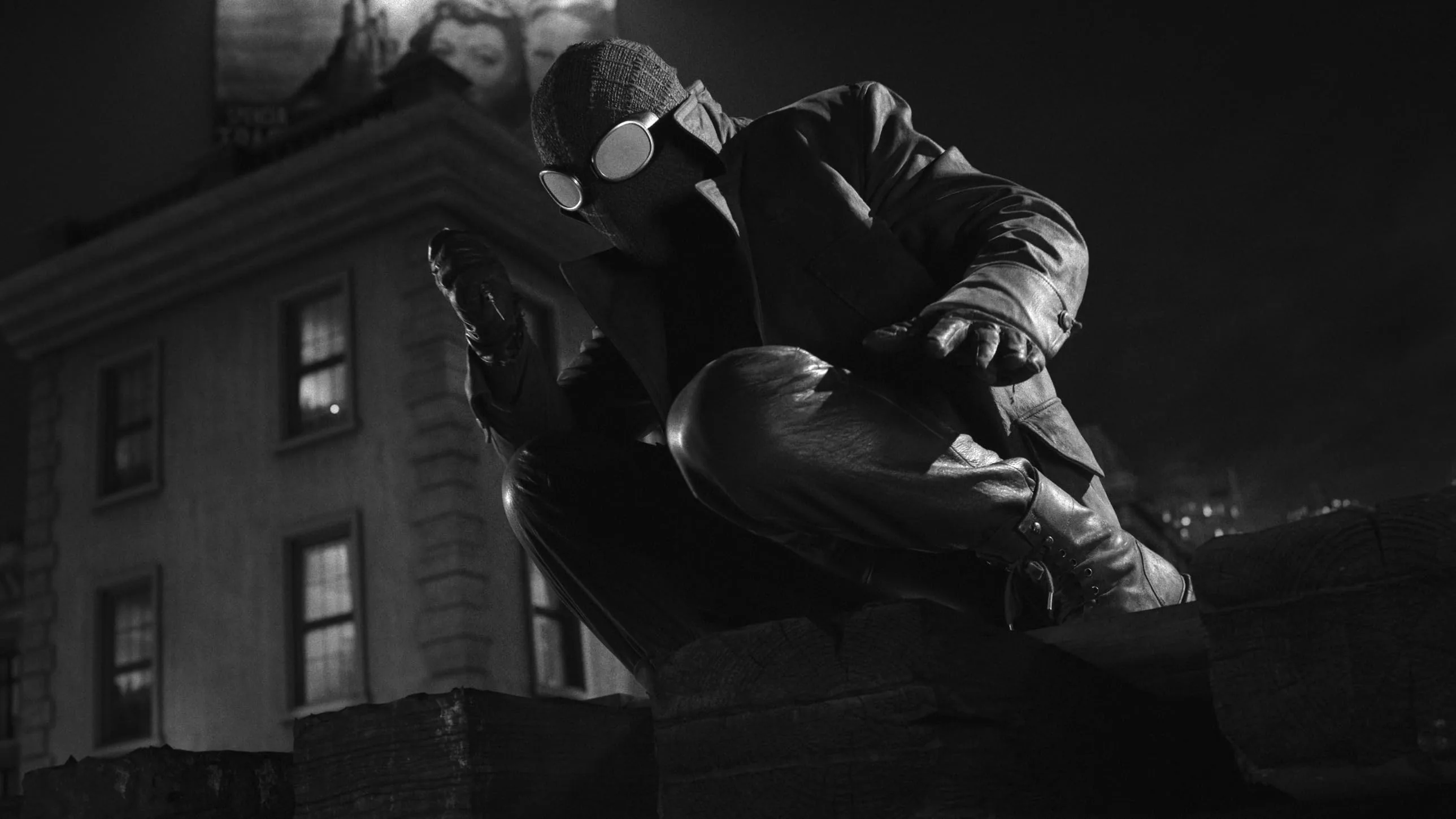
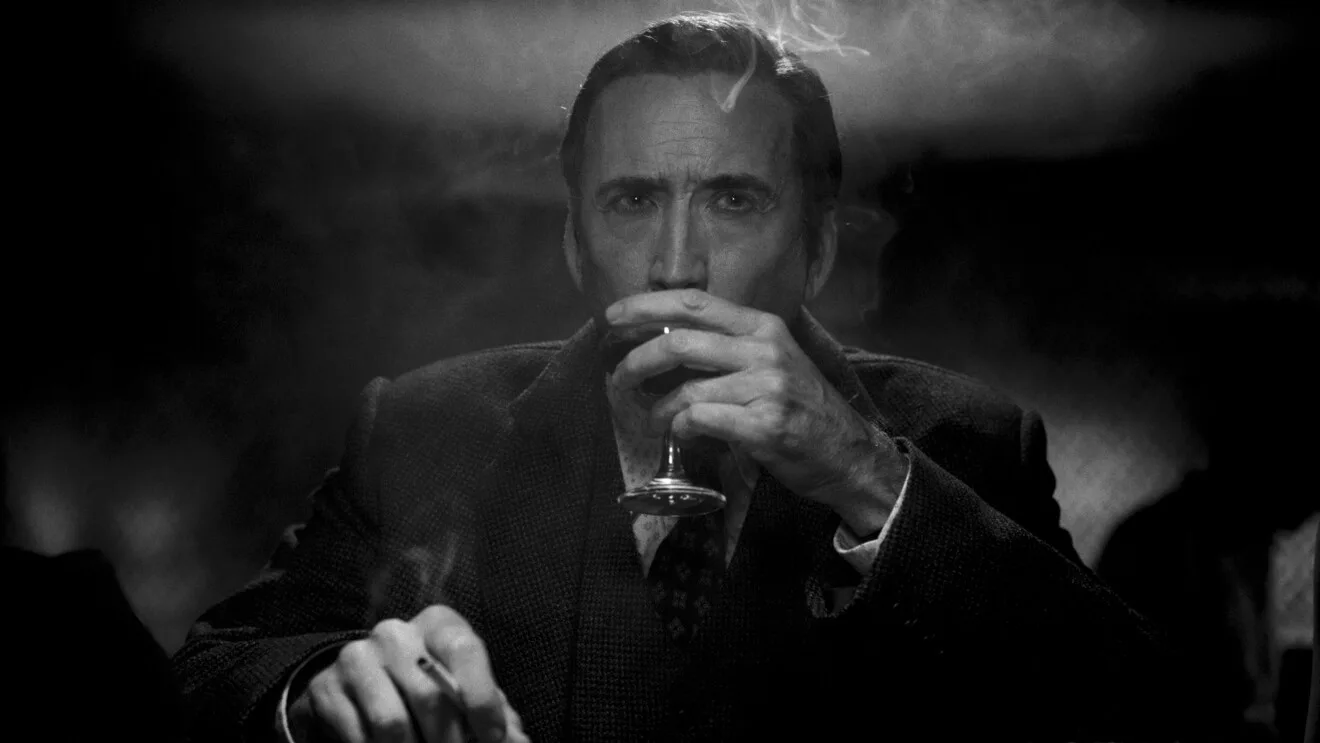
Along with the high stakes that come from stories about two worlds violently colliding, the multiverse has also given plenty of comic book writers the chance to experiment with reimagining iconic characters in totally unexpected, new circumstances. Superman if he were raised by Joseph Stalin, Doctor Doom if he became the Sorcerer Supreme instead of Stephen Strange — both DC and Marvel have leaned hard into alternative depictions of their beloved characters, and one of the most interesting of the last few decades has been Spider-Man Noir, a hard-boiled version of Peter Parker inspired by classic film noir. After making his cinematic debut in Spider-Man: Into the Spider-Verse, the character just received a live-action TV series (as a separate version also played by Nicolas Cage), and although the show bears some similarities to his debut comic, it also differs in quite a few key ways.
Spider-Man Noir On The Page
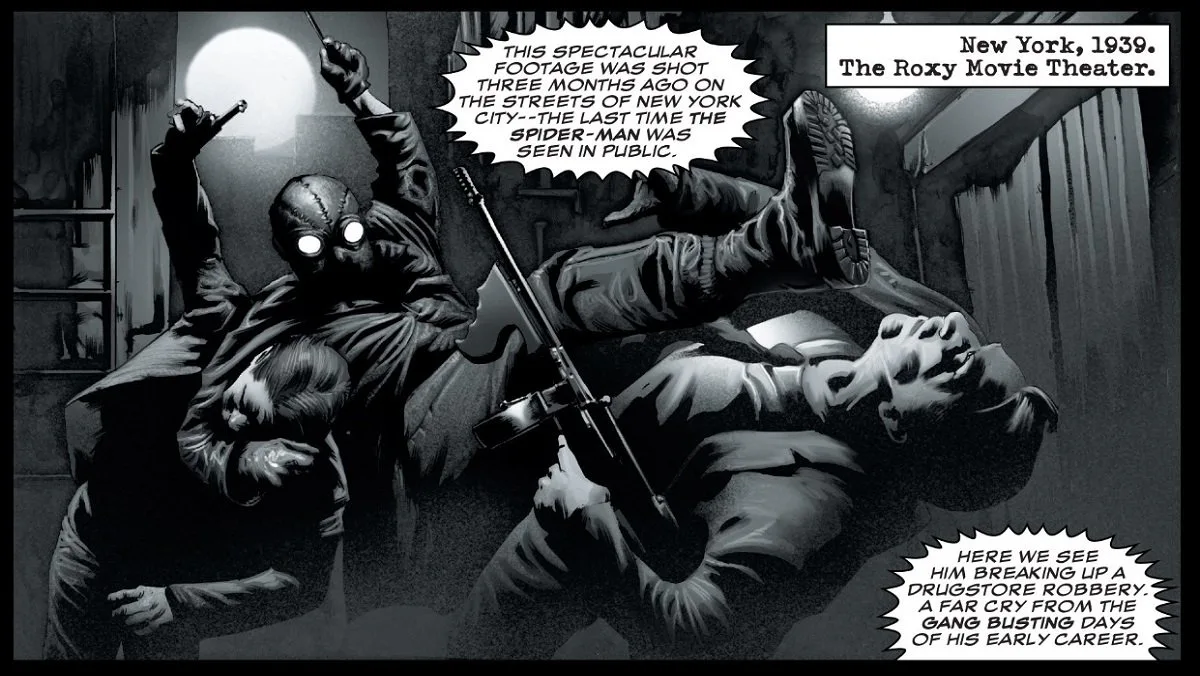
The character first appeared in two back-to-back four issue miniseries in 2009 and 2010: Spider-Man Noir and Spider-Man Noir: Eyes Without a Face, both part of a company-wide series called Marvel Noir that reimagined characters such as Daredevil, the X-Men, Luke Cage and a few others in an alternate universe designated Earth-90214. In that original series, which takes place during the height of the Great Depression in 1932, Peter Parker is an aspiring photojournalist working under the mentorship of Ben Urich. Inspired by the work Urich has done as an investigator into New York’s criminal underworld (earning him the nickname “the Spider”), Peter decides to follow in his footsteps, seeking justice for the murder of Uncle Ben (in this universe a WWI airman and social reformist cannibalized by the Vulture).
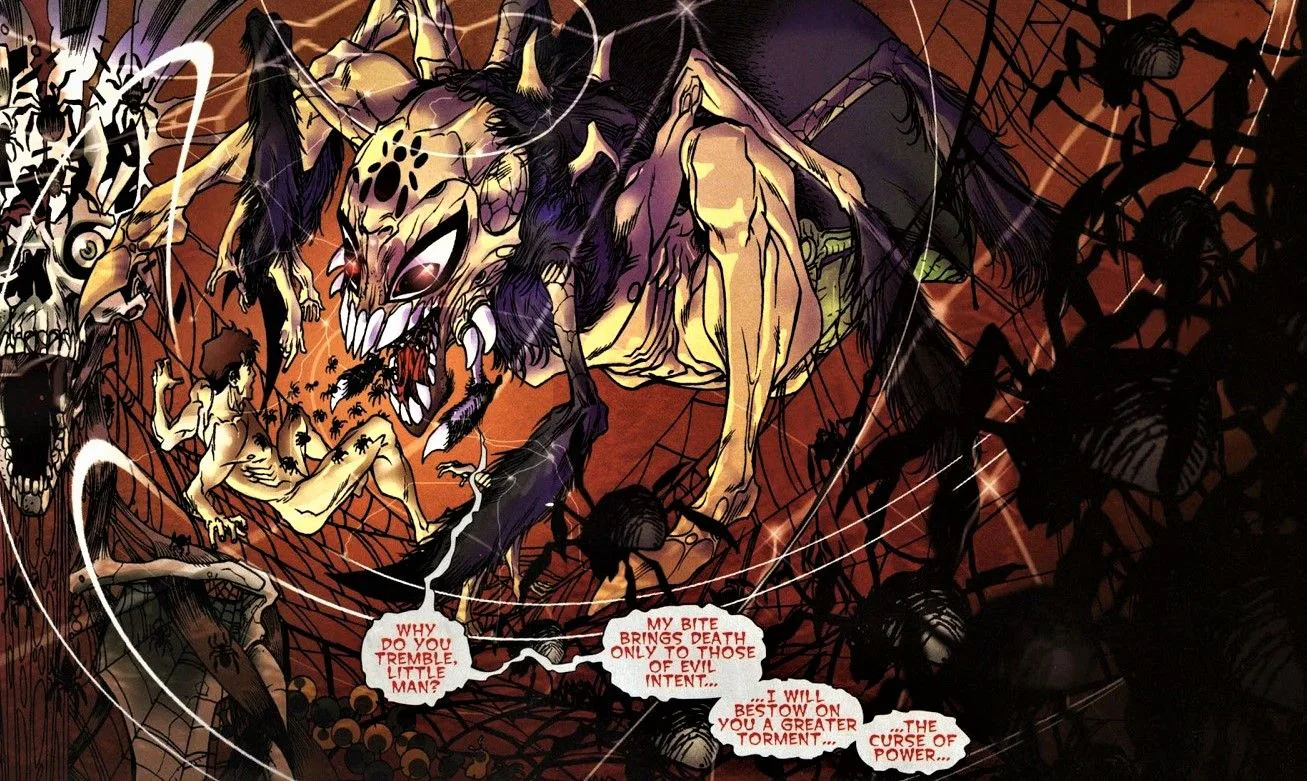
In service of uncovering the secrets of wealthy industrialist and crime boss Norman Osborn, Peter breaks into a warehouse filled with smuggled artifacts, and is accidentally bitten by a spider that crawls out of a carved idol of an ancient Mesopotamian spider-god. That god, Ereshkigal, bestows upon him supernatural powers and weaponizes him as an instrument of vengeance, a role he takes almost immediately upon discovering that his mentor has also been murdered at the behest of Norman Osborn. Peter creates a costume using pieces of Uncle Ben’s pilot uniform, and teams up with Urich’s ex-lover, Felicia Hardy (owner of the Black Cat Club) to wage battle against Osborn.
Initially, Spider-Man Noir (referred to in-story as “the Spider-Man”) is a far more hardened and callous version of the character, willing to use firearms and outright end criminals he felt were deserving. His violent edge was responsible for Aunt May (an anti-establishment working class activist in this version) growing to hate the vigilante for what she felt like were ruthless methods that made him no better than the criminals he hunted, which prompted a change of heart that prevented him from murdering Norman Osborn. Eventually the character met his demise in 2018’s Spider-Geddon crossover event only to be resurrected in an ongoing series in 2020, with his characterization subtly altered to more closely resemble Nicolas Cage’s animated counterpart in Into the Spider-Verse.
How Does Spider-Noir Compare?
Unlike the brutal agent of retribution created by David Hine, Fabrice Sapolsky, and Marko Djurdjević, Nicolas Cage’s live-action version of “the Spider” is comparatively more akin to traditional depictions of Spider-Man: fairly restrained and more on the side of “superhero” than “vigilante,” making the kinds of quips and wisecracks most would expect from the character. When we meet him in the show’s first episode, his alter-ego is Ben Reilly (a name lifted from Peter Parker’s heroic clone Scarlet Spider in true Marvel Comics canon) and he’s a private investigator mostly investigating marital indecency like Jack Nicholson in Chinatown. The change allows Cage to lean into one of the most recognizable established tropes of film noir, the world-weary PI (think Phillip Marlowe or Sam Spade), and it also allows the show to engage with the narratives of criminal and political corruption so inherent to the genre.
His day job isn’t the only major change though, this version of Spider-Man Noir’s entire origin is radically different. In Episode 5 we discover that Ben Reilly is actually an alias, adopted by Sergeant Peter Parker shortly after the end of his service in WWI. During the liberation of a German camp of American POW’s, Parker discovers that the soldiers had been genetically experimented upon, developing grotesque and preternatural mutations as a result. While attempting to free them, Peter/Ben is bitten by one of those mutated soldiers (who bears a striking resemblance to Peter’s uncontrollable Man-Spider transformation in the comics), and inevitably develops the superpowers that turn him into the Spider.
For the most part, the Spider-Noir TV show is a pretty radical reimagining of what is already a pretty radical reimagining of Spider-Man, but it mostly works in the show’s favor. While it would have been interesting to see an actor with a style as unhinged as Cage’s play a much more ruthless depiction of the character, the alterations allow the show to strike a balance between the Spider-Man that pop culture knows and loves as well as the identifiable signifiers of film noir’s impact on that same pop culture. If the show gets a second season, it would be the perfect opportunity to sift through the source material and adapt some of the comic’s wilder variations of Spider-Man lore and introduce more people to the eccentricities of one of superhero comics’ most fascinating alternate universes.