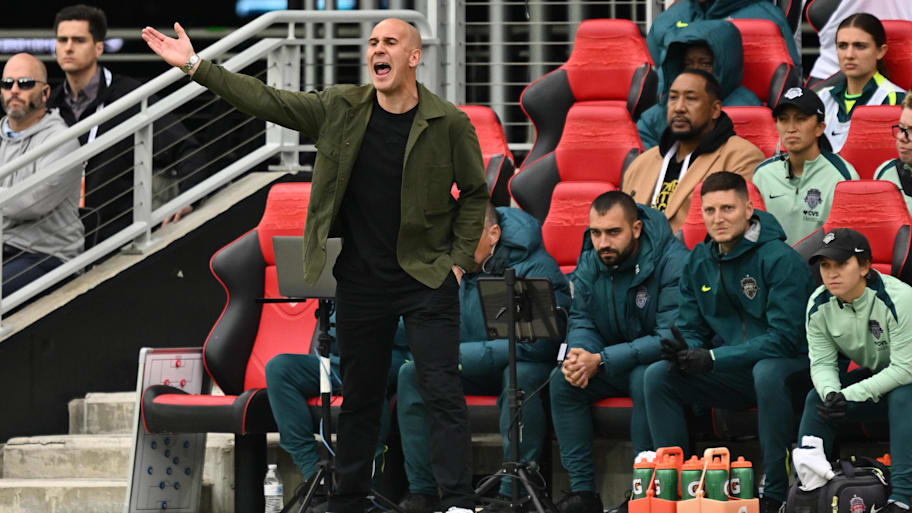
SAN JOSE, Calif. — As the American and Mexican women’s seasons both come to a close this weekend, four Spanish managers will clash in North America’s two biggest women's club soccer matches.
In the National Women’s Soccer League’s 2025 Championship Final on Saturday, Juan Carlos Amorós will lead NJ/NY Gotham FC against Adrián González and the Washington Spirit. While in Liga MX Femenil, the 2025 Gran Final Apertura will see Pedro Martínez Losa’s UANL Tigres face off against Ángel Villacampa and Club América.
In Mexico, Gran Finales are played over two legs, home and away. On Thursday night, Tigres and Club America played the first leg in Mexico City. It was a breathtaking 3–3 draw, with Tigres storming back from 3–0 down at halftime to snatch a draw ahead of the second leg at their home, the Estadio Universitario, on Sunday.
These finals also come after Amorós and Losa met in the final of the 2025 Concacaf W Champions Cup, which Gotham won 1–0.
So, why are Spanish coaches dominating the women’s club game in North America?
Journeys from Spain
The migration of these Spanish managers to North America started in 2022. Strangely enough, Amorós first arrived with the Houston Dash in the NWSL and Villacampa with Club América in Liga MX Femenil within days of each other in June 2022. They both became the first Spanish managers in those respective leagues.
Over the last four seasons, Amorós has quickly become one of the most successful managers in NWSL history. After taking the Dash to the playoffs for the first time in their history, Amorós went to Gotham and took them from the bottom of the standings to winning the 2023 NWSL championship in his first season.
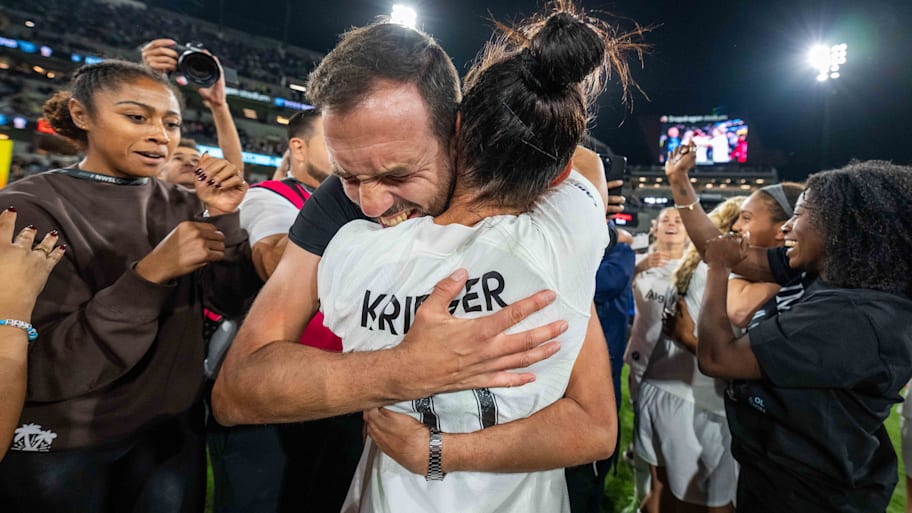
After delivering Gotham’s best-ever regular season performance in 2024, and reaching a semifinal, Amorós has taken the club back to the final in 2025 despite an eighth-place finish in the standings. The 41-year-old Spaniard has six playoff wins to his name and was handed a five-year contract by Gotham at the start of this year.
Before Gotham, Amorós began his professional coaching journey in England with Tottenham Hotspur in 2011. He was there for a decade before returning to Spain to manage Real Betis for one-and-a-half seasons.
Amorós’s opponent on Saturday, González, came to the Spirit from his hometown club of Espanyol, in Barcelona, in January 2024. He was first the interim Spirit’s manager until another Spaniard, Jonatan Giráldez, arrived after winning the 2023–2024 UEFA Women’s Champions League with FC Barcelona in June 2024. After one year with the Spirit, Giráldez moved on to OL Lyonnes in France, and González was promoted to manager.
The Spirit posted back-to-back second-place finishes and reached consecutive playoff finals in 2024 and 2025. González boasts an exemplary record of 16-6-8 during that time. Despite turning to coaching at just 24 in 2013, González didn’t manage a professional senior team until working his way up the youth ranks to the senior team at Espanyol in 2023.
Over in Mexico, Losa’s coaching journey has taken him all over the world. He was named the manager of Tigres in January 2025 after stints in charge of the Scottish women’s national team from 2021–24, Bordeaux in France's Premiere Ligue from 2019–21, Arsenal in the English Women’s Super League 2014–17, and before that, he served as an assistant in the NWSL at the Western New York Flash for two years.
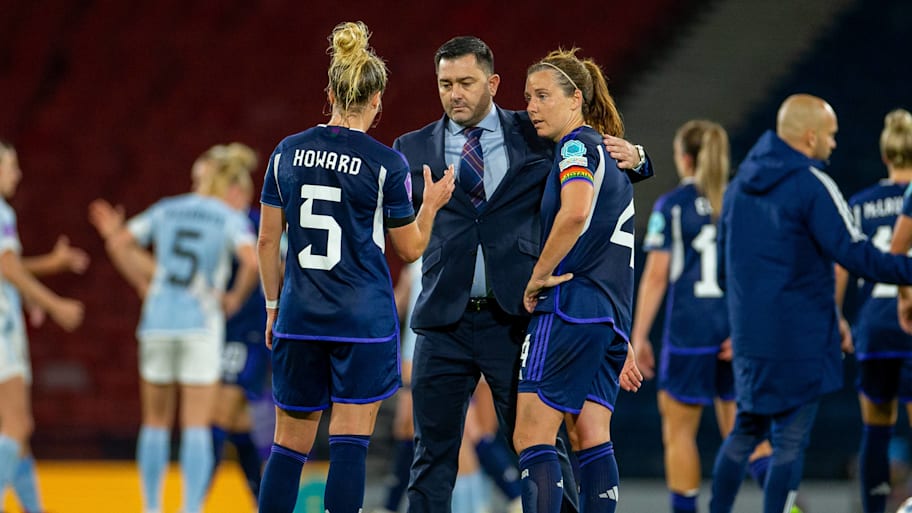
Losa exploded onto the Spanish managerial scene with his hometown team, Rayo Vallecano, in Madrid, between 2007 and 2011, taking the small Spanish team to the top division in Spain while becoming the first Spanish team to play in the UEFA Women’s Champions League.
“I owe everything I am to my time at Rayo. Above all, to the players, because without them there would be none of what has happened to me since,” Losa told The Coaches' Voice in 2024.
With Tigres, Losa has gone from disappointment to delight. His first tournament, the 2025 Clausura, saw the Nuevo Leon club produce its worst-ever regular season, finishing fifth, as it went on to be knocked out of the quarterfinals of the playoffs by local Monterrey rivals Rayadas.
But, in his second tournament, Losa and Tigres topped the standings, losing just one game, and are now back in the Gran Final for the first time since 2024, with the opportunity to win Tigres a seventh Liga MX title.
Of all four managers, Villacampa actually is the one who has spent the most time managing in his home country. Between 2017 and 2022, Villacampa took charge of Atlético Madrid, Athletic Bilbao and Levante before crossing the Atlantic.
While the expectations at Club América are very high, Villacampa has been broadly successful. He is the first manager to take a team to six Liga MX Femenil Gran Finales; however, he has lost four of those so far, with Club América’s only trophy lift coming in 2023.
Connections and representing Spain
Perhaps unsurprisingly, these managers are very familiar with one another—both personally and on the pitch. And Amorós is at the heart of those connections.
Speaking to Sports Illustrated in San Jose, Calif., ahead of the 2025 NWSL final, González smiles when he remembers arriving in the United States in 2024 and receiving a text from a Spanish number.
“He just texted me, said ‘Hey, I’m Juan Carlos [Amorós]. I’m here. Whatever you need. Welcome to America.’ He was open, and I really appreciated that, because coming from another country at the beginning, I was just kind of new. Coming here alone, it was really good to have that connection and communication,” González says.
Spirit at Championship Media Day = good energy only 📸🤪#NWSLMediaDay | @canonusa pic.twitter.com/NHfpH6p61r
— National Women’s Soccer League (@NWSL) November 21, 2025
González and Amóros shared an embrace and a short conversation on Wednesday in San Jose at the NWSL Awards. The two Spaniards congratulated each other on reaching the final. The feelings of respect and appreciation are mutual.
“My mom and dad always taught me that treat other people how you want to be treated. And I think this is coaching world is crazy. But obviously the coaching world in America is even crazier,” Amorós tells SI, reflecting on his desire to connect with other Spanish coaches.
”If I can help or support in any way. I’m the experienced one. We are enemies on the pitch, but you know, we are. We share the same job, the same passion and everyone knows how difficult this job is.”
Amorós has also had the unique experience of facing off against all three of the other Spanish managers in this year’s finals. Amorós and Gotham won the inaugural Concacaf W Champions Cup in 2025, defeating Villacampa’s Club America 3–1 in the semifinal and Losa’s Tigres 1–0 in the final.
Amoros has immense pride in representing Spain and Spanish soccer as a manager, and also for what his opponents on the other touchline are doing for his homeland.
“I definitely feel like I represent the Spanish game and the coaches, because that’s where we grew up. That’s what we are,” Amorós said. “Spain is, at the moment, in a very good place in terms of men’s and women’s football. I think, you know, the way, probably that we see the game is maybe a bit different, I don’t know. For me, it’s very special.”
Tactics and adaptation
In contrast to this, González found it hard to totally adopt a “Spanish style” and said he believed that his soccer represented the Spirit and Washington, D.C., more than anything else.
“To be honest, I don’t, I don’t like saying that I’m representing the Spanish coaching style, because Spain is so big and everyone has maybe a different approach and different playing style,” González says.
“We are creating our own identity, something that I do believe is not my way. It’s our way as a club, as a team. There are a lot of ingredients from all around. It’s not just about the coach’s idea. That’s just a little piece. Everything around it builds what we are seeing now.”
Of course, no two people’s journeys are ever the same. Losa and Amorós, who both grew up in Madrid, have been shaped by their time in the United Kingdom. Following suit, their style of soccer has adapted elements of the country’s physical style and wing-play.
Both Tigres and Gotham have tactics to overpower teams, yes. But both have also increased interest in more direct play and off-ball pressing systems over traditional Spanish short passing, ball control, and tiki-taka.
“Ten years in the English game, that had a big impact on who I am as a coach, especially because at Spurs, they do a lot of things a bit differently. That is part of me, too. At the end of the day, that is when I started to understand the game,” Amorós says.
Part of Losa’s style as a manager comes from working at Arsenal at the same time as men’s manager Arsène Wenger. The way Arsenal men promoted young players to the first team influenced him on the women’s team, and it was Losa who helped to develop players like England captain Leah Williamson from the academy to the professional game.
“I will never forget those words from Arsène [Wenger], because they were reassuring and gave me confidence in my work. He always treated me impeccably,” Losa said.
In some ways, Villacampa may represent the most traditional Spanish style, one that puts attacking with the ball at the forefront of a team’s objective. It asks: How can we maximize what our best players do rather than trying to negate what the opponent is trying to do?
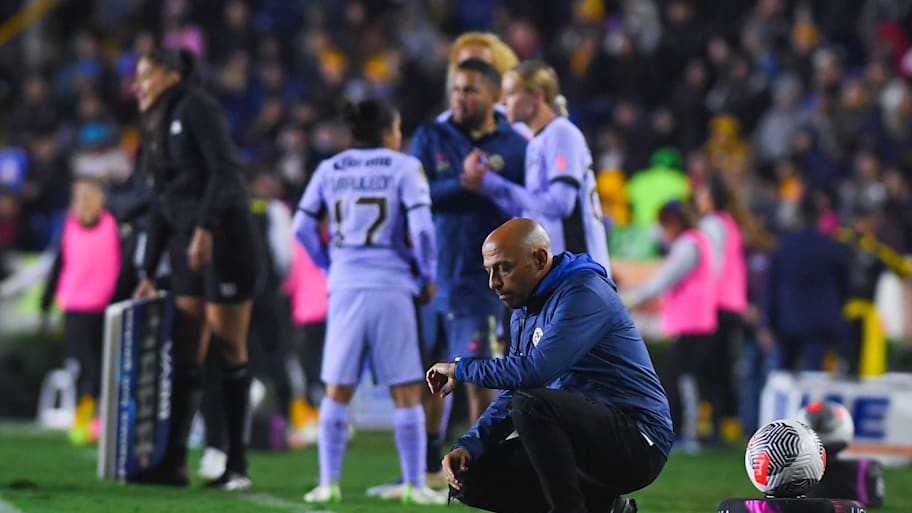
On-ball chance creation and attacking fluidity are game aspects that both Villacampa and Gonzàlez share. Both America and Spirit have pivoted with switching between a back-three, with wing-backs, and a more traditional back four.
“Alternating between positions makes us richer in tactics, regardless of who plays. What we always want is mobility, that exchanging of positions that can create danger,” Villacampa said about his tactics in a press conference on Tuesday.
More opportunities for Spanish women
Whatever happens this weekend, Spanish managers will lift the biggest trophies in North American women’s soccer. While each one will bring their own unique spin, it will be a male manager lifting the top trophies in the women’s game.
Mila Martínez was the first Spanish woman to manage in Liga MX Femenil, first with Juárez in 2022 and then with Tigres, where she won a title in 2023 before being replaced by Losa at the end of 2024. The NWSL is yet to have a Spanish woman as manager, but Amorós believes it won’t be long.
“They are coming. Natalia Arroyo is doing a great job with Aston Villa and Sonia Bermúdez with the national team,” Amorós says. “We need more female coaches. I think we’ve always had the same issue in every country. I think that is going to be a generation now of players that retire and will embrace that role, hopefully.”
More NWSL on Sports Illustrated
This article was originally published on www.si.com as How Spanish Managers Are Dominating Women’s Soccer in North America.