In Athens, history isn’t neatly boxed into museums, monuments and ticketed attractions. The past doesn’t always announce itself with barrier ropes or a plaque – it’s revealed quietly, woven into the fabric of everyday life. Having moved to Athens from the UK in 2008 for a warmer lifestyle, I’ve found this to be one of the most distinctive pleasures about living in the city: the sense that modernity is permanently in conversation with the ancient. I still find I’m discovering new examples of ancient history hidden in plain sight in this sprawling city with its distinctive and varied neighbourhoods.
Take pedestrianised Ermou Street, the city’s main shopping artery that is consistently ranked among the most expensive retail streets in Europe. At first glance, it’s all international brands, and it is frenetic with hurried commuters and tourists. Yet halfway along, pedestrian traffic and chatter dim around a small, Byzantine domed church: Panagia Kapnikarea.
Built in the 11th century, it predates the surrounding buildings by nearly a millennium. Shoppers jostle for fitting rooms, and delivery bikes weave through pedestrians, yet Kapnikarea serenely surveys all around her, with frescoes and stonework largely unchanged since the Middle Ages. Locals pass it daily without a second glance; though visitors – including myself upon first arriving here – stop to admire how majestic the church is.
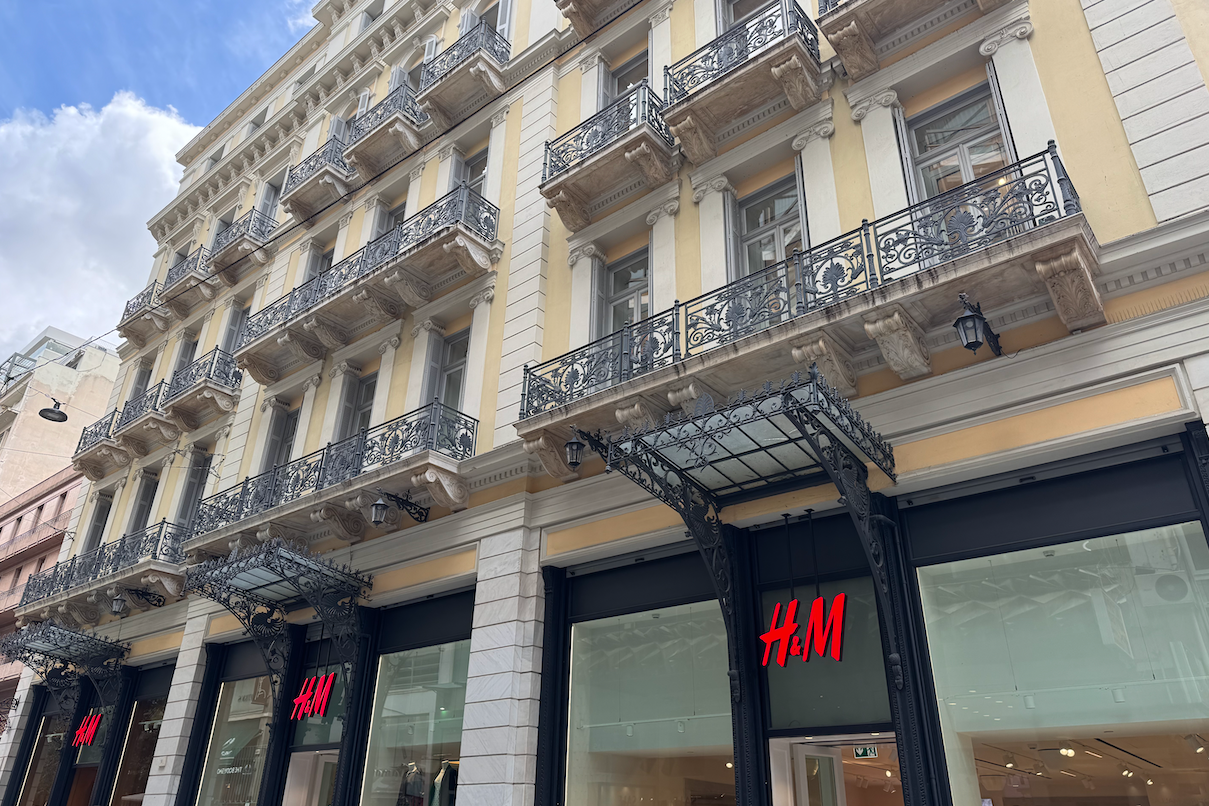
Nearby, H&M occupies one of Ermou’s grand neoclassical buildings, originally intended to be Athens’s first luxury hotel in the late 19th century. With its elegant facade, high ceilings and cornicing, the building gives hints at the ambition of a newly independent Greek state, eager to present itself as a modern European capital. Today, shoppers browse rails of Swedish affordable fashion inside the architectural marvel – another reminder that buildings here rarely have just one life.
A few steps away on Stadiou Street, another unlikely archaeological encounter awaits inside the Zara store. At the entrance, a reinforced glass floor reveals Roman remains beneath shoppers’ feet – part of an ancient complex believed to date back nearly 2,000 years. Browse the new season’s collections while gazing down at fragments of walls and tombs from the Roman era, preserved in situ.
The layering of old and new becomes yet more evident at the foot of the ancient citadel, the Acropolis. Before even entering the Acropolis Museum, and without paying an admission fee, visitors can walk over extensive glass walkways revealing the remains of an ancient Athenian neighbourhood below.
Read more: The best Greek island hotels
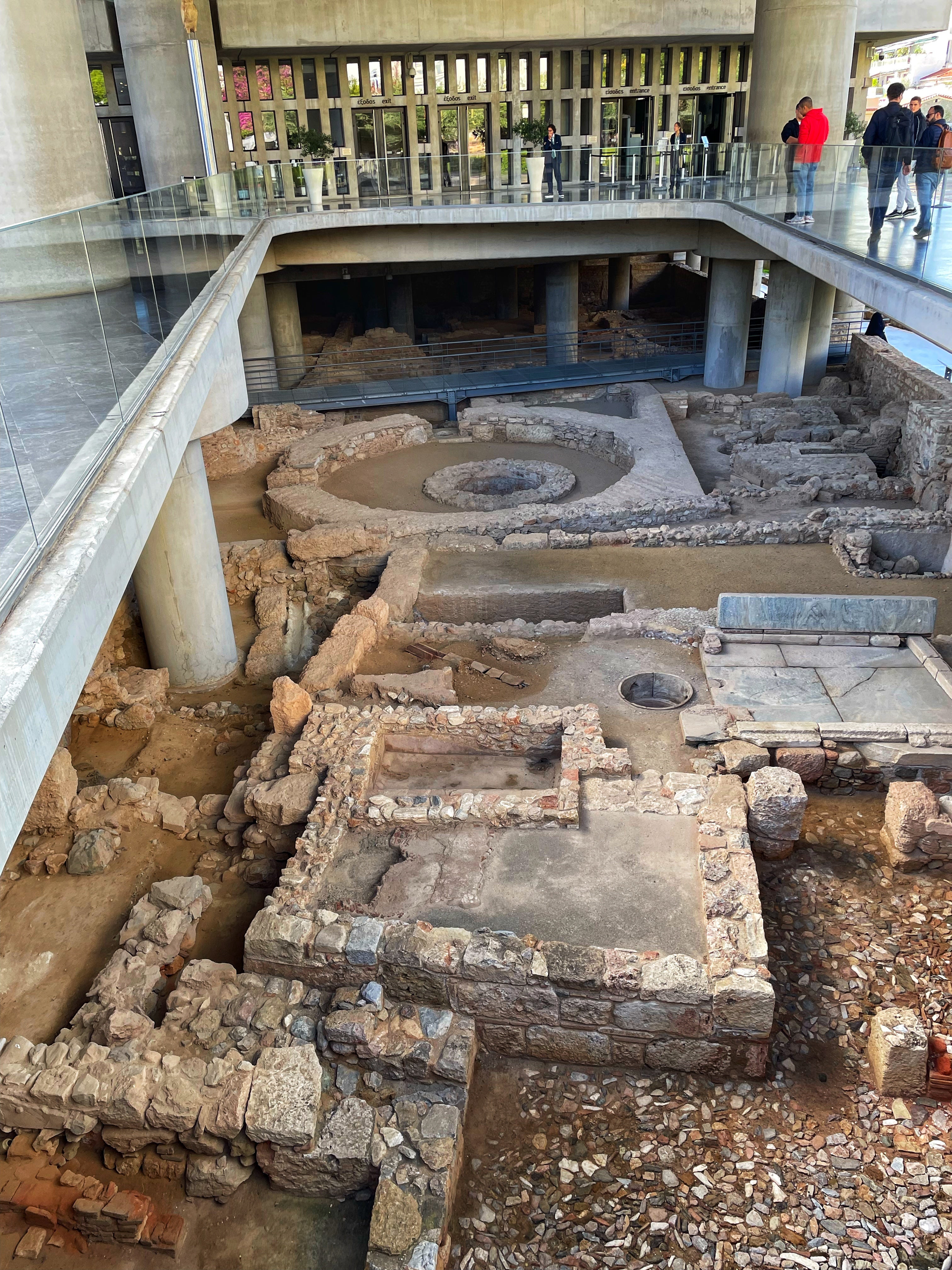
Excavated during the construction of the museum, the site includes houses, workshops, streets and early Christian bath complexes dating from classical times through to the Byzantine era. It’s an open-air archaeological park disguised as a museum forecourt and one of the city’s most overlooked free attractions.
The same philosophy extends underground. Athens’s metro system doubles as an archaeological exhibition, the result of extensive excavations carried out during its construction in the 1990s and early 2000s.
At central Syntagma station, the metro stop by the Greek parliament, many artefacts and remnants of the former architecture – including ancient wells, burial sites, pottery and sections of aqueduct – are displayed in glass cases within the ticket hall. It means they can be viewed before commuters pass through barriers or pay for a journey. There are layers of history arranged like a vertical timeline spanning classical, Roman and Byzantine eras, though most people rush past without even noticing.
The Monastiraki neighbourhood, situated beneath the Acropolis, has a Metro that hides its most remarkable feature beyond the ticket gates. On the concourse level, above the tracks and behind the Line 1 (Green Line) northbound platform, an archaeological exhibit preserves part of the ancient Eridanos river system. A second-century AD vaulted brick channel remains visible via a 24-metre glass bridge, with water still flowing through – a rare example of ancient infrastructure still functioning (but not in use) today.

Above ground, still in Monastiraki, the blending of old and new continues at The Art Foundation (TAF), an atmospheric courtyard bar housed in a former 19th-century prison. Once used to detain political prisoners and debtors, the cells have been repurposed as a cultural space hosting art exhibitions, all overlooking the shady courtyard. Here, on warm afternoons and evenings, Athenians and those in the know gather beneath its cooling trees to chat over cocktails. The transformation is symbolic of the city itself: adaptive, creative and unafraid to reinvent its past.
During my time living in Greece’s capital, what has made these encounters so compelling is their ordinariness. None require booking, specialist knowledge or, in many cases, even a ticket. You simply notice them – or not.
Many Athenians have walked over the same ruins for decades without giving them much thought. For visitors, however, the experience is unique. Few capitals offer quite so many moments where history intersects with daily routine.

Read more: I cruised around eight Greek islands last summer and these were my favourites
This seamless coexistence is actually partly practical. Athens is built on millennia of continuous settlement; digging almost anywhere uncovers significant ruins. But it also reflects an attitude. The past is respected, certainly, but it’s not cordoned off from contemporary life. Instead, it’s absorbed into it for all to enjoy.
For travellers accustomed to prioritising the Acropolis, the National Archaeological Museum and the Ancient Agora, Athens’ history hiding in plain sight is an alternative way to experience the city. By paying attention to shop entrances, metro corridors and side streets, the city is akin to a reused parchment – a manuscript written, erased and rewritten countless times. These in-between spaces reveal Athens’ true character. You might arrive here planning to buy souvenirs and tick off landmarks, yet leave having glimpsed the layers beneath your feet, which you wouldn’t have known existed until you were here.
In my opinion, the greatest luxury Athens offers isn’t its access to one of the world’s richest histories; it’s the fact that you can encounter it as you simply go about your day.
How to do it
Numerous airlines fly to Athens from UK airports, including easyJet, Jet2 and BA. Flights take around three and a half hours.
Where to stay
The Athens Flair hotel is conveniently located in the centre of the city and has a private sun terrace for guests. Prices start at £168 per night.
Where’s hot in April? Seven sunny holiday destinations in Europe and more
How this quiet Greek Island became a perfect romantic hideaway
I found a hotel in Crete that ticks the boxes for a fun-filled family holiday
This overlooked region of Greece is perfect for a chilled-out short break
Why you should swap Santorini and Mykonos for this peaceful Greek island
The incredible Greek island where travellers can escape the tourist crowds – even in peak season