For many people lettings agents mean astronomical administration fees. But a new type of lettings agent is emerging and social enterprises are at the forefront of the trend.
David Beaken, the recently appointed manager at Sussex Student Lettings, is among this new breed. He has been an estate agent in Brighton for several years and he knows all too well that some tenants and landlords have had bad experiences of corporate letting agencies. "I am not a pink tied, branded BMW Mini type of agent," he insists.
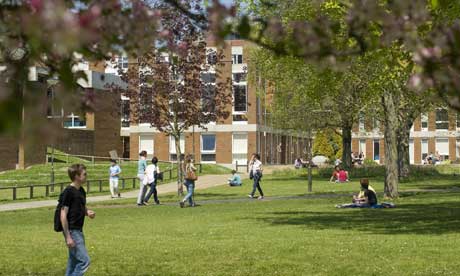
Sussex Student Lettings is a social enterprise established by the University of Sussex's Student Union to meet a recognised need for an affordable, student focused letting agents in the Brighton area. It charges landlords a competitive rate, but does not require students to pay a fee. All profits go back into the student union.
Beaken's boss John Houlihan, the union's assistant director of commercial and central services, explains that this need was first highlighted by a survey that revealed high levels of dissatisfaction from students with lettings agents.
Complaints from students included the poor management of homes, administration fees of up to £150 per person and exploiting international students by charging for photocopying and other services. Houlihan suggests that many complaints about "student ghettos" can be blamed on poor management, such as not informing tenants of bin collection days.
"We are uniquely placed to deal with any problems," he says. "We have that existing relationship with the students and if there are any problems there is a whole range of support and advice services within the union. This way the tenant feels they are being looked after and the landlord feels that we have earned the fee that they pay."
This model of a social letting agency is starting to win admirers. Last month Labour's London mayoral candidate, Ken Livingstone announced that if elected he will establish London-wide non-profit letting agents as a mechanism to intervene in the private rental market.
"It will put good tenants in touch with good landlords across the spectrum of private renting so that both can benefit from security of tenure and reduce the costs of letting," Livingstone said at the time of the announcement. "I want to end the churn-and-burn approach of some of the private letting agents, so I will be tackling abuses in this area."
The homelessness charity Crisis has been highlighting what it calls "local lettings agencies", whose remit are to produce sustainable, affordable tenancies. Crisis has produced a practical guide to local lettings agencies and how they can provide access to the private rental sector while generating an income for their parent organisation.
The guide suggests that a social enterprise is one model that could work for this type of letting agency. The advantage of the social enterprise model include its ability to respond to emerging business opportunities and the fact it can attract funding from a wider range of sources.
Devon Homes4let is one of the social enterprises mentioned in the Crisis guide. Established and operated as a separate entity by the homelessness charity PATH at the end of 2008, it works with tenants that commercial agents would normally turn down. These include housing benefit recipients and people at risk of homelessness.
PATH's director Mike Taylor says one of the benefits of being a social enterprise is the access to affordable start up finance. He says that the organisation is now self-financing and has more than 100 properties on its books. He says that social letting agencies "are an idea whose time has come".
Taylor says that Devon Homes4Let is receiving calls from people in other parts of the UK wanting advice on setting up a social letting agency so he is confident that popularity of this concept is growing. PATH has also established a sister agency in Plymouth plus a team to offer support exclusively to tenants renting through the agency.
Tenant welfare is also at the heart of Sussex Student Lettings operations. One initiative is to train students as advisers and employ them on a casual basis to accompany students on viewings and offer them impartial advice and support.
"No other agents do that," claims Houlihan. "We are going to be using people who have been through the process of renting and have been trained to help students make a more informed choice. We have three aims as a social enterprise – to provide services for students, jobs for students and income for the students union."
The agency was only established in the summer (2011), but Houlihan says that he is delighted with the response from landlords so far. "We only need 2-3% of the student market to have a profitable business and I am confident that we will get that over the next 18 months," he adds.
The prospect of a sustainable – or even profitable future - for social entrepreneurs in the private rental market begs the question why they didn't get involved much earlier. A spokesperson for Social Enterprise UK suggests social entrepreneurs' hesitancy to enter this market to date may be because it is a difficult one to break into.
"I am delighted that social enterprises are finding a place in the private rental sector," the spokesperson says. "The housing market is difficult, especially rental, but it is a great place for social enterprises to be working. Often in the most difficult areas they can be at their most innovative."
This content is brought to you by Guardian Professional. To join the social enterprise network, click here.