On Peru’s dry coastal plains, where farming has always depended on careful management of scarce resources, an unlikely material appears to have played a major role in shaping one of the region’s most influential pre-Inca societies. Seabird guano, collected from offshore islands and carried back to fields, may have helped the Chincha kingdom transform difficult desert landscapes into productive farmland. New archaeological evidence suggests that this natural fertiliser supported larger maize harvests, strengthened trade networks and contributed to the wealth that made the Chincha a major force along Peru’s Pacific coast before their incorporation into the Inca world.
Get breaking news anytime, anywhere. Download the TOI app now!
How seabird waste became a lifeline for desert farmers
The Chincha people lived in the Chincha Valley, a coastal region where agriculture was possible but demanding. Rainfall was extremely limited, and farmers relied on irrigation systems to grow crops in an otherwise harsh environment. Over time, repeated cultivation and water use reduced soil nutrients, creating a need for ways to restore the land.
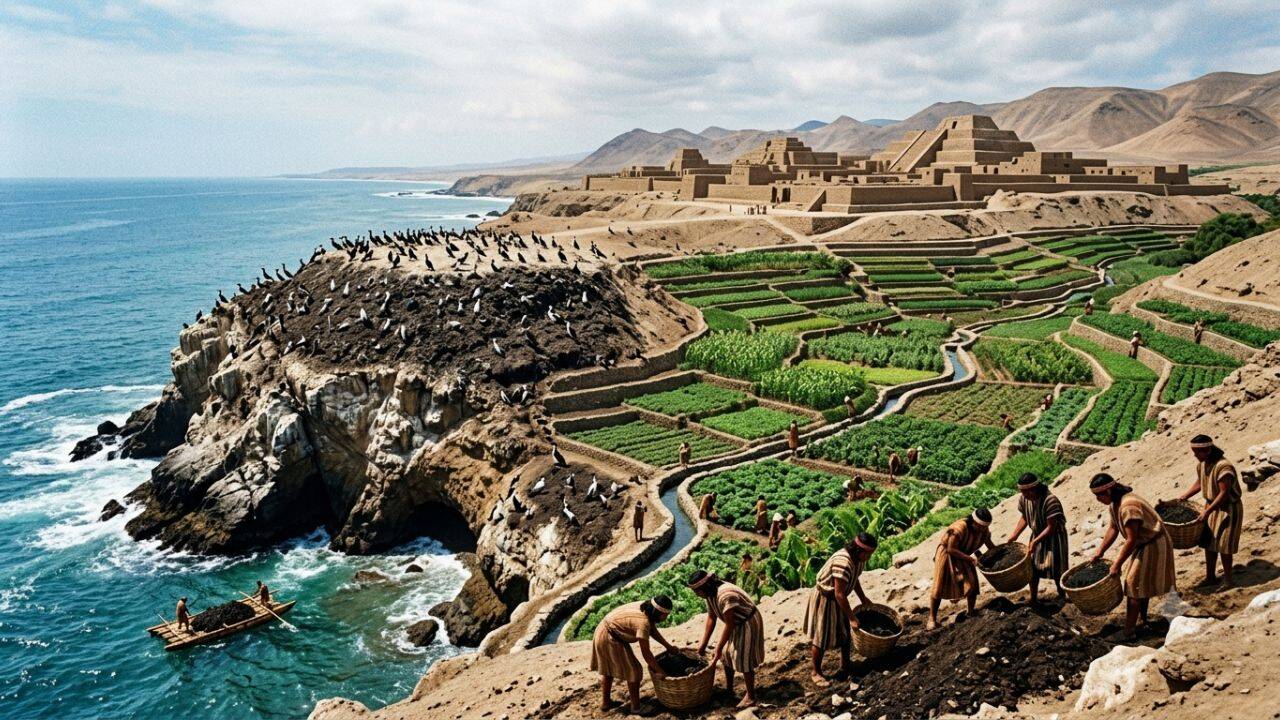
The answer came from the ocean. Islands located off the coast were home to large colonies of seabirds, including Peruvian boobies, pelicans and guanay cormorants. Their accumulated droppings formed deposits of guano, a fertiliser rich in nitrogen because of the birds’ marine-based diets.
For coastal communities, this was far more than a waste product. It was a resource that connected the sea with agriculture, allowing farmers to maintain productive fields and increase the amount of maize they could grow.
Chemical clues hidden in ancient maize
According to the study published in PLOS One, titled ‘ Seabirds shaped the expansion of pre-Inca society in Peru ’ reveals that a team of archaeologists examined 35 maize samples recovered from burial sites in the Chincha Valley. The remains contained unusually high nitrogen levels, far beyond what would normally be expected from local soils.
The chemical signature pointed towards the use of seabird guano as fertiliser. Since the area’s natural environment could not easily provide such levels of nutrients, the researchers concluded that ancient farmers were deliberately bringing guano from nearby islands to improve their harvests.
The findings provide physical evidence for a practice that had previously been suggested through historical accounts. Records from the colonial period describe coastal communities travelling by raft to offshore islands to collect bird droppings for their fields.
The research also adds to evidence that agricultural knowledge in the Andes involved careful observation of natural systems. The Chincha were not simply farming the land; they were managing a relationship between marine resources, soil health and crop production.
Maize, trade and the growth of Chincha influence
The extra food production made possible by fertile fields helped support a larger and more complex society. Surplus maize could sustain farmers, fishermen, merchants and specialists whose activities extended beyond local agriculture.
The Chincha became known as skilled maritime traders, moving goods along the Pacific coast. Their wealth has often been linked to valuable trade items such as spondylus shells, which were highly prized across the Andes. The new research suggests that access to guano may have been another important foundation of their prosperity.
By controlling knowledge of how to use this resource, and maintaining connections with the islands where it was collected, the Chincha developed an agricultural advantage that shaped their economic position.
Their success also helped explain their relationship with the Inca Empire. The highland-based Inca controlled one of the largest empires in pre-European America, but producing maize in large quantities was more difficult in their mountainous territories. Access to coastal resources and agricultural expertise would have made the Chincha an important partner.
A relationship between birds and people preserved in art
The importance of seabirds appears not only in archaeological chemistry but also in the artwork left behind by ancient coastal communities.
Images of birds, fish and growing maize appear together on textiles, ceramics and other objects from the region. These designs suggest that seabirds were not viewed only as a practical source of fertiliser but were also connected to cultural ideas about agriculture, abundance and the relationship between land and sea.
Objects such as ceremonial tools decorated with seabird imagery show how deeply these connections were woven into daily and ritual life. The repeated appearance of these themes indicates that communities recognised the significance of the ecosystems they depended on.
Guano and the politics of ancient Peru
The value of guano continued long after the Chincha period. Centuries later, seabird deposits became a major economic resource during the 19th century, when Peru’s guano industry expanded internationally.
But the new archaeological work highlights an earlier chapter in the history of this material. Long before industrial mining and global trade, Andean communities had already developed sophisticated ways of using seabird waste to improve agriculture.
The Chincha kingdom’s influence appears to have come not only from possessions or trade goods but from an understanding of how different parts of their environment worked together. Their access to the sea provided a resource that strengthened their fields, and those fields supported the growth of their society.