Surgeons can safely perform two common operations from distances of up to 1,700 miles, a new study has found.
This remarkable capability is akin to a medic based in southern Europe operating on a patient in the UK.
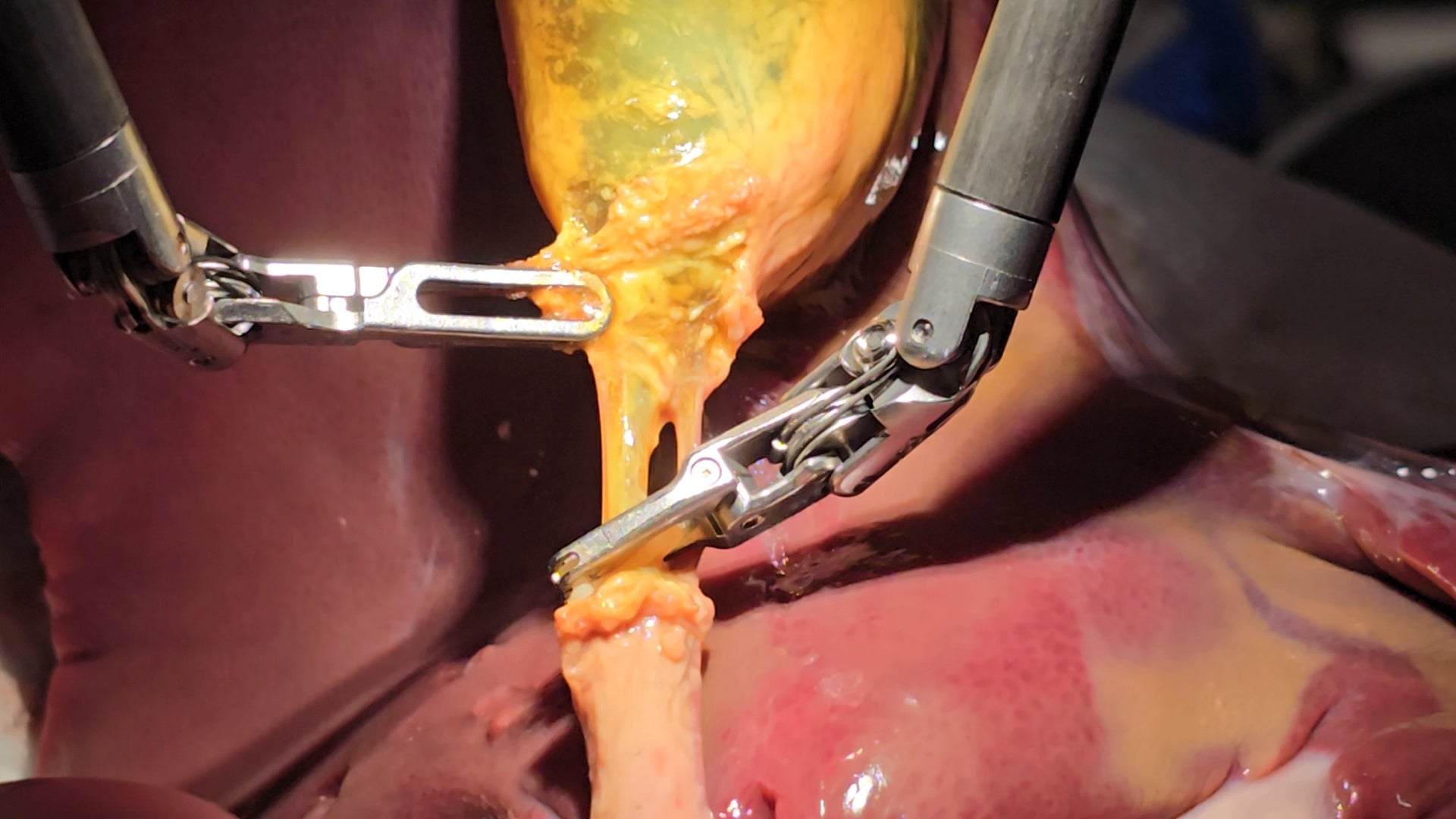
New research delved into telesurgery, a cutting-edge technique that allows medical professionals to operate on patients remotely using a surgical robot connected via a secure video-link.
Academics in China initiated the study, highlighting that robust evidence on this method has previously been "scarce".
Their primary aim was to ascertain whether telesurgery could achieve results comparable to, or "non-inferior" to, those from robotic-assisted surgery performed locally. The specific procedures investigated were prostatectomy, the surgical removal of the prostate gland, and partial nephrectomy, which involves the removal of a kidney tumour.
Some 72 patients were randomly assigned to be given telesurgery or local surgery, with the main measure of success the outcome of the surgery.
The researchers found telesurgery “was not inferior to local surgery in terms of the probability of surgical success”.
The telesurgery system was stable with a distance from 1,000km-2,800km – or 621-1,740 miles – they found.
Writing in The BMJ, the authors said: “Telesurgery has evolved over more than three decades, progressing from conceptual inception to advanced clinical exploration, however, despite the accumulation of many single arm and uncontrolled studies, robust evidence confirming its reliability remains scarce.
“As the first randomised controlled trial in the field of telesurgery, this study establishes that its reliability is non-inferior to that of conventional local surgery.”
They highlight the importance of the finding in rural hospitals which lack specialist surgeons, and for care for people in disaster or war zones.
But they also called for much larger studies to confirm their findings.
Commenting on the study, Naeem Soomro, professor of urology and member of council of the Royal College of Surgeons of England, said: “Telesurgery is an exciting advancement which offers surgeons greater flexibility, access to specialist expertise, and the ability to operate remotely using advanced robotic systems in real time, even from the other side of the world.
“This study provides a useful perspective on whether telesurgery could be as reliable as standard robotic surgery.
“However, while early findings suggest that telesurgery may be feasible for selected urological procedures, caution is needed before any wider adoption.
“The researchers acknowledge that clinical use remains limited and that a full assessment must go beyond technical feasibility to consider long-term clinical outcomes, cost-effectiveness, workforce training, and patient experience – areas not addressed in this study.
“The risks to patients therefore are not yet fully understood, and current findings do not yet show that it matches the safety and effectiveness of standard robotic surgery in routine clinical practice.
“Its role in the broader expansion of robotic surgery therefore remains uncertain.
“With strong governance and further comparative research, telesurgery could in time become a scalable alternative rather than simply an additional tool.”
The UK’s most deprived neighbourhoods where crime and unemployment will rise the most
Trump administration announces 15 new drugs for Medicare price negotiation program
Judge rules Massachusetts offshore wind project halted by Trump administration can continue
Teenage boy revels in ‘freedom’ after £1.65 million gene-editing treatment
Lawsuits pile up accusing weight-loss drugs of severe side effects
Two viruses emerging from animals could be the next ‘major’ public health threats