Get all your news in one place.
100’s of premium titles.
One app.
Start reading
The Guardian - UK
The Guardian - UK
Entertainment
Francesca Simon

How real Viking objects inspired Francesca Simon's new series – in pictures

Vikings: Lewis Chessmen
Snot is a berserker, and one of my favourite characters in The Sleeping Army. Berserkers were crazed warriors sacred to Woden, who wore bearskins and were absolutely fearless in battle, hence our expression, “to go berserk.” Snot likes threatening people, and his catch-phrase is, “Say that again and I’ll kill you.” This image shows three of The Lewis Chessmen on display at the British Museum's Viking exhibition, berserkers made of Walrus ivory in the late 12th century and found in Uig, Lewis, Scotland. Photograph: ©The Trustees of the British Museum
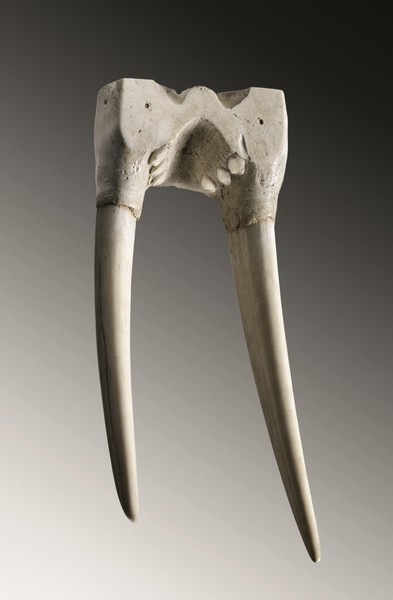
Vikings: Walrus tusks
The Lewis chessmen, who are the stars of my novel, The Sleeping Army, were carved from walrus tusk like these. Photograph: © The National Museum of Denmark
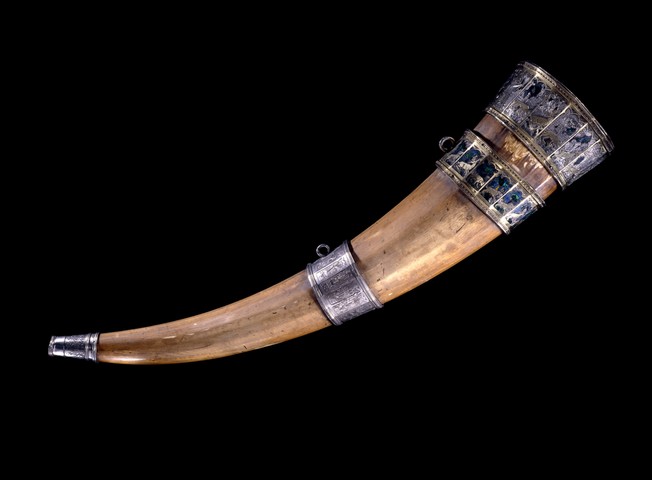
Viking: Viking horn
The God Heimdall has a famous horn which he will blow when the end of the world comes. I decided that he’d lost it, and his horn had turned up in the British Museum, which Freya eventually blows to bring the Sleeping Army—the Lewis Chessmen—to life. The horn I describe in the The Sleeping Army is much bigger than the Savernake Horn made from elephant ivory; silver, enamel, leather in the British Museum's Viking exhibition, but this little one was my inspiration for it. Photograph: ©The Trustees of the British Museum
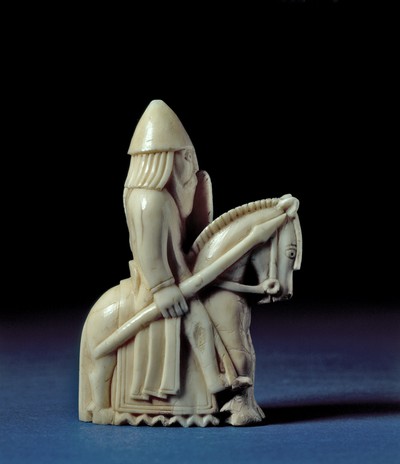
Viking: Horseman
Woden’s famous horse, Sleipnir, has eight legs. He is a key character in The Sleeping Army, and I was lucky that the long hangings on this ivory chess piece conceal his legs—there are eight hidden under the cloth of this Knight from the Lewis Chessmen from Uig, Lewis, Scotland and carved from Walrus ivory in the 12th century. Photograph: ©The Trustees of the British Museum.
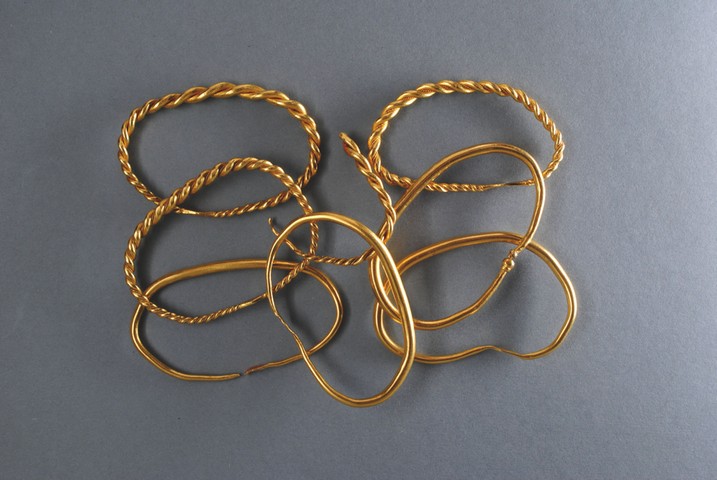
Vikings: Arm bands
At the end of The Sleeping Army, Alfi gives Freya, my heroine, a heavy gold arm bracelet like these as a thank you from the God Thor, for restoring the dying Gods to life. Leaders often gave their followers arm rings to win their loyalty. This picture shows an incredible hoard of seven Scandianavian gold arm-rings and one fragment on display as part of the British Museum's Viking exhibition, they were made in the 11th century and found in Peenemünde, Germany.
Photograph: ©Jutta Grudziecki, Kulturhistorisches Museum der Hansestadt Stralsund
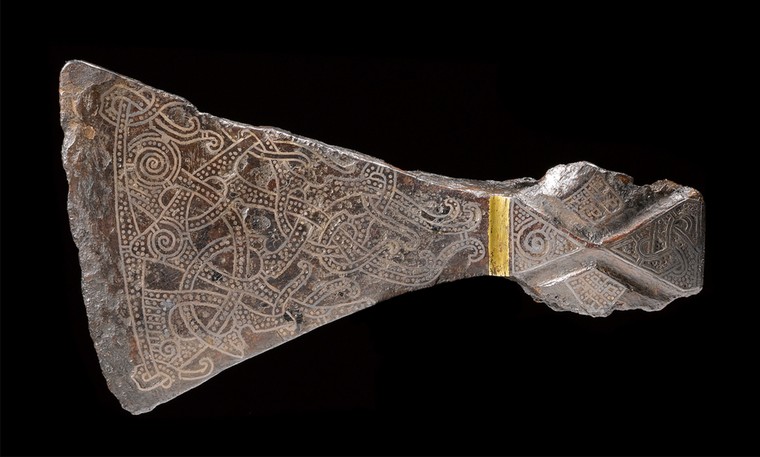
Vikings: Axe
Snot, the beserker and bad poet in The Sleeping Army, carries an inlaid, carved axe at all times just like this one in the British Museum's Viking exhibition, a silver-inlaid axehead in the Mammen style, made around 900ADs and found in Bjerringhøj, Mammen, Jutland, Denmark. Photograph: ©The National Museum of Denmark
Vikings: Thor hammer amulet
Freya wears a Thor amulet at all times. In the world I’ve created in The Lost Gods, Christianity never happened so people still worship the old Viking Gods, and the state religion is called Wodenism. This beautiful Thor hammer pendant made from silver was found Vålse, Falsster, Denmark and is on display in the British Museum's Viking exhibition. Photograph: ©The National Museum of Denmark
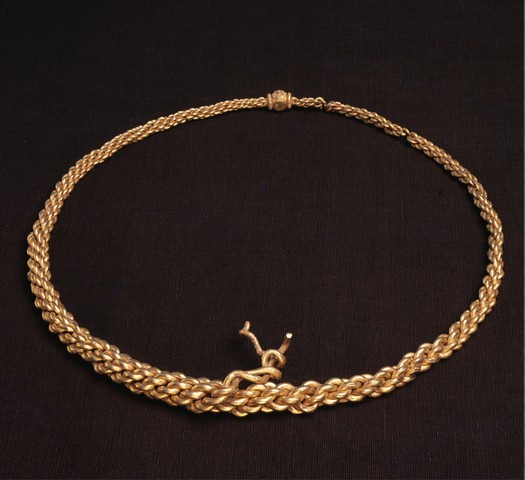
Vikings: Necklace
I love this necklace! It’s so heavy, and so bling! The goddess Freyja is one of the main characters in The Lost Gods and she wears a famous necklace, the Brisingamen, and I like to think it’s as heavy and as decorative as this one, the two kilo gold necklace on display at the British Museum's Viking exhibition. It was made in the 10th century AD and found in Kalmergården, Tissø, Zealand, Denmark. Photograph: ©The National Museum of Denmark
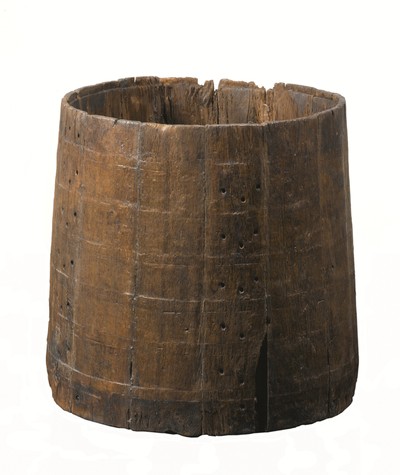
Vikings: Feasting bucket
The Monstrous child, the third book in the Mortal Gods series is about the Goddess Hel, who rules the kingdom of the Dead. She occasionally holds feasts in her dank, rain-dark hall, and uses a feasting bucket like this which can be seen in the British Museum's Viking exhibition. It was made of oak in the 10th century AD and found in Bjerringhøj, Mammen, Jutland, Denmark. Photograph: ©The National Museum of Denmark
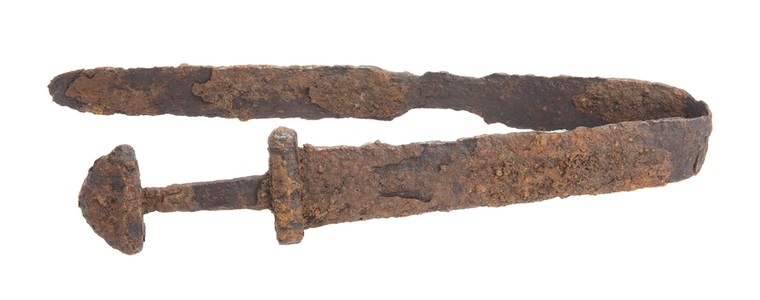
Vikings: Sword
The Goddess Hel, in the book I am currently writing, The Monstrous Child takes all the grave goods people are buried with for herself, telling the angry spirits that since she’s hosting them for eternity, it’s the least they can do for her. This incredible ritually killed iron sword was made between 800-110 AD and found near near Kilmainham, Dublin, Ireland.
Photograph: ©National Museum of Ireland/British Museum
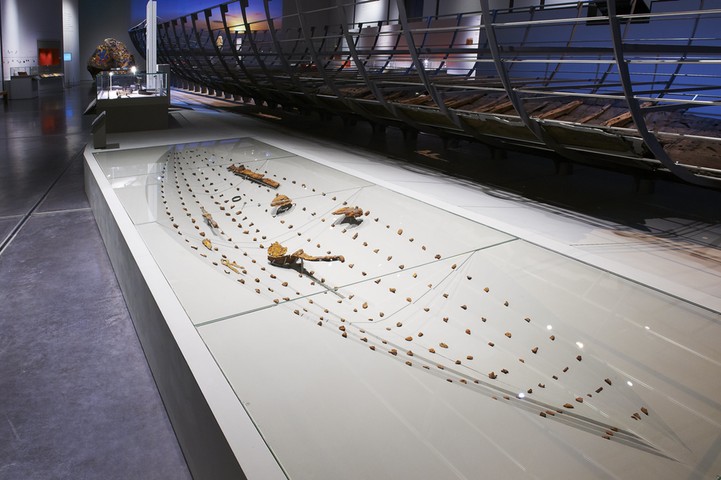
Vikings: Boat
The Viking world of the dead is cold, foggy, misty and smelly—like a gigantic burial mound. Sometimes people were buried in boats, in the belief that they would sail down into Hel. This picture shows a recreation of the Ardnamurchan Boat Burial.

If this gallery and Francesca's books make you want to find out more about the Vikings you still have time to visit the British Museum's Viking exhibition, it's free for kids (with a paying adult) and ends on 22 June 2014. Also find out more about Viking Adventures at the British Museum, a schools showing of the exhibition on Thursday 5 June and other dates at a cinema near you!
Photograph: ©The Trustees of the British Museum

Sign up to read this article
Read news from 100’s of titles, curated specifically for you.
Already a member? Sign in here
Related Stories
Top stories on inkl right now
One subscription that gives you access to news from hundreds of sites
Already a member? Sign in here
Our Picks
Fourteen days free
Download the app
One app. One membership.
100+ trusted global sources.