Up to half of treated water supplied to urban areas around the world is lost during distribution. These losses, also known as non-revenue water, cost the world’s water utilities $14bn (£9.3bn) annually, estimates the World Bank. Physical leakage is a major contributor, with some 32bn cubic metres leaking from urban water supply systems each year.
As urban populations swell and water scarcity looms - analysts predict that global demand for water could outstrip supply by 40% by 2030 at the current rate of consumption - it is clear that action must be taken to stop the leaks.
“Preventing water loss is a natural step in achieving water security,” explains Morten Riis, business development manager at Grundfos. “It simply makes sense to focus on water efficiency with the same rigour that we apply to energy efficiency.
“Existing technologies could make a difference, yet water utilities often lack access to finance or the means to implement solutions. Multi-stakeholder discussions can help to forge a constructive dialogue and make progress in a way that benefits all parties.”
Indeed, public-private partnerships (PPP) offer significant potential, particularly when progress on tackling losses is slow. With fragmented governmental responsibility on water issues, underground leaks “invisible” by nature and the true cost of water often hidden by hefty subsidies, water leaks can remain low on the political radar.
“Repairs are often deferred, generating ‘off the scale’ leakages,” says Stephen Hart, water sector expert at the European Investment Bank. “The combination of technical, business, financial and legal expertise needed to address the issue can sometimes be overwhelming – for both developing and developed countries.”
Moving water up the “green growth” agenda
Recognising these challenges, the Global Green Growth Forum (3GF), a multi-country partnership founded by the Danish government to explore pathways to inclusive green growth, is building momentum on tackling water losses. It has identified the option of performance-based contracting, whereby a private company is incentivised by a water utility to improve the utility’s performance, as a possible blueprint for curbing water loss in developing countries.
“Growth is simply not possible without water,” explains Christian Hald-Mortensen, export advisor to Denmark’s Ministry of the Environment and 3GF project manager. “As we raise water up the political agenda, it’s important that we connect lofty water-saving aims with concrete progress on the ground. Public-private partnerships could help to bridge that gap and provide a scalable solution.”
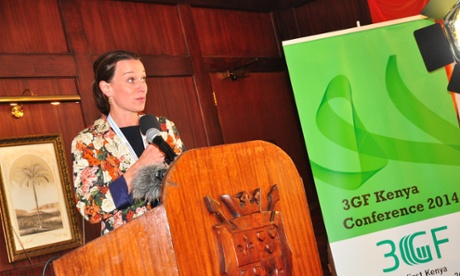
3GF selected a network of 11 partners, creating a balanced group of experts including water technology specialist Grundfos, the European Investment Bank (a major lender to the water sector), and the Danish Ministry of the Environment. The partners agreed to convene four “explorative” workshops in Russia, the Philippines, Kenya and China – uniting water utilities, water authorities and government with solutions providers and financial institutions for the most comprehensive multi-stakeholder discussions to date on this topic.
Collaborating to tackle water loss
The overall aims of the workshops were to establish whether water loss was indeed a challenge, raise awareness of the performance-based contracting (PBC) model and understand the relevance and applicability of the model in the region. With the water sector slightly wary of public-private partnerships following privatisation controversies in some countries, it would be important to create a robust model for collaboration and encourage objective, frank discussions in a “closed door” environment.
The two-day sessions included focused case studies and in-depth debates on the challenges and viability of the PBC model, with some utilities able to share their experiences of performance-based contracting. Attendees heard about methods, tools and solutions including pump solutions and pressure management, smart-metering and leak detection software, as well as different types of funding and achieving return on investment.
Participants responded positively, highlighting that the workshops offered an effective “one-stop-shop” for discussions on governance, finance and technical solutions. The convening partners noted the importance of untangling stereotypes, ensuring the presence of high-ranking government officials and creating an atmosphere in which water utility managers and governments could speak openly about water losses.
“Working together, it was clear that we could make progress more rapidly,” says Riis. “Every party brought different perspectives and we quickly got to know each other and understand the level of complexity faced by each party. We hope that any agreements to emerge will have a significant impact on reducing water losses.
“The workshops provided a good learning opportunity and a useful forum to discuss practical solutions,” adds Hart. “They opened new channels of communication and paved the way to a genuine exchange of opinions and ongoing collaboration between key partners.”
Forming robust partnerships
Taking the discussions to the next level will mean quickly formalising routes to cooperation, establishing all-round accountability, collectively designing transparent, results-oriented contracts and arranging financing. Relationship-building will continue to be important, as water utilities build the business case for investment. Importantly, the workshop discussions are already catalysing concrete projects between participating stakeholders and helping to inform the EU’s thinking and legislation on tackling water loss.
“There’s strong interest in launching more performance-based water loss projects,” concludes Hald-Mortensen. “And there’s no doubt that more workshops would add value.”
The Danish Minister of the Environment, Kirsten Brosboel, who also attended one of the workshops, agrees: “We need to act now on the water challenges we are facing globally, especially water scarcity and achieving water efficiency, which will be part of the negotiations on the UN Sustainable Development Goals. This needs to be followed up with concrete actions, and I believe strong institutions focusing on financing of water loss projects could be one way forward.”
Katharine Earley is a copywriter and journalist specialising in sustainability.
Content on this page is paid for and provided by Grundfos, sponsor of the water hub