Accessing the so-called Base of the Pyramid is tougher than it sounds. First, your product has to fit. If it’s flat-screen TVs or iPads you are looking to flog, then don’t expect to sell too many to the 2.7 billion or so people living on less than $2 per day. Even if your price point is right, you still need to physically get your product to your end consumer. Many of the world’s poorest live in rural areas, far from the nearest shopping mall.
Czech footwear brand Bata has no problem on the product side. Operating in 120 countries, the family-owned firm has made a global reputation for its in durable, affordable shoes. Its basic flip-flops, for example, retail for around $1. In countries with well-developed logistic networks and extensive market penetration, reaching poor customers is tough but doable. In a country like Bangladesh, where the population of rural poor is huge and geographically disperse, it’s close to impossible.
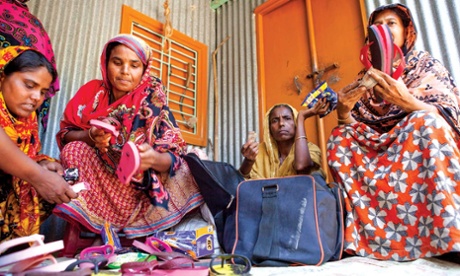
An innovative partnership between Bata and CARE Bangladesh, the local arm of UK-based development charity CARE International, is finding a way around the challenge of rural distribution. The answer lies in turning enterprising villagers into sales agents. Since 2005, the two organisations have been working together to recruit and train local women to sell its $1 flip-flops door to door. For every sale, these aparajitas (Bengali for a “woman who never gives up”) receive between 10-15% commission. That translates to an average income of about $80 per month, more than double the country’s minimum wage.
For the two partners, the alliance is mutually beneficial. Bata, which has operated in Bangladesh since the mid-1950s, now has access into a new tranche of future consumers. Turnover remains small compared to Bata’s established markets, but sales are increasing at 120% per year, according to Nicole Voillat, the company’s sustainability director. At the same time, the Bata brand is gaining recognition and customer loyalty for when Bangladesh’s rural market grows and becomes more connected.
As for CARE, it points to the additional income and enhanced status enjoyed by the 3,000 or so women involved in the programme. CARE takes responsibility for transporting small quantities of shoes to a network of 54 distribution hubs around the country, for which it receives a 3-6% commission. The participating aparajitas collect their stock from these hubs, before returning to their respective villages to sell it on at a small profit. To ensure long-term sustainability, the charity has created a stand-alone social enterprise to manage the whole process.
“Without CARE’s contribution, the project would simply be difficult for us from a logistics point of view and too expensive, given the small volumes we’re talking about. With a shoe priced at $1, there would not be much return for us if we had to dispatch them ourselves”, says Voillat.
Read more stories like this:
-
The future is bright for corporate-NGO partnerships despite challenges
- Encouraging Brazil’s emerging middle class to buy sustainably
- Advertisement feature: Unilever seeks innovative startups for sustainable living hack
The sustainable living hub is funded by Unilever. All content is editorially independent except for pieces labelled advertisement feature. Find out more here.
Join the community of sustainability professionals and experts. Become a GSB member to get more stories like this direct to your inbox