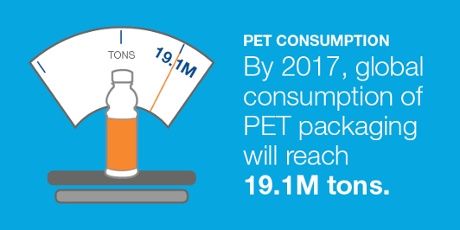
Consumers and beverage makers alike love bottles made from PET plastic, those ubiquitous, transparent packages that hold your favorite drinks. According to an industry study, the global consumption of PET packaging will reach an estimated 19.1m tons by 2017.
But PET plastic is a resource-intensive material whose manufacture requires large amounts of water and petroleum and contributes to the greenhouse gas emissions causing climate change. So, the fewer new bottles that have to be made, the better.
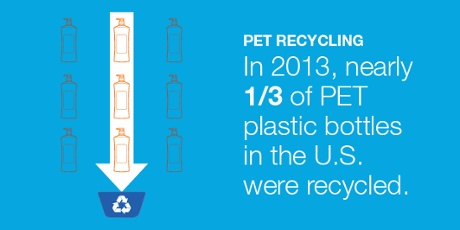
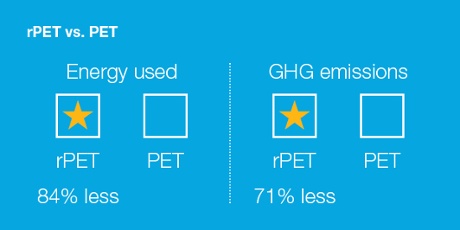
Fortunately, PET bottles are recyclable. In 2013, nearly a third of PET plastic bottles in the US were recycled. And using recycled PET – called rPET – instead of new PET plastic is much easier on the environment. Per kilogram, rPET uses 84% less energy and results in 71% less in greenhouse gas emissions than PET plastic.
Most recycled PET plastic is used to make things other than bottles, like t-shirts, fleece jackets, fill for sleeping bags and dog beds, carpeting and much more. But in a perfect system, PET plastic bottles would be used to make more PET bottles, dramatically reducing the amount of natural resources needed to meet global demand.
Such bottle-to-bottle recycling exists, but on a limited scale. One challenge is that there aren’t yet many bottle-to-bottle factories. There’s also not enough high-quality PET waste available for food-grade packaging. Too often, the labeling on PET plastic bottles discolors or otherwise contaminates the PET “flake”, the material produced when PET plastic is reclaimed. Contamination means the PET can’t be used for bottles or other food packaging, and it must be “downcycled” into other products. (At Avery Dennison, we use fabric made from recycled PET plastic in the labels we provide to major apparel brands.)
Now, our labeling innovators have invented a solution to the label-contamination issue. It’s called CleanFlake.

By making it easier to produce food-grade quality rPET, CleanFlake is helping processors bring more recycled PET plastic to market and enabling more bottle-to-bottle recycling. It’s also helping beverage companies promote the sustainable practices that consumers increasingly demand. All in all, CleanFlake is good for business and good for the planet.
We’ll drink to that.
Read more about Avery Dennison’s commitment to sustainability. Then join the conversation on our blog.
Content on this page is provided by Avery Dennison, supporter of the Vital Signs platform.