
Before he drove off, Grandpa Saeree*, who lived by himself in Chon Buri, told one of his neighbours he was going to visit his son. The 80-year-old never made it to his destination.
When his grandchildren realised that he'd gone missing, they asked for assistance from the Mirror Foundation. A month later, the old man was found dead, only a kilometre away from his car. Police suspected that he'd been killed by floodwaters from the mountains. They also suspected that Grandpa Saeree had been suffering from dementia. The son he was on his way to see had died long ago.
Cases of the elderly going missing are on the rise in Thailand. According to figures from the Mirror Foundation, they made up almost 60% of all missing persons in 2017, up from almost 40% in 2008. Dementia is a major factor.
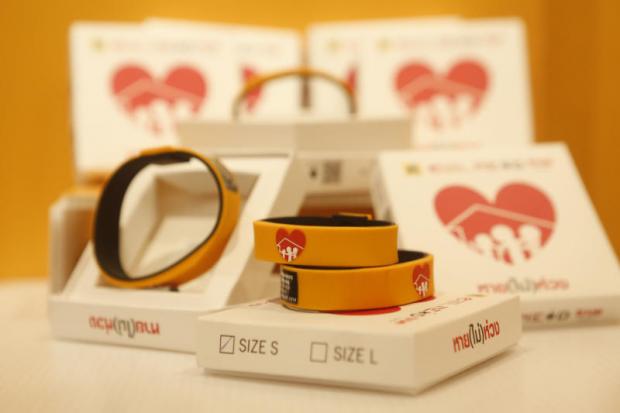
In order to combat this issue, a campaign titled "Hai Mai Huang" ("Missing, But Don't Worry") has recently been initiated. A collaborative work between the Mirror Foundation, the Royal Thai Police, the Department of Social Development and Welfare under the Ministry of Social Development and Human Security and two private organisations, the campaign provides free wristbands for patients suffering from autism or mental illnesses such as dementia. Imprinted with a QR code, the wristband allows relatives to identify their loved ones in the event of them going missing.
"The wristbands are used by children with autism, but most are elderly people with dementia. In the first week alone, we had requests for 200 wristbands," said Witanapat Rutanavalepong of the Mirror Foundation.
Dementia is an increasingly worrying public health issue in Thailand as the population continues to age. The 2014 data from the Health Systems Research Institute found that 8.1% of people aged above 60 years old fell victim to dementia. Last year, it is estimated that there were around 800,000 elderly people in Thailand living with the condition.
"The number of cases is increasing every year. In 2016, there were 350 missing people with mental conditions like dementia or autism. The following year, that number rose to 530 -- a sharp rise. It's one of the things that shows we are ageing as a society," Witanapat said.

Most elderly people who go missing live alone. In many cases, they do not understand what dementia is and may not even aware that they suffer from it. Signs of dementia include personality and mood changes, losing track of dates or talking about dead people as if they are still alive.
When the Hai Mai Huang campaign began, the wristband was criticised as a violation of privacy. But Witanapat insists that they don't provide any personal data.
"After the QR code is scanned via the Thai Missing application, a message pops up, saying 'This person is a patient. Please report to a police officer or call the Mirror Foundation'.
"We are aware that people who wear the wristbands may take them off, throw them away or lose them. If the wristbands included private information, they could be wrongly used by someone else. We have to protect patient rights. The QR code doesn't provide any personal data, not even their names."
The campaign also targets younger missing persons. According to last year's report by the Mirror Foundation, 310 teens went missing, 77% of whom had run away from home. The number of cases involving girls aged between 13 and 15 was three times higher than boys.

"Family problems are one of the main reasons why juveniles run away," Witanapat said. "These range from violence to verbal abuse to too much pressure from parents. Some parents force their children to break up with girlfriends and boyfriends, so they decide to leave home.
"To prevent teenagers from running away again, Mirror Foundation staff talk to parents before the children return home. They have to try to understand their kids and both sides need to balance their expectations."
Nowadays, teenagers can make friends with strangers easily through social media and online applications. To many parents, this is a serious concern. Witanapat doesn't think that way.
"In the past, teenagers had other tools to make friends with strangers. The problem is parents don't know who their children communicate with. Parents should keep up with technology and know who their children talk to, be they friends or boyfriends. Most children want to stay at home with their parents. But if they don't have freedom, some of them use running away as a tactic for getting their way," he said.
The Hai Mai Huang campaign is one of the first initiatives that sees the Mirror Foundation implement technology as part of their solution. Although the wristband is currently at its experimental stage, the foundation plans to develop other devices in the near future.
"We have been looking into technology for locating missing people for a while. We've even considered GPS, but it's too costly. In the future, we may develop a necklace," Witanapat said.
*not his real name