Diplomacy increasingly blends economics and politics. In this article, I look at how former Prime Minister P.V. Narasimha Rao’s momentous economic reforms of 1991 played out in Europe’s largest economic power.
In September 1991, just before India’s Ambassador to Germany, A. Madhavan, was to retire, Prime Minister Rao travelled to Germany, mainly to fulfil an obligation from three years ago, to launch a year-long Festival of India. Some months earlier, India had tried to postpone this event on account of the financial distress that had brought the country to the brink of insolvency, but the Germans were adamant that the commitment made by an earlier Prime Minister, Rajiv Gandhi, regarding the festival be honoured.
P.V. Narasimha Rao, the subversive insider
A talkfest
In Germany, an ‘accidental’ Prime Minister who was guiding India towards national renewal encountered a rejuvenated Chancellor, Helmut Kohl, who had just steered his nation to a serendipitous ‘unification’ with East Germany (which had come to pass thanks to the collapse of the Soviet Union). This created unforeseen chemistry. In effect, Chancellor Kohl decided to take a chance; he seemed to believe that the Rao government would survive though it lacked a parliamentary majority. Taking a small step, the two leaders decided to create an annual talkfest called the Indo-German Consultative Group (IGCG). At this talkfest, non-official public figures of the two countries (about half of them business leaders and the rest from the fields of academia, culture, the media, and science) were to discuss ways to steer the relationship between the two countries towards a new future. Two or three officials joined, but in a listening role; the IGCG’s recommendations would go directly to the two leaders.
When I reached Bonn in May 1992, for the first working meeting at the German Foreign Office, I was told that the IGCG was an experiment for the Germans. They had no such mechanism with any non-ally country. Incidentally, nor did India, besides one with Japan, dating to the 1950s, which had ossified into an annual, unproductive ritual. In New Delhi, the Ministry of External Affairs was cautiously optimistic about the new mechanism. It gradually appointed about 17 Indian figures, with P.N. Dhar as the co-chair. Germany had already named Deutsche Bank board member Ulrich Cartellieri as co-chair, and a sterling group of some 16 members. In both countries, the two Ambassadors worked with the co-chairs and the designated members, and discussed actionable ideas. The IGCG met in September 1992, at Bonn’s St. Petersburg Castle overlooking the Rhine river. Its recommendations covered a page-and-a-half. A day later, Chancellor Kohl received P.N. Dhar and I, and declared himself pleased. The Foreign Office, which is not given to hyperbole, said that the meeting had “exceeded their expectations”.
That set the stage for Chancellor Kohl’s visit to India in February 1993, probably the first major visit by a foreign leader to Delhi after the 1991 reforms. While preparing for this visit, Chancellor Kohl’s Chief of Staff, Harald Nestroy, raised a problem. It was Kohl’s practice to take about 20 ‘special guests’ — top business leaders, a few academics, scientists and public figures on his visits. Kohl wanted he and his guests to meet Rao for a substantive discussion following his own official meeting with the Prime Minister. New Delhi firmly refused: there was no such practice in India. Mr. Nestroy asked whether Prime Minister Rao would accommodate this special request. I sought and obtained an assurance on reciprocity and used backchannels to convey this request to the Prime Minister. He knew well the importance of that German opening and agreed readily.
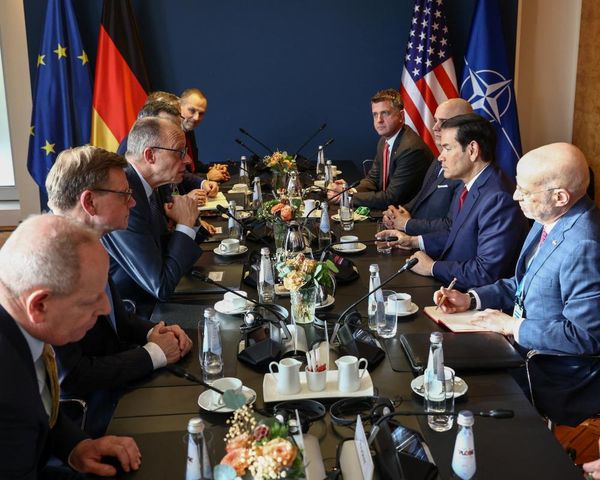
At Hyderabad House on February 3, 1993, after lunch, the German businesspersons raised a host of issues over India’s reforms, urging improvements. Prime Minister Rao spontaneously invited them to give him all their suggestions. Kohl endorsed this, adding that when the Indian Prime Minister visited Germany a year later to continue their dialogue, they would discuss this further. Prime Minister Rao then added that he would respond to the German requests before he reached Germany. This was done; our response reached Bonn four days before the Prime Minister went there.
A new practice
More important, as the aircraft left Delhi, Chancellor Kohl gathered his friends and asked, “Why are we so absent from India?” India had found a good ally. A few months later, for the first and only time in his 16-year chancellorship, Kohl asked the Foreign Office to produce a study on their Asia Policy. When that was finalised (after the draft was debated in the Bundestag), China, Japan and India were named as Germany’s three ‘strategic partners’ in Asia. It was a first for India, in any western country; in those days, ‘strategic’ carried weight.
At Prime Minister Rao’s return visit to Germany in February 1994, we stumbled into a new practice. Indian leaders were always coy about taking business delegations. This was despite the fact that by then, the three Indian apex bodies — CII, FICCI and ASSOCHAM — had begun to jointly host foreign leaders visiting New Delhi, to boost economic exchanges. But they had not “officially” been taken abroad by our leaders. That somehow seemed improper. Japan had a similar inhibition, which lasted much longer, into the 2000s.
PV’s economic vision has its mark on global scenario too: Dr. Manmohan Singh
When I asked the Foreign Office to confirm a meeting for our businesspersons with Chancellor Kohl, they stonewalled us saying there was no such practice in Germany. Mr. Nestroy then stepped in and confirmed that India could bring the businesspersons, provided they were “accompanying the Prime Minister”. But a new problem came up. In New Delhi, high officials from the External Affairs Ministry and the Prime Minister’s Office said that the Indian businesspersons were not “officially” with the Prime Minister; they “just happened to be in Germany at that time”. That little impasse was sorted out via a direct approach with the Prime Minister, who said he had no problem with the businesspersons being associated with his visit.
The above narrative is a small tribute to P.V. Narasimha Rao for his vision and guidance in executing our new diplomacy following economic reforms. He personally steered this, sweeping away accumulated cobwebs in our thinking. After 30 years, the details or individuals are unimportant. We were all in a new game, unfamiliar with its rules and modes. And we learnt as we went along. My tribute is also to a succession of Indian and German envoys and officials who have raised this bilateral relationship to a much higher level, one that is mutually profitable. Such pragmatism became embedded in our practice of international relations. Prime Minister Rao guided and led us from the front, permitting India a smooth transition to the post-Cold War world. We confront today a different and perhaps more difficult national economy to manage, in the midst of a complex international political front. We need similar adaptability plus an ability to improvise and innovate, guided by the lodestar of national benefit.
Kishan S. Rana is former Ambassador, author of Diplomacy at the Cutting Edge (2016), and teacher