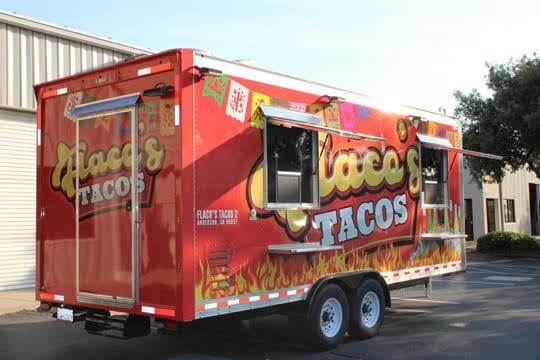
Food trailers have become one of the most flexible and cost-effective ways to launch a mobile food business — but that doesn’t mean they’re inexpensive. Depending on the size, layout, materials, equipment, and level of customization, a food trailer can cost anywhere from a few thousand dollars for a basic used shell to more than $100,000 for a fully outfitted, commercial-grade build.
Whether you want to serve tacos at festivals, operate a coffee bar at farmers markets, or run a full mobile kitchen, understanding what determines the price of a food trailer is crucial for planning your budget. If you’re actively exploring options, it’s worth browsing new food trailers for sale to get a sense of realistic pricing and available configurations.
Key takeaways
- Food trailers are more affordable than restaurants, but depending on equipment and customization, they can still cost tens of thousands.
- The right layout and equipment choices directly affect performance — a small, smartly designed trailer can outperform a larger, poorly planned one.
- Health codes and permitting can be costly or complex, especially in cities with strict requirements.
- Customization enhances branding and workflow efficiency, but also increases cost and build time.
- Buying, leasing, or renting each has benefits — choose based on your long-term vision, available capital, and commitment level.
How much do food trailers cost?
The price of a food trailer for sale varies widely depending on size, cooking capability, and the level of customization. Most operators spend between $20,000 and $120,000 for a fully functional trailer that meets modern health and safety codes.
On the lowest end, used trailers listed on marketplaces like eBay may cost $6,000–$10,000 — though these often require significant upgrades. High-end, fully custom food trailers can exceed $150,000, with some ultra-specialized models priced above $200,000.
It’s also important to remember that these prices typically include only the trailer itself — not permits, startup inventory, POS systems, or ongoing business costs. Even so, beginning with a food trailer remains far more affordable than launching a traditional brick-and-mortar restaurant.
Typical cost ranges:
- Entry-level: $15,000–$30,000
- Mid-tier builds: $30,000–$60,000
- High-end custom builds: $60,000–$120,000+
Factors affecting food trailer pricing
1. Size and layout
The size of your food trailer has one of the biggest impacts on total cost. Larger trailers require more materials, more equipment, and more build time — which raises the price. Smaller trailers are more affordable but may limit menu options or require more frequent restocking.
2. Equipment and utilities
Trailers designed for full cooking capabilities cost significantly more. Consider what your menu really needs:
- Griddles, fryers, ovens, and steam tables
- Refrigeration and cold storage
- Plumbing (sinks, water tanks, wastewater systems)
- Ventilation, electrical wiring, propane systems
- Fire suppression systems
Each piece increases cost, weight, and power requirements.
3. Build quality and materials
Build quality directly affects durability and long-term value. Stainless steel interiors, insulated walls, reinforced flooring, and commercial-grade fabrication all impact pricing — but they also reduce long-term maintenance costs.
4. Customization
Customization improves workflow efficiency and branding but adds to total cost. Examples include:
- Exterior wraps and graphics
- Custom shelves, counters, and prep stations
- Unique builds like fold-out windows or specialty equipment
Some operators completely redesign their layouts to match their cooking style. As chef Armando Moya explains: “My truck has two giant windows and two grills… I didn’t want a fryer, so we added two extra coolers and a built-in rice cooker.”
5. Health and safety code compliance
Food trailers must meet local health and fire safety requirements. Ventilation systems, fire suppression equipment, plumbing, and wastewater systems may all be mandatory — and retrofitting later can be expensive.
Cities vary widely in fees and zoning rules. For instance, Chowchilla, CA proposed fees of $36,500 annually for trailer operators, while the nearby city of Madera charges only $614 per year.
6. Power setup
Your trailer’s power system influences both upfront and ongoing costs:
- Generators: Flexible but noisy and fuel-dependent
- Shore power hookups: Ideal for semi-permanent locations
- Battery or solar systems: Quiet and efficient but expensive to set up
7. New vs. used
New food trailers come with warranties and up-to-date equipment but cost more. Used trailers are cheaper but may require retrofitting or repairs to meet current codes. Always budget for inspections and upgrades.
8. Rent, lease, or buy
Your acquisition method dramatically affects total cost:
- Buy: Highest upfront cost, most control
- Lease: Moderate upfront cost, option to buy later
- Rent: Lowest commitment, ideal for testing concepts
Tips for finding an affordable food trailer
- Buy used but inspect thoroughly for structural issues or non-compliant systems.
- Consider partial builds (shells with basic utilities installed).
- Search outside your region to compare pricing.
- Ask about financing or lease-to-own options.
- Avoid unnecessary upgrades on day one — scale your equipment over time.
- Include hidden costs like maintenance, generator fuel, repairs, and permit fees.
As one operator shared about local permitting: “For us, it’s a two-day process… One day closed for inspection, and the day before moving the whole setup.”
Don’t let food trailer costs run you off the road
Whether you’re buying new, comparing used units, or considering leasing, understanding what drives food trailer pricing helps you avoid mistakes and stay on budget. Start with your concept, define your menu, and map out your workflow. From there, choose or build a trailer that supports your vision — without exceeding your financial limits.