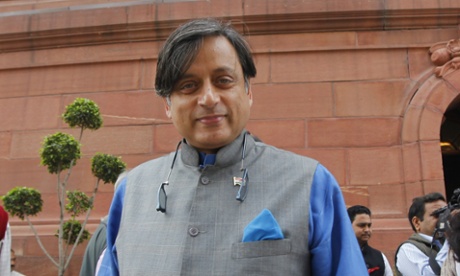
Should Britain pay reparations to her former colonies? Shashi Tharoor, one of India’s most prominent parliamentarians, debated the question at the Oxford Union back in May but a video of his speech, since posted online, has now gone viral, prompting almost 3m views in three weeks and support from India’s prime minister Narendra Modi. Tharoor suggested that he would be happy with the token payment of £1 a year for 200 years – one for every year of colonial rule. But maybe a more powerful move would be for Britain to dramatically overhaul its schools’ history curriculums. The then education secretary Michael Gove observed in 2013 that: “A knowledge of Britain’s past, and our place in the world, helps us understand the challenges of our own time.” Yet the dregs of A-level British history that remain in my mind include George, Duke of Clarence, dying from drowning in a butt of Malmsey wine, Henry VIII wearing a tonlet at the Field of the Cloth of Gold, and the fact that Philip of Hesse was a bigamist – useless information that does nothing to help me understand modern conflicts.
The internet is flooded with essays asking whether or not the British empire was a force for good, with conversations invariably starting with the great gift of the railways and ending in calls for the monarchy to return the Koh-i-Noor diamond. But history lessons could do with teaching Churchill’s role in the Bengal famine as well as his second world war heroism; about General Dyer’s role in ordering troops to open fire on an estimated 10,000 unarmed men, women and children in Amritsar in 1919; or, perhaps, Robert Clive’s rampant 18th-century pillage that resulted in the devastation of Indian weavers. With a more rounded education, us British schoolchildren would not grow up under the illusion that the Nazis were the world’s sole perpetrators of crimes against humanity, or rely on films such as Gandhi to fully understand British history. The British empire was a huge force for change, but it was not always a force for good.