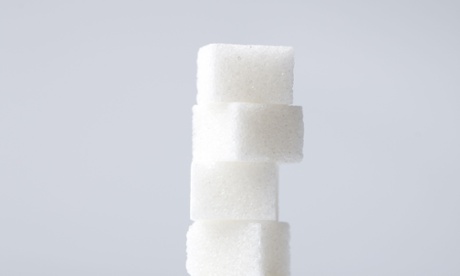
How much sugar do you take in your 300ml cup of tea? Two teaspoons? One? None? Three would be ridiculous, right? Both madly sweet and very unhealthy. As a British Medical Association (BMA) report published on Monday puts it: “A high intake of added sugars is a risk factor for a range of health conditions.” Which is why the BMA suggests that “a useful first step” to improving the nation’s health “would be to implement a duty on sugar-sweetened beverages … by increasing the price by at least 20%”.
So, how much sugar do you think there is in a 300ml glass of milk? Whole milk, skimmed milk; it makes no difference. Give up? It’s 3.9 teaspoons. Admittedly, that’s lactose, rather than added sucrose, which is sweeter – but it’s sugar nonetheless, with the same calorie content.
That’s the trouble with sugar. It’s a master of disguise. If you doubt it, consider these drinks and their sugary equivalents. And remember that these are equivalents in sugar only, not calories as a whole.
Old Jamaica ginger beer, 330ml
50g, or almost 10 Delia Smith pancakes with a teaspoon of sugar and a squeeze of lemon on each
Innocent pomegranate, blueberry and acai smoothie, 250ml
35g, or two-and-a-third BBC Good Food meringues “sandwiched together with a generous dollop of softly whipped double cream”
Dr Pepper, 330ml
34g, or 850g of raw sweet red peppers, which is about six of them
Belvoir Elderflower presse, 330ml
33g, or just over one-and-a-half servings of Häagen-Dazs vanilla ice-cream
San Pellegrino Limonata, 330ml (a G2 favourite)
33g, or 1.6kg of boiled mung beans or 3.7kg of cooked quinoa