A certain image of the Winter Olympics persists in the American imagination: a ski-fest ruled by Austrians and Norwegians, with occasional interludes dominated by other cold-weather nations.
It's true: the all-time Winter Olympic medal table is dominated by the Global North, and the Norwegians specifically have topped the medal table in each of the last three Games. However, the Olympic movement has made a concerted effort to promote the growth of winter sports in warmer-weather nations, which has galvanized slow progress toward the Winter Games resembling its more diverse Summer counterpart.
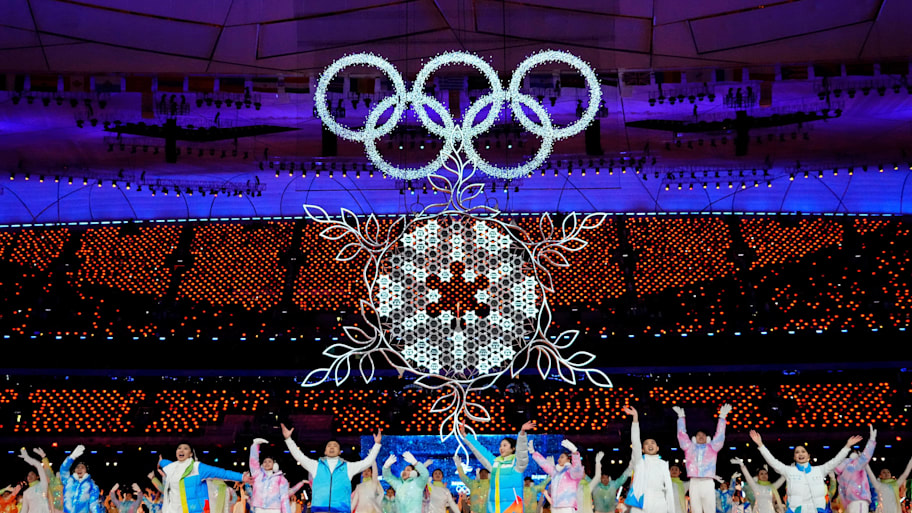
Here is a look at the projected national makeup of February's Winter Olympics in Milan and Cortina d’Ampezzo, Italy—as well as a look at how that makeup has changed over the years.
The Official Count: Nations at Beijing 2022 and Milan Cortina 2026
The ’22 Games in Beijing included a total of 91 delegations, counting the Russian Olympic Committee—prohibited from using the Russian flag due to that country’s 2019 doping scandal.
The ’26 event is expected to include 86 delegations at the moment, not counting “Individual Neutral Athletes"—that is, Belarusian and Russian athletes who meet International Olympic Committee specifications following Russia's invasion of Ukraine in Feb. 2022. In September, amid international speculation, the IOC indicated that Israel would be permitted to participate amid allegations that the nation is committing genocide in the Gaza Strip.
From Chamonix 1924 to today: How participation has evolved
When the Winter Olympics came into being in 1924 in the ski resort town of Chamonix, France, they were a small-scale affair. The host nation welcomed 15 other participants to the landmark event: Austria, Belgium, Canada, Czechoslovakia, Finland, Great Britain, Hungary, Italy, Latvia, Norway, Poland, Sweden, Switzerland, the United States and Yugoslavia.
Since then, however, the Games have exploded in popularity. Here is a look at the evolution of the field over time, and some notable debutant nations in each edition.
| SITE | YEAR | NUMBER OF COMPETING NATIONS | NOTABLE DEBUTANTS |
|---|---|---|---|
| Chamonix, France | 1924 | 16 | Canada, France, United States |
| St. Moritz, Switzerland | 1928 | 25 | Argentina, Germany, Japan |
| Lake Placid, N.Y. | 1932 | 17 | N/A |
| Garmisch-Partenkirchen, Germany | 1936 | 28 | Australia, Spain, Turkey |
| St. Moritz, Switzerland | 1948 | 28 | Chile, Denmark, South Korea |
| Oslo | 1952 | 30 | New Zealand, Portugal |
| Cortina d’Ampezzo, Italy | 1956 | 32 | Bolivia, Iran, USSR |
| Squaw Valley (now Olympic Valley), Calif. | 1960 | 30 | South Africa |
| Innsbruck, Austria | 1964 | 36 | India, Mongolia, North Korea |
| Grenoble, France | 1968 | 37 | Morocco |
| Sapporo, Japan | 1972 | 35 | Philippines, Taiwan |
| Innsbruck, Austria | 1976 | 37 | Andorra, San Marino |
| Lake Placid, N.Y. | 1980 | 37 | China, Costa Rica, Cyprus |
| Sarajevo | 1984 | 49 | Egypt, Monaco, Puerto Rico |
| Calgary | 1988 | 57 | Guam, Jamaica, U.S. Virgin Islands |
| Albertville, France | 1992 | 64 | Algeria, Brazil, Ireland |
| Lillehammer, Norway | 1994 | 67 | Kazakhstan, Trinidad and Tobago, Ukraine |
| Nagano, Japan | 1998 | 72 | Azerbaijan, Kenya, Venezuela |
| Salt Lake City | 2002 | 78 | Cameroon, Hong Kong, Thailand |
| Turin, Italy | 2006 | 80 | Albania, Ethiopia, Madagascar |
| Vancouver | 2010 | 82 | Pakistan, Peru, Serbia |
| Sochi, Russia | 2014 | 88 | Paraguay, Tonga, Zimbabwe |
| Pyeongchang, South Korea | 2018 | 93 | Ecuador, Nigeria, Singapore |
| Beijing | 2022 | 91 | Haiti, Saudi Arabia |
| Milan and Cortina d'Ampezzo, Italy | 2026 | 91 | Benin, Guinea-Bissau, United Arab Emirates |
Where do Winter Olympians come from?
Due to climactic and financial constraints, Winter Olympians overwhelmingly come from cold-weather nations with deep winter-sports infrastructure.
Of the 10 most successful nations on the all-time Winter Olympic medal table, eight are European: Norway, Germany, Austria, the USSR, Sweden, Finland, Switzerland and the Netherlands. That the Norwegians lead the all-time medal table is particularly shocking, considering its population is just 5.6 million, but that’s the way the cookie crumbles when your country appears to have evolved over eons with skiing specifically in mind.
The two outliers in the top 10 are the United States (second) and Canada (fifth). Both countries have formidable infrastructure and have hosted multiple Games, although the Canadians’ success skews recent (they won a record 14 gold medals in Vancouver in 2010). Outside of Europe and North America, China, Japan and South Korea—all past hosts with cold-weather locales—rank in the top 25.
Success is scant elsewhere. Australia has 19 medals, more than three-quarters of which are in freestyle skiing and snowboarding. Kazakhstan has eight since the USSR’s dissolution, half in cross country skiing. New Zealand has six, North Korea two, and Uzbekistan one. Africa and Latin America are still seeking their first winter medals, and will send large nations such as Argentina, Brazil, Mexico, Morocco and Nigeria to Milan in search of glory.
How a country qualifies for the Winter Olympics
In order to qualify for either the Summer or Winter Olympics, an athlete must be a member of a national Olympic committee. Not every nation has one—notable countries without one include the Faroe Islands, Greenland, Macau, New Caledonia, and the Turks and Caicos.
Every sport’s qualification system is different. To name a few: hockey uses world rankings and a series of qualification tournaments; curling uses the results of recent world championships and a qualification tournament; alpine skiing uses the World Cup points list with quotas to prevent nations from sending more than 22 athletes; luge designates specific events as “Olympic qualification ranking events.”
Quotas are crucial for helping bolster winter sports in nations without winter sports infrastructure (they are used liberally in the Summer Games as well). It is with the help of this system that three nations will make their Winter Olympic debuts.
New and debuting nations in 2026
Benin will send alpine skier Nathan Tchibozo (formerly a representative of Togo), Guinea-Bissau will send Utah-trained alpine skier Winston Tang and the United Arab Emirates will send alpine skiers Alexander Astridge (who learned to ski in a Dubai shopping center) and Piera Hudson (formerly of New Zealand). None of these countries have previously sent a representative to the Winter Olympics.
Excitement in these nations is high. Benin’s Olympic committee went to great lengths to tout their achievement in a press release, while the FIS highlighted Astridge’s unique upbringing. Because the Olympics tend to attract a human-interest audience beyond sports fans, look for these stories to receive media coverage in the United States and elsewhere.
Why some nations sit out the Winter Olympics
The most formidable barrier to Winter Olympic participation is winter itself—which countries have it, and which countries don’t. For this reason, more than 40% of all National Olympic Committees have never sent delegations to the Winter Games. Some of the more high-profile nations never to compete include Cuba, the Dominican Republic, Indonesia, Qatar and Vietnam.
In a few rare cases, the circumstances preventing countries from competing are neither climactic nor economic but political. Greenland, for instance, is a recognized member of the International Biathlon Union but not of the International Olympic Committee—ergo a Greenlandic biathlete could not compete in the Winter Olympics under their flag.
More on Sports Illustrated
- Way-Too-Early 2026 College Football Playoff Brackets: Expert Picks, Imaginative Scenarios
- Why the NCAA Should Fight the Charles Bediako Eligibility Case
- Men’s Basketball Bracket Watch: First Look at Projected March Madness Field
- Ex-Alabama Star Who Played in the G League Pushing for Additional NCAA Eligibility
- Indiana’s Magical Title Run Has One Parallel That Foreshadows How College Football Will React
This article was originally published on www.si.com as How Many Countries Are at the Winter Olympics? Complete Breakdown of Nations.