Delirium is a state of acute mental confusion where a person may see or hear things that are not there and become very agitated, sleepy or a mixture of both.
It can be resolved by treating the underlying cause and supporting the patient by good nursing care.
It can be particularly dangerous and distressing to a person with dementia as they may find it difficult to relearn skills lost through an episode of acute illness, such as washing or dressing. If not treated quickly and appropriately, patients with delirium may not recover.
People who are over 65, have cognitive impairment, a severe illness or current hip fracture are at increased risk of developing delirium while in hospital. The National Institute of Clinical Excellence recommends vigilance to signs of delirium throughout the hospital stay. Staff are advised to monitor dehydration, constipation, hypoxia (low levels of oxygen), infection, multiple drug use and pain. We are advised to try to minimise sleep disturbance while encouraging mobility and activities – all of which help prevent a person developing delirium.
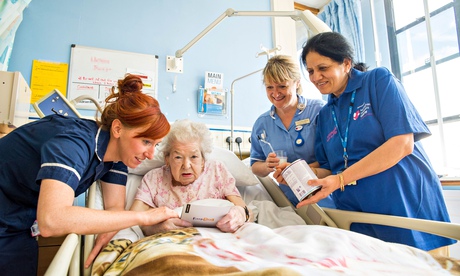
Family and friends can really make a difference in the prevention of delirium. Their familiar presence helps to keep a person oriented, particularly if a patient has been moved from one ward to another, and they can do so much with all the practical elements of person-centred care: making sure that glasses, hearing aids and dentures are worn, sitting and reading a newspaper or doing a puzzle together, helping with drinks and meals and a multitude of other, seemingly small, insignificant things that make a huge difference to the quality of a hospital stay and to the prevention of delirium.
In addition to this, we on Ward B48 at NUH NHS Trust actively encourage volunteers to be involved in caring for our older patients. On our ward, we have a regular core of volunteers who are part of our team. They receive support, training and help with travel expenses. We consider our family carers and our volunteers to be vital allies in our efforts to prevent delirium and improve the experience of being in hospital and the outcomes for our patients.