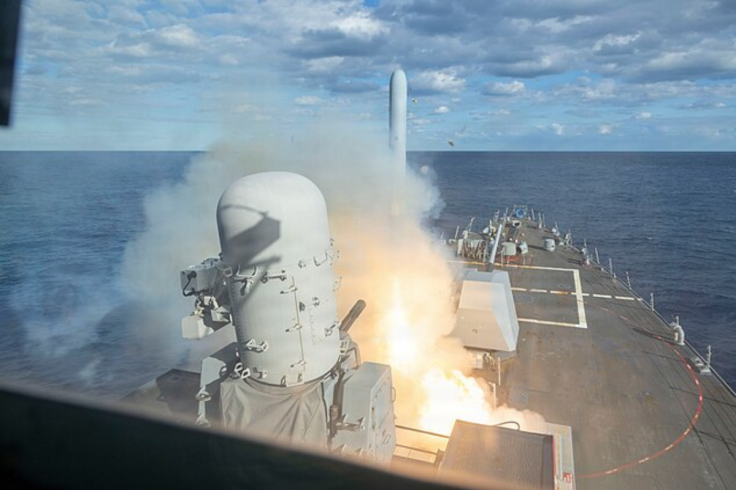
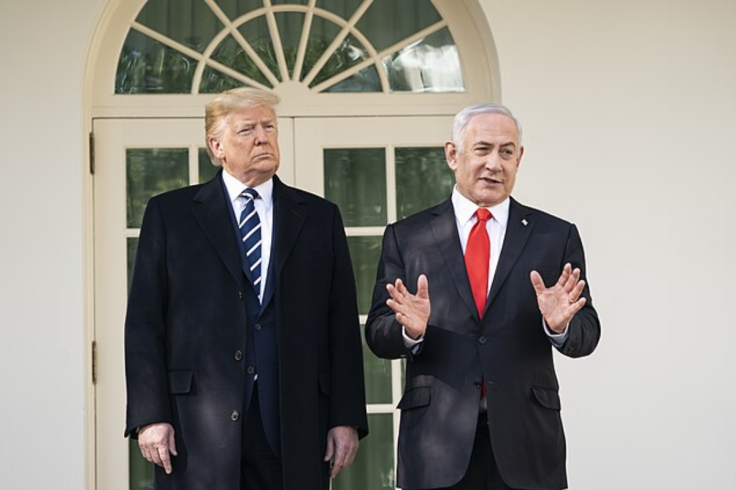
Both Donald Trump and Benjamin Netanyahu have drawn the same line: the US-Israel war on Iran will end in weeks, not years. As the conflict entered its fourth day with strikes continuing across Iran and retaliatory attacks hitting Gulf states hosting US military bases, the two leaders moved in rare lockstep to temper expectations of a prolonged campaign — while leaving room for escalation if required.
Trump said the assault was always conceived as a finite operation. 'Right from the beginning, we projected four to five weeks, but we have capability to go far longer than that,' he said, shortly after the Pentagon confirmed a fourth US military member had been killed. He added: 'It's always been a four-week process. We figured it will be four weeks or so... it's a big country, it'll take four weeks — or less.'
Netanyahu Rules Out Years of Conflict
On the Israeli side, Netanyahu was equally firm in distancing the current campaign from the grinding, multi-year conflicts the region has historically endured. 'I said it could be quick and decisive,' he said. 'It may take some time, but it's not going to take years. It's not an endless war.'
Israeli Lieutenant Colonel Nadav Shoshani echoed that position during an online military briefing, confirming Israel had set a working scope of weeks for the operation and ruling out the deployment of ground forces. Netanyahu has stated that the joint US-Israeli action was aimed at removing 'the existential threat' posed by what he described as 'the terror regime in Iran.'
Pentagon chief Pete Hegseth also pushed back on fears of another open-ended Middle East entanglement. 'This is not Iraq. This is not endless,' he said. 'This operation is a clear, devastating, decisive mission. Destroy the missile threat, destroy the navy, no nukes.'
Casualties and Retaliation Mount
Despite the stated timeline, the human cost is already significant. At least 787 people had been killed in Iran by day four of the conflict, according to the Iranian Red Crescent Society — a figure other monitoring groups believe to be a significant undercount. At least 31 people were killed in Lebanon, 11 in Israel, three in the United Arab Emirates and two in Iraq, with Oman, Bahrain and Kuwait each reporting one death amid Iranian retaliations across the region. Casualty figures remain difficult to verify independently, particularly inside Iran, due to communication restrictions.
Trump acknowledged the American toll in a video posted on Truth Social on 28 February, saying: 'The lives of courageous American heroes may be lost and we may have casualties. That often happens in war. But we are doing this not for now, we are doing this for the future and it is a noble mission.'
Separately, Trump said that Iran's current leadership had expressed interest in new negotiations with the US. 'They want to talk, and I have agreed to talk, so I will be talking to them,' he said, adding: 'They should have done it sooner... They waited too long.' Iran's Supreme National Security Council Secretary Ali Larijani flatly rejected that framing, writing on X: 'We will not negotiate with the United States,' and disputing reports that Tehran had made any push to resume talks through Omani mediators.
There's no war in Iran – you've completely misunderstood.
— Jürgen Nauditt 🇩🇪🇺🇦 (@jurgen_nauditt) March 3, 2026
Trump has given his version: The White House declared that the US has launched a "major combat operation," not a war.
Where have we heard this before? pic.twitter.com/7hXfxEuM3V
India, meanwhile, called for de-escalation while 'firmly opposing' attacks on merchant ships, with its Ministry of External Affairs stating: 'As a proximate neighbour with critical stakes in the security and stability of the region, these developments evoke great anxiety.'
The alignment between Trump and Netanyahu on a weeks-long scope carries significant strategic weight. Operation Epic Fury was launched on Saturday as Washington and Tehran were engaged in negotiations over Iran's nuclear programme, with the most recent round of talks concluding in Geneva on Thursday. With diplomacy now effectively suspended and Iran's Supreme Leader Ayatollah Ali Khamenei confirmed dead, the coming weeks will determine not only the military outcome but the future shape of the entire region.