On paper, forming a U.S. LLC looks simple: choose a state, file online, pay the fee, receive the approval. For foreign‑owned businesses, that simplicity is misleading. I regularly meet founders who formed their LLC in one afternoon and then spend months untangling tax filings, banking issues, and compliance gaps they never knew existed.
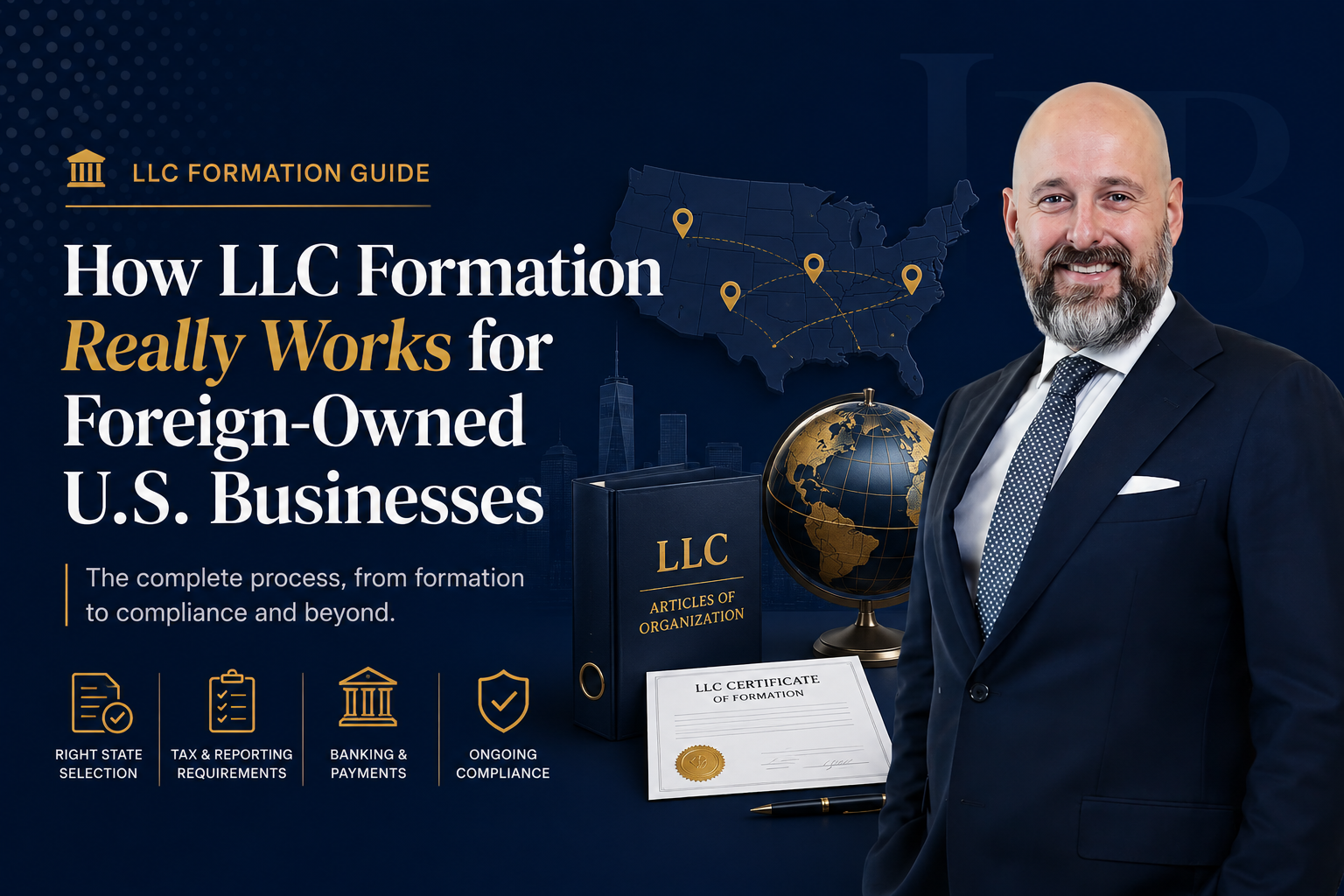
LLC formation for foreign‑owned U.S. businesses is more than filing articles with a state. You must choose the right state, understand how foreign ownership changes tax and reporting rules, connect the LLC to banking and payment systems, and set up an ongoing compliance process that keeps the entity in good standing. Formation is step one; the real structure comes after.
Why Simple LLC Formations Fail
Most foreign founders are sold a “simple LLC” story. The pitch says that once the paperwork is filed, everything else takes care of itself. In reality, foreign‑owned entities sit in a different category for U.S. tax and compliance, and those rules do not disappear just because the formation service did a quick filing.
Foreign ownership can trigger extra reporting obligations and change how certain forms must be filed. When those obligations are ignored, penalties accumulate quietly until the IRS or a state system forces the issue. That is why a foreign‑owned LLC needs a formation plan built around the entire structure, not just the registration.
Choose The Right State For Your Business
State choice is not just a matter of fees or marketing. Each state has its own rules, annual requirements, and links to where your business actually operates. Foreign‑owned businesses often choose states they saw mentioned in content rather than states that match their operations, banking needs, and long‑term plan.
If a business has clear operational ties to a particular state, forming elsewhere can create unnecessary complexity. On the other hand, a remote or cross‑border model may call for a different state if it fits the tax and compliance strategy. The decision should be made with both operations and filings in mind.
Practical approach:
- Map where your customers and key activities are.
- Compare state annual requirements and fees.
- Factor in banking and registration needs.
- Choose a state that matches both your operations and your compliance plan.
Understand Foreign‑Owned LLC Tax Treatment
The most important difference between a domestic and a foreign‑owned LLC is tax reporting. A foreign‑owned single‑member LLC may be taxed differently for income purposes, but it still has reporting obligations that include information returns and pro forma filings
Many founders assume that no or low U.S. income means no filings. In reality, certain forms are required as long as the foreign‑owned structure exists. These filings may not create tax, but they are compliance obligations that must be met to avoid penalties.
Key points:
- Foreign‑owned entities can have required forms even when tax owed is zero.linkedin+1
- Single‑member and multi‑member structures may use different forms and schedules.
- Pro forma corporate filings can be part of the required package.
The goal is to treat tax reporting as part of the formation design. When tax obligations are considered early, the structure can be built to meet them cleanly instead of having to correct mistakes later.
Build Banking And Payments Into The Setup
A foreign‑owned LLC that exists only on paper is not very useful. The real value comes when the entity can open accounts, accept payments, and connect to the financial systems the business needs. This step often fails when founders form the LLC without preparing the documents banks and payment platforms expect.
Banks usually want formation records, tax IDs, owner identification, and a clear business description. Payment systems often want similar information. When the LLC’s details and foreign ownership are not presented clearly, account approval becomes much harder, and the business can get stuck at the onboarding stage.
What to prepare:
- Formation documents and EIN.
- Owner passport and proof of address.
- A short, accurate description of the business model.
- Consistent information across every document.
When banking is built into the formation plan, the LLC can move from registration to operations without a gap. That is especially important for foreign‑owned businesses that rely on U.S. accounts to serve global customers.
Document Ownership And Control Properly
Operating agreements and internal records are not filler. They provide clarity on who owns the LLC, how decisions are made, and how profits and responsibilities are shared. For foreign‑owned structures, this clarity matters even more because cross‑border ownership can create extra questions.
The absence of a clear operating agreement can create internal disputes, make external reviews harder, and weaken the LLC’s position if regulators, banks, or counterparties ask how the business is governed. A well‑documented structure helps answer those questions.
Include in your documentation:
- A written operating agreement.
- Defined ownership percentages and rights.
- Rules for decision‑making and capital movements.
- Clear records of any changes over time.
For foreign‑owned entities, these records often support tax, banking, and compliance steps. They also make reporting on ownership and control more straightforward when required.
Treat Compliance As An Ongoing System
The biggest difference between a strong foreign‑owned LLC and a weak one is ongoing compliance. States, tax authorities, and reporting systems expect updates, filings, and renewals. Missing them can cause late fees, penalties, loss of good standing, or increased scrutiny.
Foreign‑owned businesses face added complexity because reporting rules and deadlines can differ by structure and by state. Many founders stay compliant in one area and fall behind in another simply because they did not build a single, unified compliance calendar.
Core compliance habits:
- Track state annual reports and fees.
- Track federal tax and information return deadlines.
- Keep ownership and company details updated.
- Monitor notices and respond early.
These habits turn compliance from a reaction into a routine. The more predictable the process, the less likely the business is to face sudden disruptions or avoidable penalties.
Common Misunderstandings To Avoid
“No U.S. income means no filings.”
Foreign‑owned LLCs can have required filings even when tax owed is zero. Reporting rules focus on the structure and transactions, not only on the tax bill.
“Any state works the same.”
States differ in annual requirements, fees, and links to your actual operations. Choosing “any state” can create unnecessary complexity.
“A cheap formation service is enough.”
Low‑cost services usually file documents but do not design the tax and compliance structure. Foreign‑owned entities need more than just formation to stay healthy.
“The bank will sort it out for me.”
Banks expect a complete, consistent application. They do not design the LLC’s structure. If the setup is unclear, account approval becomes harder.
FAQ
Is a U.S. LLC a good choice for foreign owners?
A U.S. LLC can be a strong choice for foreign owners when the structure, tax treatment, and compliance are designed together. It offers access to banking, payments, and a respected jurisdiction.
Does foreign ownership change tax rules?
Yes. Foreign ownership can create specific reporting obligations and change how certain forms must be filed, even when income is low.
Is the pro forma corporate return only for big companies?
No. Some foreign‑owned single‑member LLCs must file pro forma corporate forms as part of their compliance package, even if they are small.
Does an LLC automatically reduce home‑country tax?
Not necessarily. Home‑country tax rules can still apply based on residency, management, and local law.
Can I open a U.S. bank account quickly?
It is possible when formation, tax IDs, and documentation are ready and consistent. It becomes harder when those steps are incomplete.
How do I keep the LLC in good standing?
Use a compliance calendar, keep records up to date, and file required state and federal forms on time.
Conclusion
At James Baker and Associates, we help with LLC formation for foreign‑owned U.S. businesses that is not just about filing one form with a state and waiting for the certificate. It is about designing a structure that connects formation, tax reporting, banking, and compliance into a single, coherent system. When that system is built correctly, the LLC can support growth and protect the founder from avoidable trouble. The most important shift is seeing formation as the first step, not the whole journey. Foreign‑owned businesses that plan for tax, banking, and compliance from day one are far more likely to stay stable, avoid penalties, and use the U.S. LLC structure as an advantage instead of a liability.