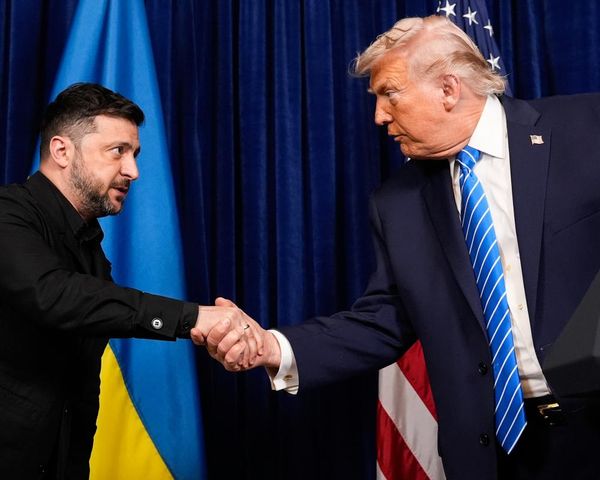
No moral guardian... Jack Valenti. Photograph: AP
Jack Valenti, who died last week, was a born sidekick: he was five feet seven; he had a terrific grin; and he was a great laugher whenever a boss-man made a joke. Those qualifications had served him admirably as yes-man and shit-kicker for Lyndon Baines Johnson. Valenti ran his Texas campaign in the 1960 election, and thereafter backed him up, calmed him down and sympathised as the Johnson presidency became increasingly troubled. He was special assistant to the president; he married one of his secretaries.
By 1966, Valenti was shrewd enough to see what was coming, and so he started listening to seductive appeals from some powers in the movie business. With all the connections Valenti had in Washington, why not become the new president of the Motion Picture Association of America?
Valenti held that job from 1966 until 2004, and he maintained the high traditions of the office. Namely, he did as little as he could to upset his powerful bosses and he did all that he could to ensure that the picture business was allowed to proceed without growing up or running the risks of responsibility. He shook hands, he attended banquets, he was edging into the corners of group pictures on big occasions, and he was giving off with that terrific grin - indeed, Valenti was pleased to be there.
It was not his fault that he presided over the significant decline of picture-making as a force in the life of America. That falling off was inevitable after glory days. But it was Valenti who religiously encouraged the selling of as many tickets as possible without having to engage in anything like moral responsibility.
So as movies became dirtier in speech, action and deed, he offered a bromide to American parents that allowed them to fancy that they were taking care of their children. The reason Hollywood bosses wanted a man like Valenti - someone who knew how Washington worked - was that, by the mid-60s, one way or another, it was clear that American movies were going to get sexier, more violent and even more subversive. The industry was very timid because the US is a country where local laws on decency vary enormously. They were always afraid of partial bans on pictures, and they were very afraid of having their decency tested in the courts.
There was already a simple self-regulated ratings system, carried out by the picture business. They hired a few teachers and citizens to look at movies in advance and determine the appropriate age of their audiences. Valenti amplified that system in the face of bolder and naughtier films. In time, his ratings became G, PG, PG13, R and NC17. G was open to anyone. PG called for "parental guidance". PG13 suggested the age of 13 as critical. R said that only children accompanied by adults could see such films. And PG17 banned anything absolutely for people under the age of sixteen.
America fell for all the hypocrisy in the scheme. Year after year they reckoned that they were being looked after. And, essentially, the courts were kept out of the picture business. There were bitter objections. Director Philip Kaufman observed that Valenti could see a breast cut off by a sword and give it an R, but if a hand stroked the breast it was an NC17. Violence was treated far more lightly than sexuality, and Valenti may well have reckoned, why not? Americans prefer violence to sex?
Meanwhile, for 40 years, very young children have been exposed to horrendous violence. And if their parents were sitting beside them in the dark at such moments, maybe that only encouraged some disturbed kids to turn the guns on their own parents. Yes, that last remark is unfair.
Equally, America has traded recklessly on the awkwardly adjacent liberties of making guns available and letting kids fantasise over firing them. Valenti seldom objected to a film industry that was content sometimes to turn the movies into a kind of ghetto for violent dreams. We don't know exactly how that climate leads to events like the Virginia Tech shootings - but an enquiring mind is bound to wonder. Valenti's grin seldom had such a mind for company. He was a PR flack for an industry that has little respect for the imaginations it reached.
He was a spin-master, raised in politics and easily successful in movies. "Everyone" liked him, but all of us need to ask searching questions about the damage he permitted.