
Valued at a market cap of $21.7 billion, Corpay, Inc. (CPAY) is a payments company based in Atlanta, Georgia, that helps businesses and consumers manage and pay their expenses.
Companies worth $10 billion or more are typically classified as “large-cap stocks,” and CPAY fits the label perfectly, with its market cap exceeding this threshold, underscoring its size, influence, and dominance within the software - infrastructure industry. The company specializes in corporate payment solutions, including accounts payable (AP) automation, cross-border payments, and commercial card programs.
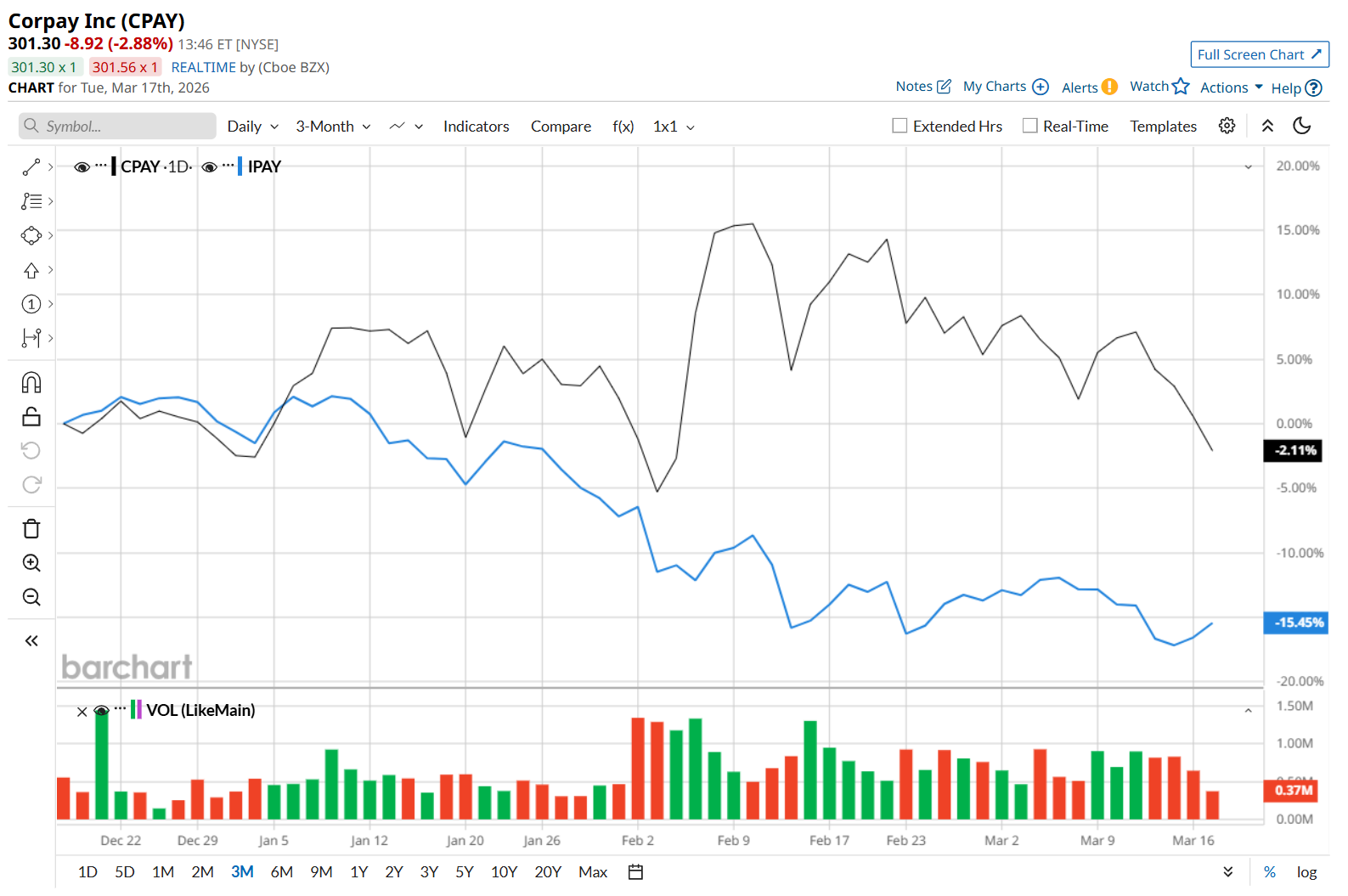
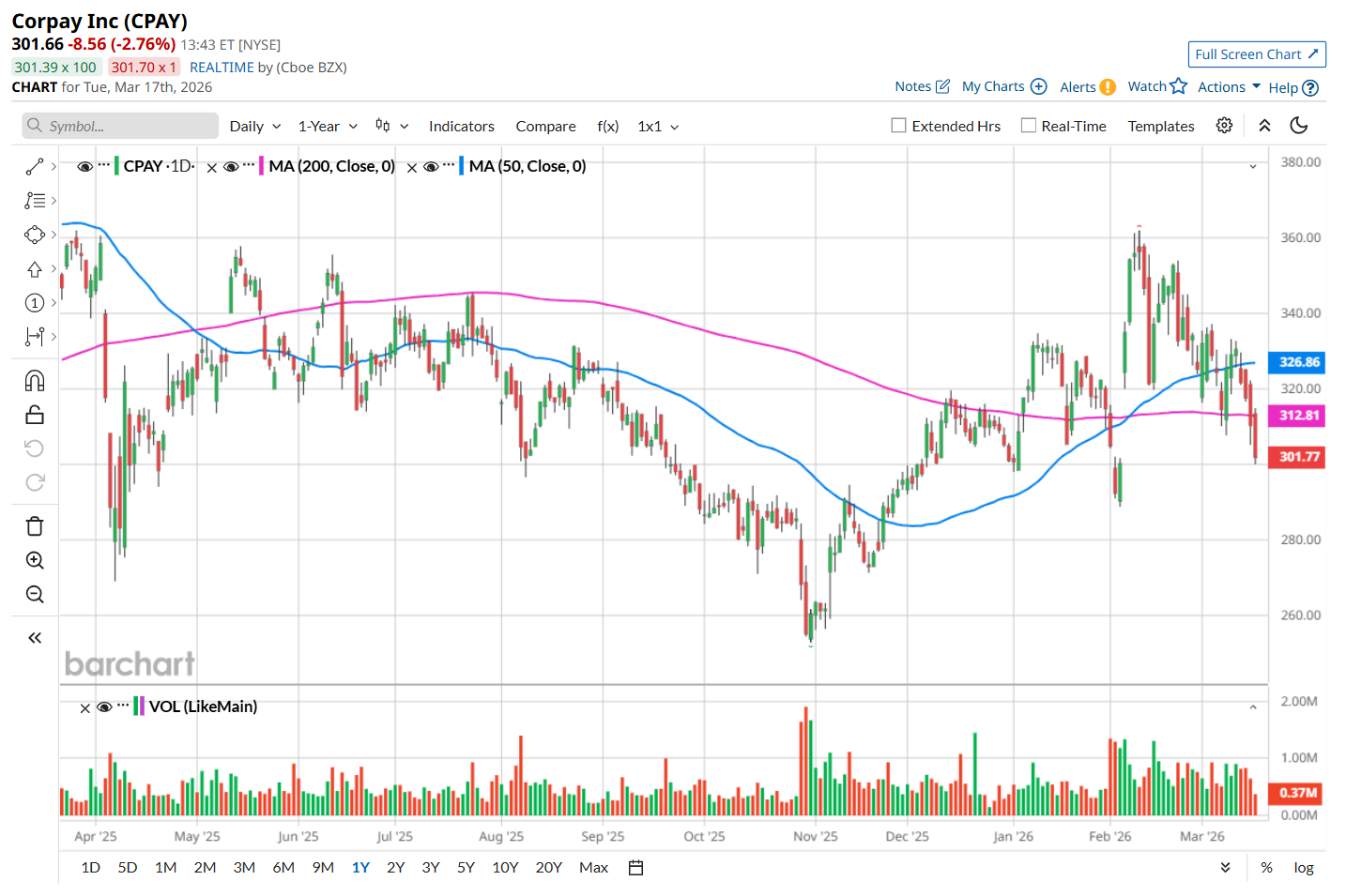
This fintech company has slipped 16.9% from its 52-week high of $361.99, reached on Feb. 10. Shares of CPAY have declined 2.1% over the past three months, outperforming the Amplify Digital Payments ETF’s (IPAY) 15.6% drop during the same time frame.
Moreover, in the longer term, CPAY has dropped 13% over the past 52 weeks, outpacing IPAY’s 18.1% fall over the same time frame. On a YTD basis, shares of CPAY are up marginally, compared to IPAY’s 15.1% loss.
To confirm its bearish trend, CPAY has started trading below its 200-day and 50-day moving averages since mid-March.
On Feb. 4, CPAY delivered impressive Q4 results, prompting its shares to surge 11.6% in the following trading session. The company’s revenue increased nearly 21% year-over-year to $1.25 billion, with organic growth of approximately 11%. Its adjusted EPS rose 13% from the year-ago quarter to $6.04, also surpassing estimates. The performance pointed to strong underlying demand, particularly in the corporate payments segment, which delivered 16% organic growth despite facing a roughly 200-basis-point drag from lower interest rates.
CPAY has outpaced its rival, Global Payments Inc. (GPN), which dropped 24.1% over the past 52 weeks and 6.2% on a YTD basis.
Given CPAY’s recent outperformance relative to its industry peers, analysts remain moderately optimistic about its prospects. The stock has a consensus rating of "Moderate Buy” from the 16 analysts covering it, and the mean price target of $389.14 suggests a 29.6% premium to its current price levels.