INDIANAPOLIS — When the Final Four arrives in town, it often envelops the host city. Big signs, branding all over, a catchy tagline and a slew of polo shirts in a variety of colors will dot every street corner and flat surface.
This year in the Indiana capital, that is even more so the case as a hoops-mad region plays host to the conclusion of the men’s NCAA tournament, the final three games of the NIT and will see the Division II and Division III champions crowned over the same weekend as well. As usual, the National Association of Basketball Coaches will hold their annual convention in conjunction with the Final Four to top it all off.
What adds to this basketball melting pot is something even more unique and far more unexpected this season: a renaissance of the European big man which has played a crucial role in Illinois, Michigan and Arizona’s path to the Circle City.
“I think the one thing that has changed is because of NIL is maybe the caliber of the young player that we’re getting and the person we’re getting,” said Illini coach Brad Underwood, sporting shoes at Friday’s open practice featuring flags of the countries represented on his team. “I think there’s always been tremendous intrigue in coming to the States and playing college basketball. I think that is heightened by what’s gone on in the portal and NIL, and I think it’s all been very, very positive.”
“One of the detriments to international recruiting back in the day was if a kid wanted to get paid, the European clubs could pay them legally, and obviously we couldn’t,” added Arizona coach Tommy Lloyd. “Now that that hurdle has been taken away, you’re seeing more and more good players from Europe that are willing to come over.”
Willing and, crucially for the programs on this stage, able.
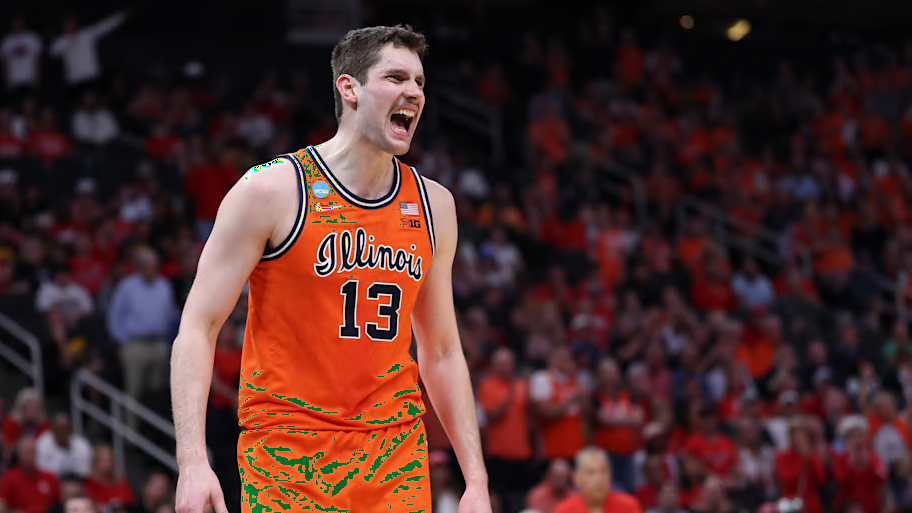
Illinois is the tallest team in the country according to KenPom and features a Balkans-powered front line with 6' 9" freshman David Mirković from Montenegro and twin centers Tomislav and Zvonimir Ivišić from Croatia. Prior to making the trip across the pond, the trio all came through Montenegrin hoops outfit SC Derby that plays in the fully professional Adriatic League.
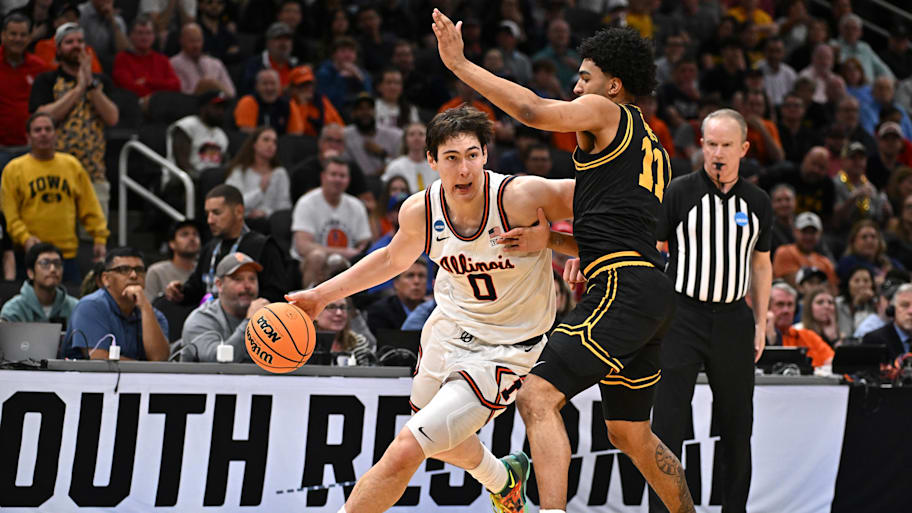
“It’s really rare that young players get a chance to play in professional basketball and really improve,” Mirković said of transitioning from Europe. “I would say that college basketball is the best spot to come here and improve yourself as a basketball player.”
Arizona, which is the tallest team in the Big 12 and is just an inch behind the Illini in terms of the average height on their roster, have one of the best defenses in the country thanks largely to the interior presence of Lithuanian center Motiejus Krivas. German freshman Ivan Kharchenkov isn’t a traditional big man, but also adds an element of size out on the perimeter when the team needs to switch on screens as a 6' 7" power forward, too.
“When I first saw Mo, I thought, this is going to be the next great big man from Lithuania after [Arvydas] Sabonis. I’m sure there’s a few others in between there. But that was my first thought,” said Lloyd, who has been recruiting in Europe dating back to his time as a Gonzaga assistant. “It’s been really cool to watch him kind of grow into that. He had a solid freshman year for us, but I think, like a lot of international kids, he came over and maybe thought it was going to be a little bit easier than it really was.”
That’s not an uncommon sentiment to have given that most players crossing the Atlantic have been playing and practicing against others who are much older on a regular basis. Still, it’s far from the only thing that they have to adjust to when arriving on a college campus, much less factoring in things like the language barrier or being so far away from their homeland.
“[Basketball] is way smaller there, it’s not watched as it is here—not even close,” said Zvonimir Ivišić. “The facilities are way better here and everything. It’s a whole different type of basketball.”
“I think the biggest difference is the game is slower there. It’s more tactical, definitely more sets are being played, trying to use more advantages,” brother Tomislav adds. “I would say it’s what we’re trying to do more this year at Illinois compared to most college teams where it’s running fast, shooting a lot of balls, tactics maybe not as big a deal [here] as it is over there.”
The importing of foreign talent is not a new strategy for Underwood, who first employed it a quarter century ago as an assistant at Western Illinois. Three hours to the west of his current home, the Leathernecks at one time featured Brazilian Fernando Coloneze and Dominican forward Juan Martinez.
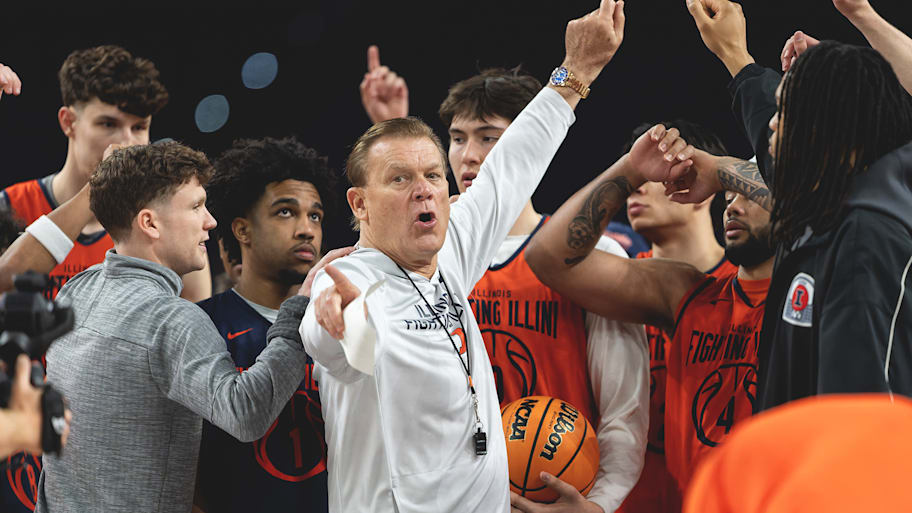
What is different nowadays is twofold, the first being the war chest that the Illini have as a member of the Big Ten and the ability to not only offer revenue sharing to players but NIL benefits as well. International students are still somewhat limited in terms of what they are allowed to receive directly in terms of compensation, but are still getting paid handsomely by programs through a variety of means. The second is the ability to get far more polished players from Europe who have the ability to step in right away and start contributing in the paint with easy-to-find attributes.
“The Euro market was something we were interested in [early at Illinois]. We knew we needed positional size. We knew we were recruiting shooting. They do it as well as anybody in the world in my opinion,” said Underwood. “[Assistant coach Geoff Alexander] has spent many, many trips going over there, developing relationships, and now Orlando [Antigua] comes back and we’ve just invested heavily in doing that. We believe in it.”
So, too, does Big Ten compatriot Michigan.
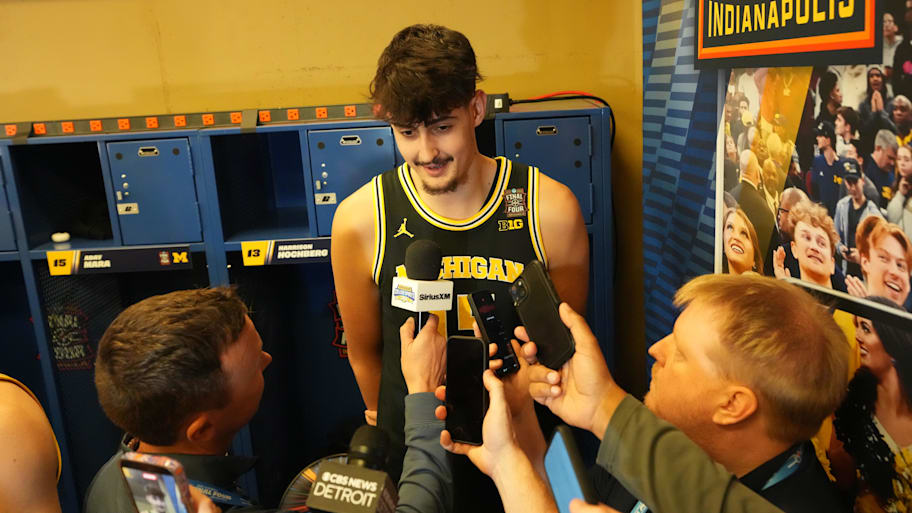
Though the Wolverines didn’t have to go as far to land Aday Mara out of the transfer portal following his time at league rival UCLA, the 7' 3" center is fourth in the country in blocks per game to fuel this run to a semifinal and one of his backups, 7-footer Malick Kordel, hails from Germany.
Mara is notably the first Spaniard to play in the Final Four and remains quite familiar with his primary opponent in the low post on Saturday night as he battled Arizona’s Krivas when the two big men played against each other during Lithuania’s 82–73 victory at U20 Eurobasket U20 in Poland two summers ago.
“I watch a lot of film of Pau Gasol, Marc Gasol. Now, [Nikola] Jokić. That type of center,” says Mara. “European basketball is getting bigger here with all the guys in the NBA and now in the NCAA, too. I’m very grateful because there’s a lot of players from Spain coming to play here. I’m happy that I can see different paths you can take to the NBA or the best level that you can get.”
This weekend in Indianapolis, that certainly includes a bit of European flair on the court at the Final Four that is impossible to miss.
More March Madness From Sports Illustrated
Listen to SI’s college sports podcast, Others Receiving Votes, below or on Apple and Spotify. Watch the show on the SI College YouTube channel.
- Road to the Final Four: March Madness Predictions, Picks for Saturday’s Final Four Games
- UCLA Has Improved in One Major Way in This Final Four: It Can Play Ugly
- South Carolina Forced UConn, Geno Auriemma Into the Worst Version of Themselves
- Geno Auriemma Made It All About Himself and That’s a Real Shame
- If North Carolina Doesn’t Land Billy Donovan, Is Blueblood Power Slipping?
This article was originally published on www.si.com as How International Big Men Are Shaping the Men’s Final Four.