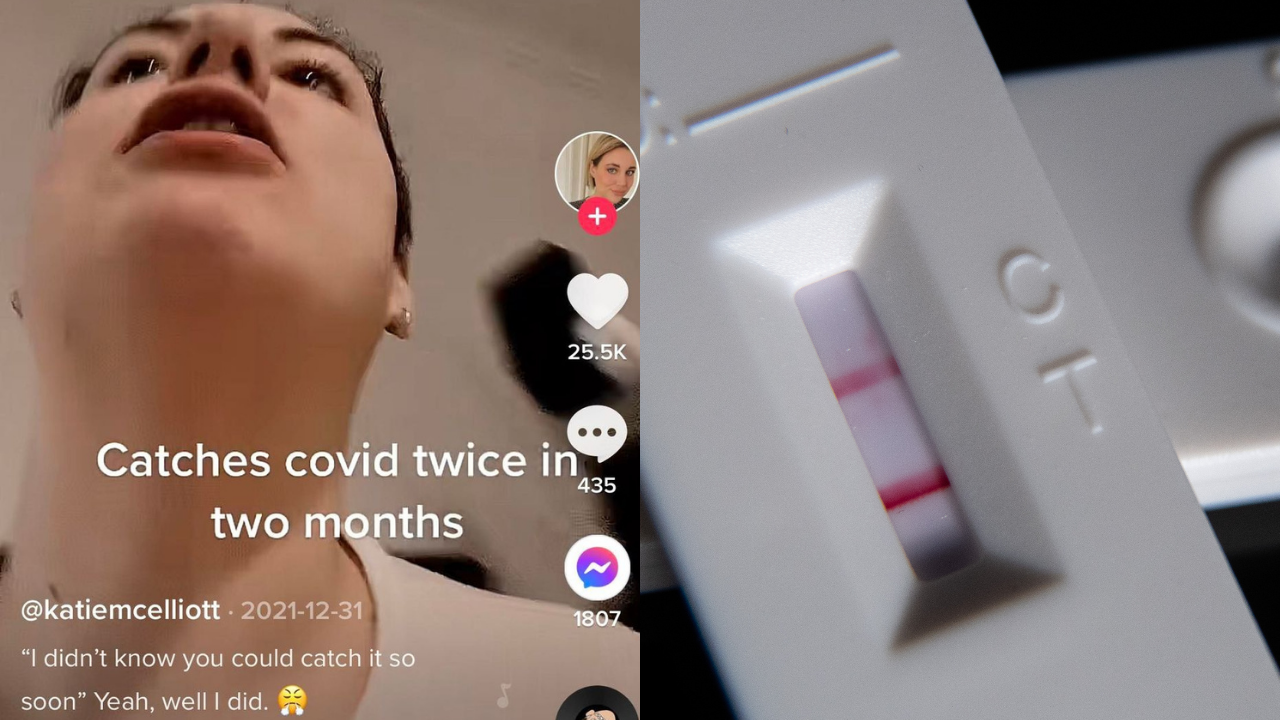
If you, like thousands of other Aussies, were visited by Ms Omicron this summer, chances are at least one of your friends has offered you the consolation prize of “at least you’re immune now!”
It may have been the one shred of hope you clung onto while sick in bed.
But is it true? And for how long? And what is the DEAL with boosters?
Before you throw caution to the wind and start thinking you’re invincible after making it through the plague, there are a few things we need to get straight.
I’ve just recovered from COVID, am I immune?
Short answer: no. But! Your immunity against the virus has been boosted for a little while.
Your immune system will be better at fighting the virus immediately after infection.
Like vaccines, an infection will help your body create antibodies that combat the virus.
But your cells have a memory, so to speak, and after time will start to forget how COVID looks and behaves.
How long does does this ‘boost’ last?
Well, it will vary from person to person.
Some studies have found it could last several months or even a year, while others are less encouraging.
One 2021 study of immunological memory found that about 95 per cent of participants retained immune memory at about six months after having COVID-19.
But a recent study from the University of North Carolina has found that strong protection following infection could last three months or less, and that the window would be much smaller for the unvaccinated.
NSW Health is more conservative still, saying people who have recovered from COVID-19 have “a low risk of getting it again in the 28 days after you are released as most people develop some immunity”.
Should I delay my booster if I’ve just had COVID?
The federal Department of Health says vaccination can be deferred for up to six months as past infection reduces the chance of reinfection for at least this amount of time.
It also says people who’ve tested positive for COVID should delay their next dose of vaccine until they have recovered.
People with prolonged symptoms from COVID-19 beyond six months should be vaccinated on a case by case basis.
Otherwise, there is no requirement to delay your booster.
In the US, the Centers for Disease Controls and Prevention advises people to wait 90 days after recovering from COVID before getting a booster.
However if you’re immunocompromised or are at a greater risk of infection due to your work or other circumstances, the Department of Health says you might choose not to delay at all, although you shouldn’t get a jab while you’re suffering symptoms of acute illness.
How likely am I to catch COVID twice?
Several clinical studies published in 2021 found that the risk of repeat infection decreased by around 80 per cent within a year of the first infection.
One US clinical study of young, healthy 18 to 20-year-olds found that infection was 82 per cent less likely in those who’d previously tested positive.
But that was pre-Omicron, so reinfection is still possible and could be more likely than we thought.
We don’t have much research on Omicron yet, but we know it’s more transmissible than all the other variants so the risk of reinfection could be higher.
It’s unclear what level of immunity occurs after an omicron infection, but one UK study published in December concluded that the risk of reinfection with the Omicron variant was more than five times higher than Delta.
Experts are also concerned for new variants emerging, as it’s more likely you can be reinfected with COVID if it’s a different variant to your first infection.
When Delta arrived, UK research suggested it raised the risk of COVID reinfection risk by 46 per cent in people who’d already had it, but with a different variant.
We all know plenty of people who’ve had COVID now, and soon we’ll start knowing people who’ve had it twice. So please keep wearing your mask, monitoring symptoms, isolating when unwell and following all health advice.
The post How Immune Are You *Really* After Recovering From COVID? appeared first on Pedestrian TV.



.png?w=600)