I’ve written a book called Lottery Boy about a homeless boy who wins the lottery. I don’t know what it’s like to be homeless. The only time I can even begin to get a sense of the kind of alienation someone on the streets might feel is coming to London on the train and wandering through Waterloo station. Instantly, you are someone who is in the way, visible to everyone but no one giving you the time of day as commuters rush to get somewhere. You can even stare right into their eyes and they still don’t see you. It’s a strange feeling, and I used it as a way in to begin writing about a boy called Bully and his dog called Jacky living on the streets together.

Bully is a determined 12-year-old, cynical and yet naive, withdrawn but unconsciously seeking a way back into the crowds around him on the London streets. As an English teacher I came across one or two boys with elements of Bully’s character - and I have to say that generally I didn’t used to like teaching these boys much. They were often confrontational, difficult to predict and hard work.
Occasionally I used to wonder what was going on in their lives; how they became like that before they were even mid-way through their teens, but mostly I was just glad whenever they weren’t there, sometimes even going so far as checking the register before lessons.
I got the idea for a story about a boy a little bit like this winning the lottery after overhearing a couple of boys discussing what they’d spend their winnings on if they hit the jackpot. And I remember thinking, “what would you do if you did win?” Who would you get to put your claim in? I didn’t think anything more about it, but years later the idea resurfaced as a homeless boy winning the lottery, perhaps because my wife had died and my life had changed in a way that I had never imagined.
When I started writing Lottery Boy, I didn’t do any formal research I but used things I’d noticed about people on the streets in London: for example, people who sleep rough are often not the same people who beg. In my story, Bully, the central character, does both, but he’s young and keen to evade social services.
Around the time I was writing the book, I started noticing a young man in his 20s called Chris, bedding down at the back of a sports hall doorway near where I lived. And I didn’t like noticing him. He never begged but he made me feel guilty all the same and sometimes I even went a different way to the shops so I didn’t have to notice him.
Sometimes I poked fivers and occasionally tenners into the top of his rucksack while he was asleep, hoping he wouldn’t wake up. I was doing a good deed, I thought, until the local newsagent fifty yards away where Chris often bought a cup of tea, told me he was getting increasingly anxious about someone leaving money in his bag. And he didn’t know what to do, and he hadn’t spent any of it.
I found this quite incredible, that a man without a home would treat the money I’d given him the same way a good citizen would if he’d found it on the pavement.
When I did finally speak to Chris to explain things, my words had no impact whatsoever: he simply looked straight through me. He wasn’t aggressive or defensive – I think he was simply frightened and disturbed by me, by what I’d done.
Homelessness is not just about a lack of shelter – on the streets your sense of self, often already fragile, is quickly worn threadbare. And it was perhaps after meeting Chris that I began to understand a little just how bad being homeless is, and what a lottery life can be.
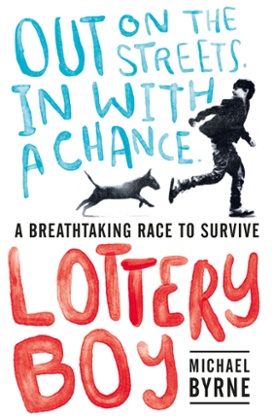
And this fed into the story I was writing, because the lottery that we play for money where everyone has the same chance of winning, and everyone is equal before the numbers are drawn, is not like life at all. In real life we all enter a very different kind of lottery on the day we’re born, and we all win… something. The big question is how much and what exactly do we spend it on? And that’s what this book, Lottery Boy, is really about.
Michael Byrne’s Lottery Boy is available at from the Guardian bookshop.