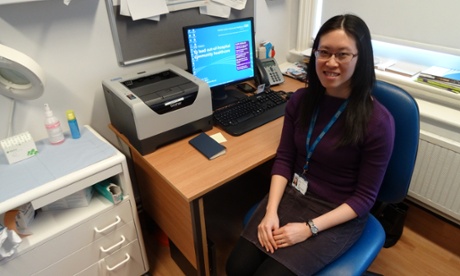
I wake up at 6.30am, and I am well on my way to London within the hour. A bus ride, overground train and interchanging tube journeys later I arrive at the clinic with a hot chocolate. I’m on the computer by 9am, checking my emails for urgent referrals, important notices, and the receptionist will pass on any messages requiring action. A pre-booked list of patients will be on the system.
A typical morning is filled with diabetic patients who require foot assessment, education and care planning, and new patients needing urgent treatment. This could include use of specialist dressings, urgent referrals to hospital or individualised care planning. Everything is paperless at work, from patient referrals to clinic notes, appointment diaries, and correspondence to GPs, consultants, and other healthcare professionals.
I specialise in treating hard-to-reach adults with diabetes in Westminster. This includes those with learning disabilities or mental health issues, or they could be homeless, housebound or have dementia. There’s a high prevalence of uncontrolled diabetes and foot problems among this group, which leads to higher incidences of amputation and hospital admissions. My role is to ensure these groups have access to specialist diabetes and foot health services in the community to reduce re-ulceration and re-admission to hospital. I’ve developed good relationships with local GPs, district nursing teams, and community services, and work with them to deliver the best packages of care to patients with complex needs.
Outreach work requires me to see patients in their own setting for assessment and treatment. I had an obese diabetic patient with an infected foot ulcer who had never accessed any foot health services before, because she is unable to walk down the stairs of her own flat. Last week I treated an ex-homeless man with schizophrenia with a red, hot, swollen foot who didn’t know he had sprained and fractured it. Each case has its challenges. Sometimes it requires more resources such as use of interpreters, longer treatment sessions, engagement with patients’ carers or families, more frequent visits, and referrals to many services to work together. Sometimes the case needs a rapid referral to the hospital team within 24 hours. The job frequently requires multitasking and I have to work quickly; it’s very hands on and emotionally challenging. Supervision meetings to discuss complex cases with colleagues and support from my line manager have been key to overcoming hurdles in the job.
I check my emails before leaving the office at about 5pm and then set off on my journey home. I enjoy cooking and nothing is better than tucking into some homemade food after a hard working day! When I’m not working I enjoy long walks as well as meeting up with friends and my group in the local church.
The most rewarding part of my job is being able to enhance people’s mobility and quality of life, and knowing that I’ve made a difference. It feels like no time has passed when the alarm clock rings again!
If you would like to be featured in our “Day in the life of...” series, or know someone who would be great to include, please email healthcare@theguardian.com