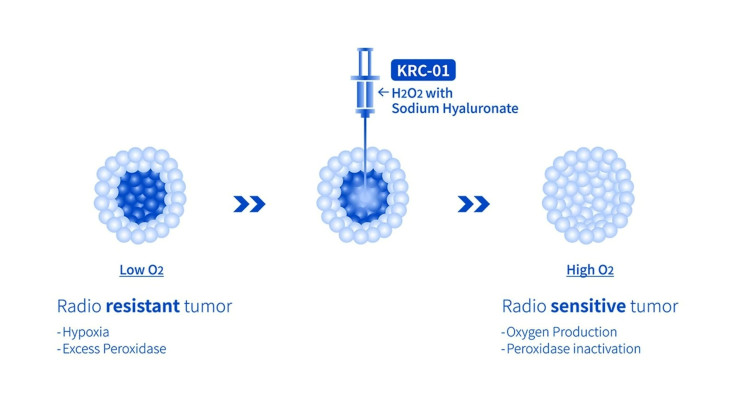
Radiation therapy is one of the most common tools doctors use to treat cancer. But for many patients with advanced tumors, radiation doesn't always work as well as hoped. A key reason is something called tumor hypoxia (areas inside a tumor that lack oxygen). Without oxygen, radiation has a harder time damaging cancer cells.
Now, a biotech company based in Palo Alto believes a familiar household molecule, hydrogen peroxide, may help solve that problem.
KORTUC has launched a new international clinical study testing an experimental treatment designed to boost oxygen levels inside tumors right before radiation therapy. The goal: make radiation treatments more effective without increasing side effects.
Radiation works by creating highly reactive molecules that damage cancer cell DNA. Oxygen plays a crucial role in that process. But larger or fast-growing tumors often develop poorly supplied regions where oxygen levels drop. Even if doctors precisely deliver radiation, those oxygen-starved cancer cells can survive, leading to treatment resistance or tumor regrowth.
This is a long-standing challenge in oncology. And it's especially common in locally advanced cervical cancer, the focus of KORTUC's new trial.
KORTUC's experimental drug, called KRC-01, uses hydrogen peroxide as its active ingredient. While most people recognize hydrogen peroxide as a disinfectant, the body also naturally produces small amounts of it in cells.
When KRC-01 is injected directly into a tumor shortly before radiation treatment, it temporarily increases oxygen levels inside oxygen-poor tumor regions. It also neutralizes certain enzymes that help tumors maintain low-oxygen conditions. Together, this creates a brief window where radiation can work more effectively.
Importantly, KRC-01 doesn't kill cancer cells by itself. Instead, it makes tumors more vulnerable to radiation, essentially removing a biological shield that protects resistant cancer cells.
The new Phase 1/2 clinical study will enroll 70 cervical cancer patients across hospitals in India, Thailand, and the United Kingdom.
All participants will receive the current standard treatment chemotherapy combined with radiation therapy. Some patients will also receive KRC-01 injections into their tumors just before radiation sessions. Researchers will first evaluate safety and dosing, then compare whether patients receiving KRC-01 experience better tumor control than those receiving standard treatment alone.
Doctors will also monitor overall health, side effects, quality of life, and imaging scans that measure tumor oxygen levels.
While this is the first large multinational trial, the approach has already been used in Japan. Over the past several years, more than 1,300 patients with difficult-to-treat solid tumors received hydrogen peroxide–based radiosensitization at university hospitals. Physicians reported good tolerability and promising local tumor control, with no unexpected safety issues.
Formal clinical trials have also taken place. A previous breast cancer study at The Royal Marsden Hospital in the UK published results showing the approach could safely enhance radiation response. Those findings helped pave the way for the current cervical cancer trial.
Cervical cancer remains a major global health challenge. Radiation therapy is central to treatment, but hypoxia-related resistance contributes to higher relapse rates in advanced disease. If KRC-01 can improve how tumors respond to radiation, patients may experience:
- Better tumor control
- Fewer repeat treatments
- Potentially fewer long-term side effects
In the future, improving radiation sensitivity might even allow doctors to use lower radiation doses while achieving the same or better results, reducing damage to nearby healthy organs.
KORTUC plans to test the approach in other cancers where radiation resistance is common, including breast, rectal, head and neck cancers, and soft tissue sarcomas.
"We are initially focusing on cancers with high unmet medical need where radiation therapy is already a standard treatment, but where hypoxia leads to high failure rates," says KORTUC CEO Kazu Matsuda. "Over time, we plan to expand this approach to a broader range of solid tumors, such as soft tissue sarcoma and head and neck cancers."
As patients enroll across international hospitals, researchers will gather critical data on safety and early effectiveness. If results are positive, larger trials could follow, bringing hydrogen peroxide–based radiosensitization closer to becoming part of standard cancer care.
For now, the study represents a new attempt to solve one of radiation oncology's oldest problems: how to defeat oxygen-starved tumors.