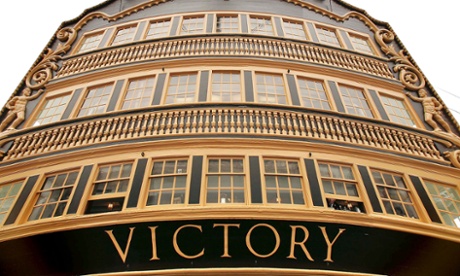
On 21 October 1805 HMS Victory sailed into the history of British naval triumphs as the flagship of Admiral Lord Nelson at the Battle of Trafalgar. However, if it hadn’t been for the sweaty nightmares of a Chatham carpenter, the ship could have joined the less glorious roll-call of great British cock-ups.
Victory was the pride of Chatham dockyard in Kent, the largest warship built for the Royal Navy. However, on 7 May 1765 shipwright Hartly Larkin realised, tossing in his bed in the small hours, with VIPs from the government and navy invited to stand on board for a splendid ceremony later that day, there was a calamitous error: Victory was too fat to fit through the wooden gates of the dock to be launched into the Medway.
“At best the gates would have gouged lumps out of the timbers – at worst if she had stuck in the dock entrance, and sat there unsupported as the tide fell beneath her, the keel could have broken,” said the naval historian Brian Lavery, who has been researching the episode as curator of the 250th anniversary exhibition, with exhibits including the bullet that killed Nelson, loaned by the Queen, at Chatham Historic Dockyard. “The cables were fixed to haul her out into river, but they would have had no means of dragging her back into the dock. She would have been destroyed, a heap of lumber, and ended on a bonfire in the dockyard.”
At first light Larkin, the “foreman afloat” responsible for the launch, rushed to the dockyard, measured and confirmed his worst fears: the ship was a good 9.5 inches too wide to fit through the gates. He told his boss, master shipwright John Allin, the appalling news. Lavery says that Allin, who was already described as “suffering from violent and frequent attacks of a bilious disorder in his bowels”, panicked, said the launch would clearly have to be abandoned and asked his junior what to do. Larkin asked for every available shipwright, and they set to with their adzes, chopping the frame holding the gates to pieces and just clearing enough room for the ship. The launch went ahead, with the guests totally unaware of the drama – even if some of the more sharp-eyed must have noticed the deplorably battered state of the gates.
Victory just missed the seven years’ war for which she was built, and sat for years at anchor in the Medway where Nelson, learning his navigation skills in its treacherous mudflats and tidal creeks, first saw her. When the ship was moved to Portsmouth, covered in barnacles and trailing seaweed, and rapidly outsailed her escort boats, it was realised just how good, manoeuverable and fast she really was.
Victory’s inglorious launch might have been forgotten, since Allin soon retired on health grounds, except that the unsung hero Hartly Larkin wrote the story of “the dreadful consequence which must inevitably have happened to the ship”, and petitioned the navy for some reward, “he having a large family”. Lavery found his letter in the records with, scrawled across the corner in another hand, “no notice to be taken of this application”. Poor Larkin asked to retire on a small pension in 1779, and died in 1803, so never saw the day of glory of the ship he saved, still preserved as a museum at Portsmouth.