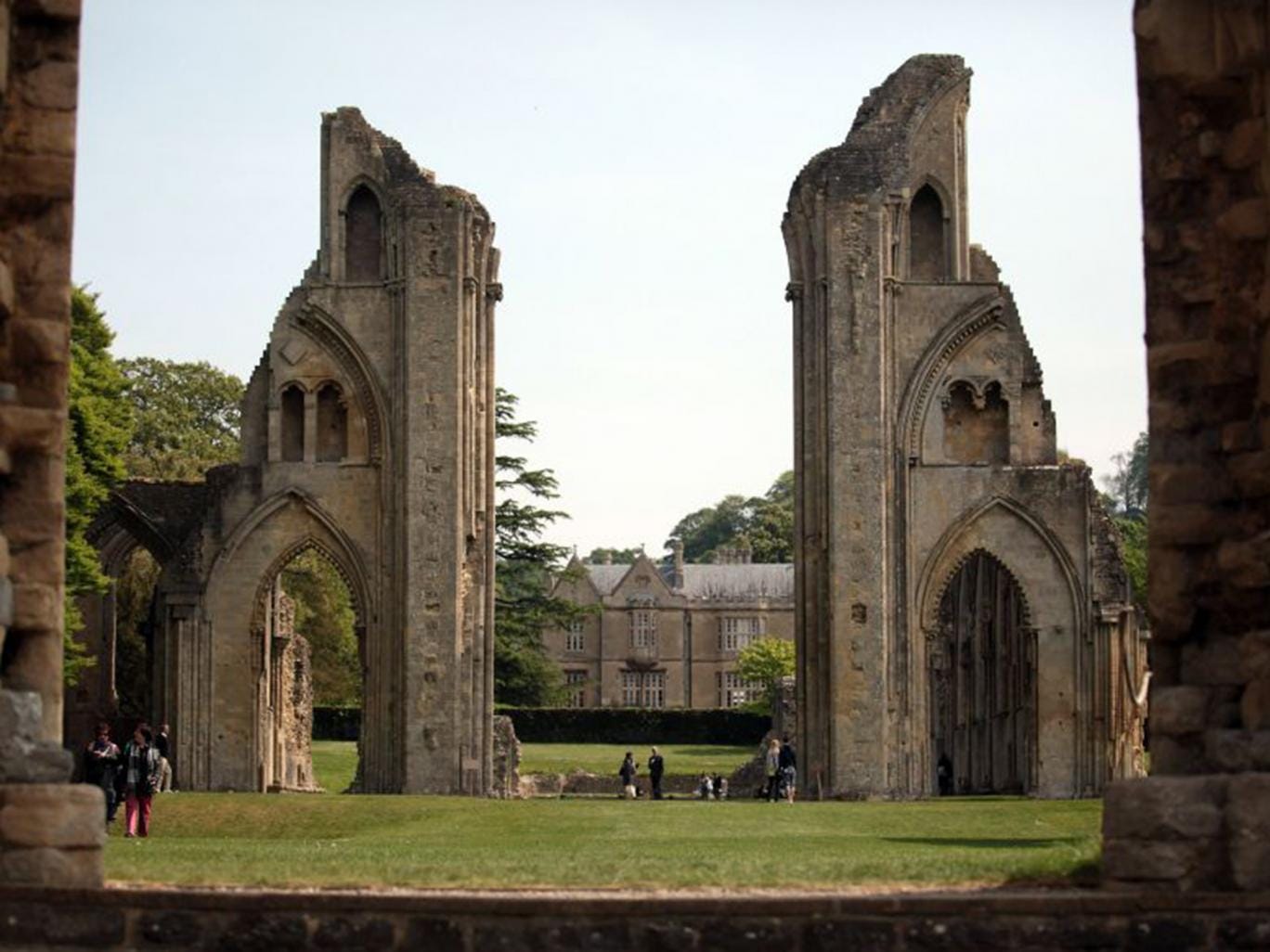
It has long been linked with the legend of King Arthur and the story of Joseph of Arimathea, but archaeologists have now torn apart a series of popular myths about Glastonbury Abbey, one of the most romantic religious sites in Britain.
They have sifted through hundreds of years of evidence and have found that stories about the abbey’s origins were most likely invented by medieval monks trying to turn a profit.
The abbey, in Somerset, was believed to have been founded by Joseph of Arimathea as Britain’s earliest church and was reputed to be King Arthur’s burial place. But those alluring myths have been dismissed by a team of archaeologists from the University of Reading following a four-year study.
Their analysis revealed how the medieval monks spun the abbey’s mythical links to make Glastonbury one of the richest monasteries in the country.
Professor Roberta Gilchrist, who led the study, said: “We took a step back from the myth and legends and used 21st-century technology to expose the abbey’s true history. This project has rewritten the history of Glastonbury Abbey.”
A key focus for the researchers was a re-examination of the work of Ralegh Radford, who excavated the site in the 1950s and 1960s.
Dr Radford claimed to have discovered Britain’s earliest Christian cemetery as well as the site of King Arthur’s grave – allegedly located by monks in 1181. But Arthur’s “grave” has now been found to contain material from the 11th to the 15th centuries, with no evidence linking it to the mythical king.
The new analysis has highlighted how the monks crafted the legends to restore the abbey’s fortunes after a devastating fire in 1184.
Professor Gilchrist said: “The monks needed to raise money by increasing the numbers of visiting pilgrims, which meant keeping the myths and legends alive.
“We found evidence that the monks laid out the buildings in a very distinctive way to emphasise the ‘earliest church’ story.
“The monks also deliberately designed the rebuilt church to look older. This swelled pilgrim numbers – and the abbey’s coffers.”