TV Asahi has admitted it reacted improperly to a sexual harassment scandal involving a top Finance Ministry official and a female reporter for the station. One failure was TV Asahi's inaction despite the reporter having consulted with a superior about being harassed by Administrative Vice Finance Minister Junichi Fukuda. The other was the reporter's act of providing a weekly magazine with information she gained through her reporting, according to the company's Thursday press conference. The Yomiuri Shimbun asked two experts about how organizations should respond to such issues, as well as the journalistic ethics of the matter.
(From The Yomiuri Shimbun, April 20, 2018)
Journalistic ethics must be upheld to maintain the trust of sources
As the Finance Ministry's falsification of documents regarding the Moritomo Gakuen issue has come to light, I assume the female reporter was working hard to gain information she needed from Administrative Vice Finance Minister Fukuda.
Fukuda, who has been accused of repeatedly making sexually harassing remarks to the reporter, can be considered to have been taking advantage of his position, which is abhorrent behavior by a public official.
At the same time, TV Asahi must also bear heavy responsibility, as it failed to protect its reporter, who had been sexually harassed. The superior whom the female reporter consulted with was asked to report the harassment as news, but the official concluded that reporting it was difficult for reasons such as concern that "the reporter could be identified and suffer secondary damage."
As the superior is said to have not reported the matter to company management, it can't be helped but to conclude that the superior hushed up the scandal. Had the company responded in a resolute manner at the stage when the reporter consulted her superior, she might not have supplied information to the weekly magazine.
With the company not taking appropriate measures, it is understandable that the reporter would have thought that the harassment she suffered was going to be overlooked. However, her passing on conversations she had with Fukuda to the weekly magazine means that she used information acquired through the process of reporting for purposes other than coverage by the company she works for.
Speaking in generalities, if a reporter uses information gained through news coverage and documents for anything other than the company's reporting, this damages the relationship of trust between the reporter and the source of the information, which makes subsequent reporting difficult. Such cases can lead to a situation where the media finds itself unable to respond to the people's right to know.
It is a fact that the reporter's action resulted in coverage of the story by the weekly magazine, and thus became the decisive factor in bringing the sexual harassment case to light. However, it must also be said that handing news information that requires high levels of confidentiality to a third party constituted a deviation from journalism ethics, which stipulates that sources of information should be protected and that news information should not be used for any other purpose than the aim of reporting. I believe that TV Asahi's inappropriate response led to the actions of the reporter.
This is apparently not the only case where a reporter has been sexually harassed by the person who was the subject of an interview. There are limitations to the actions that an individual can endure. I believe it is necessary for companies, or even the entire media industry, to take measures such as creating guidelines for dealing with sexual harassment by interviewees.
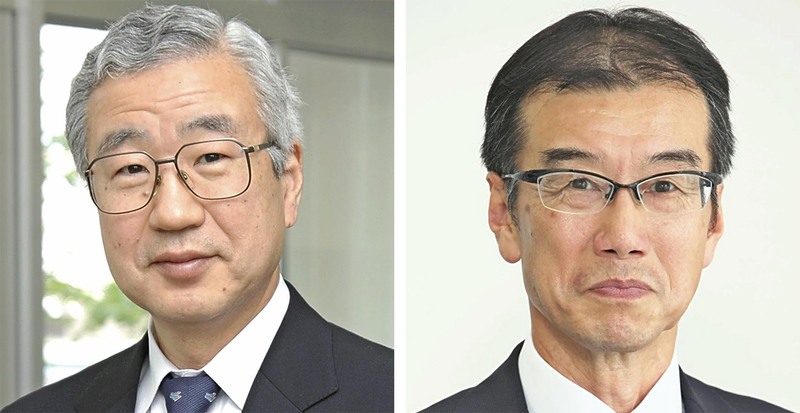
-- Masahiro Uzaki / Dokkyo University Emeritus Professor
Uzaki specializes in the Constitution and laws concerning media.
Protecting employees a requirement amid changing views on the issue
The crux of whether a company responds appropriately to complaints of sexual harassment by its employees lies in whether the victim can report accurately to their superior about harassment, and whether the superior can listen properly to what the subordinate says.
In this incident, the female reporter stated her allegations of sexual harassment by Vice Finance Minister Fukuda to her superior. I assume this required great courage. Strictly speaking, at this point the superior should have reported the matter to management, and TV Asahi should have responded as an organization -- this was the turning point of the case.
It is open to question why TV Asahi did not choose the option of officially protesting to the Finance Ministry. Even if the ministry had not responded seriously to the protest, the reporter would have been able to feel that her company had made an attempt to protect her.
According to TV Asahi, the reporter's superior stated the reason the official concluded the case was that it was "difficult to report" as "the reporter could be identified and suffer from secondary damage." This explanation is not really convincing. Did the superior take the matter lightly, thinking that the female reporter just needed to endure the treatment to obtain information?
As a result, a number of people have likely gotten the impression of TV Asahi as a company where reporters go against industry ethics and leak information that has been gained during their reporting. It is also possible that a sense of disappointment will spread to other employees, as TV Asahi has not been able to protect its own reporter.
The possibility of female reporters who conduct one-on-one interviews with male interviewees being sexually harassed is an issue that could have been predicted. These days, there are many companies that make rules on how superiors should respond in cases when a subordinate reports claims of sexual harassment. It seems, however, that TV Asahi had not given sufficient thought to the likelihood of such a scenario.
Last year, triggered by allegations of sexual harassment in the United States, numerous celebrities and everyday people complained about their own personal experiences with sexual harassment through Twitter and other social media in the #MeToo movement, which spread widely. We can expect an international trend of not condoning sexual harassment to continue to grow stronger.
It is a requirement of the times to protect staff who claim they have suffered sexual harassment by interviewees, business partners and others. Resolute measures must be taken to ensure that no employee is forced to silently bear such harassment.
-- Katsuyuki Kamei / Kansai University Professor
Kamei specializes in risk management.
Read more from The Japan News at https://japannews.yomiuri.co.jp/