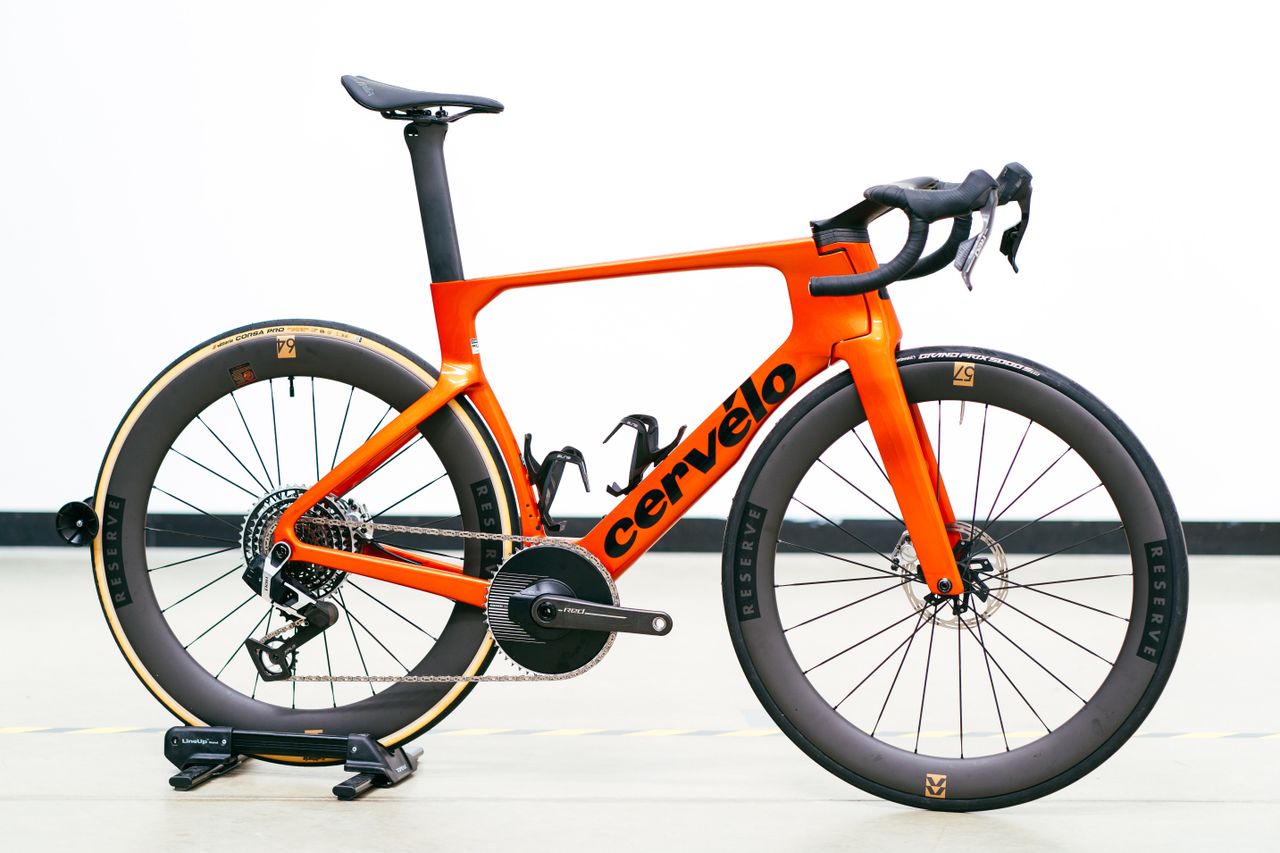
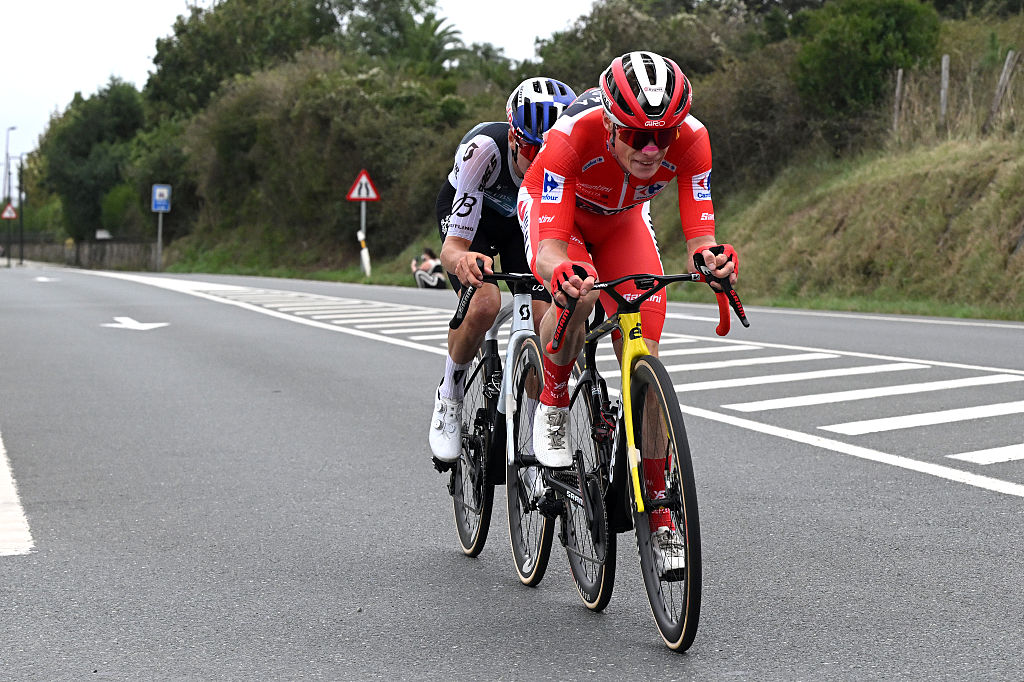
Just before the start of the 2025 Critérium du Dauphiné, several Visma-Lease a Bike riders were spotted on what appeared to be a marginally different version of the team's aero bike offering, the Cervélo S5.
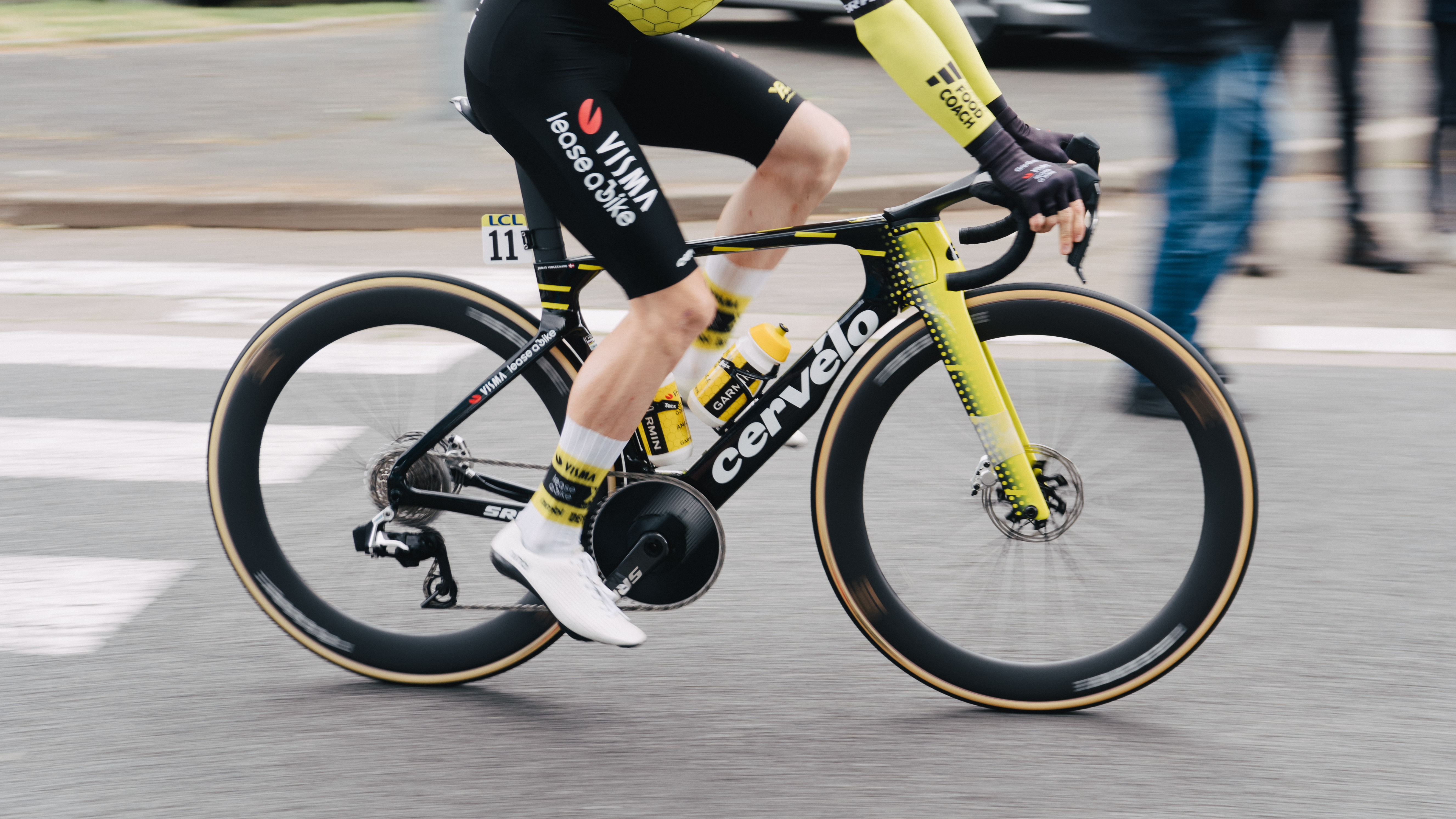
Traditionally kept for flatter stages with less elevation gain, this bike quickly became the only bike of choice for the men's team, and it was used to great effect to achieve a podium finish in the Tour de France, as well as taking a mountainous stage win. It then continued this success by taking the overall title at the 2025 Vuelta a España for Jonas Vingegaard.
Being one of the first out-and-out aero bikes, the S5 has gone through several redesigns over the years. Nothing revolutionary, more evolutionary, but in this latest version, Cervélo says it has reduced aerodynamic drag by an equivalent of six watts, while also trimming weight and adding compliance.
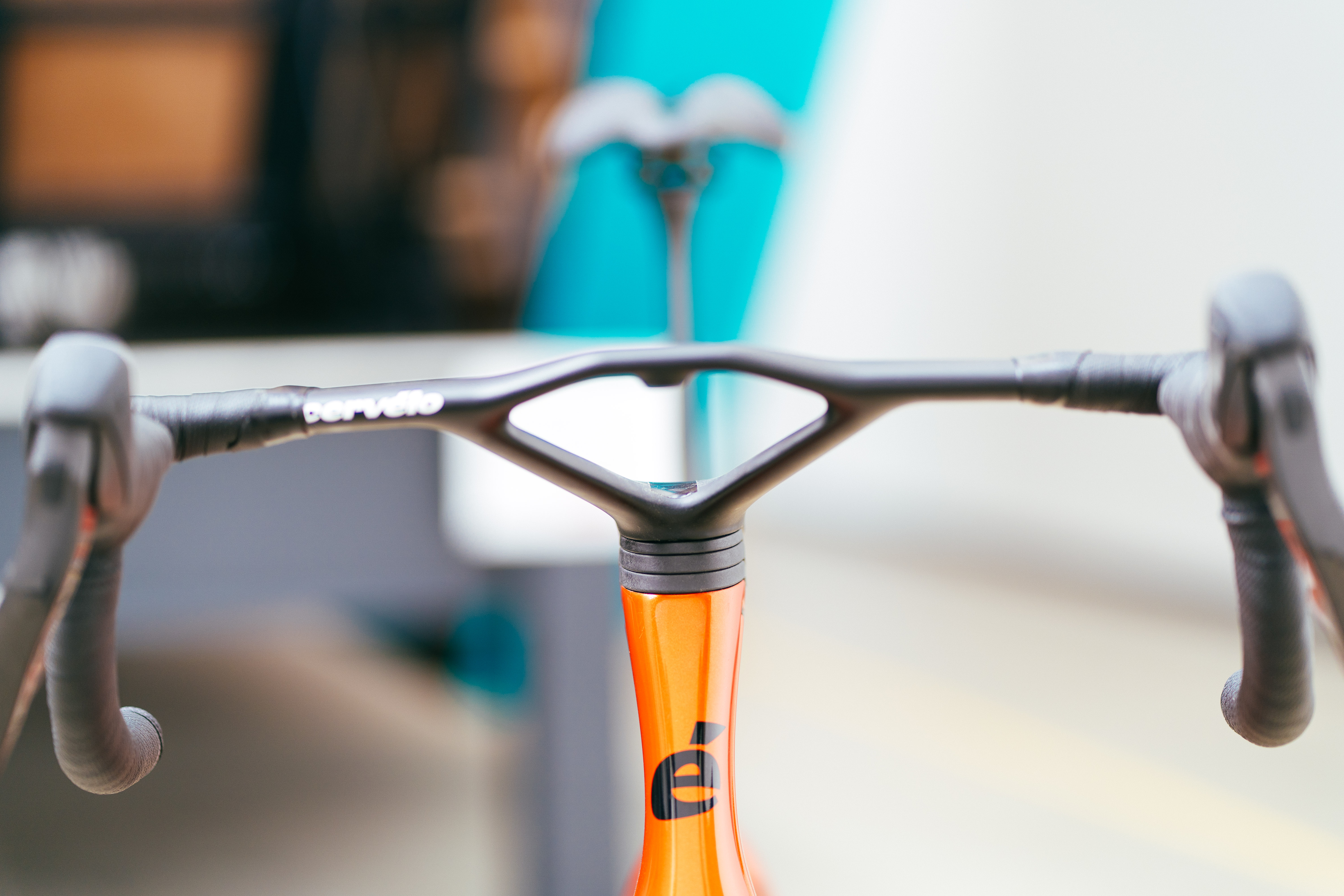
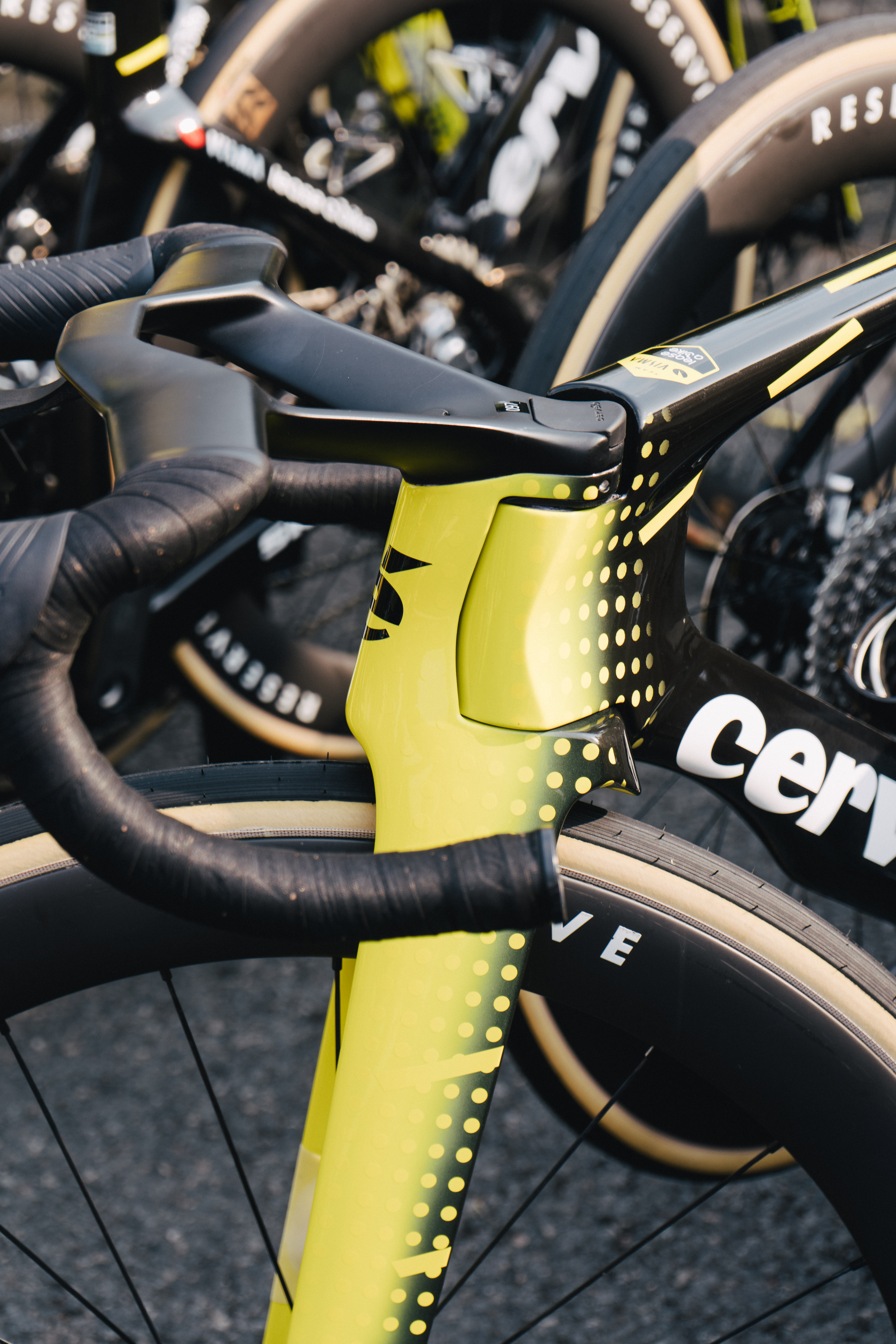
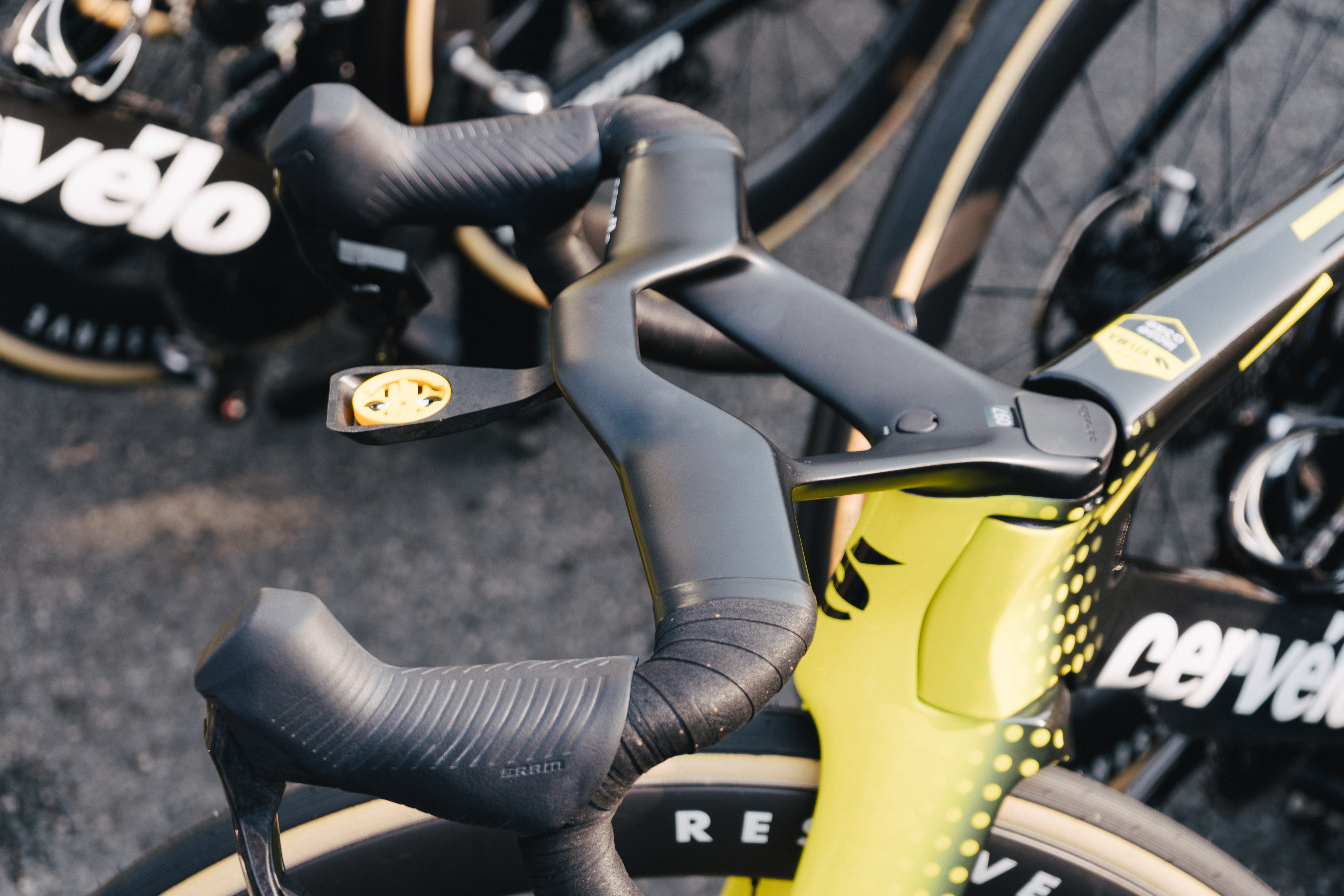
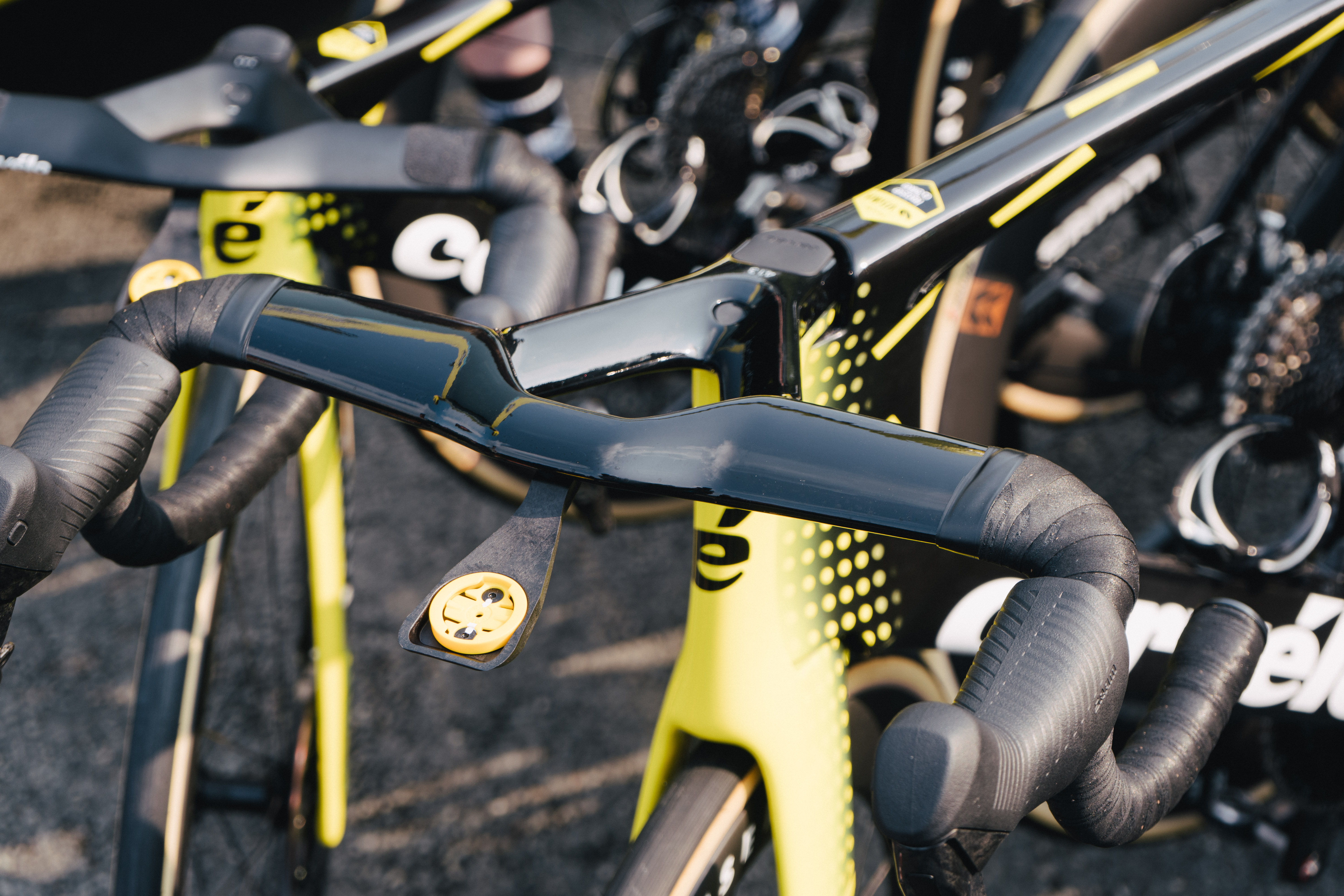
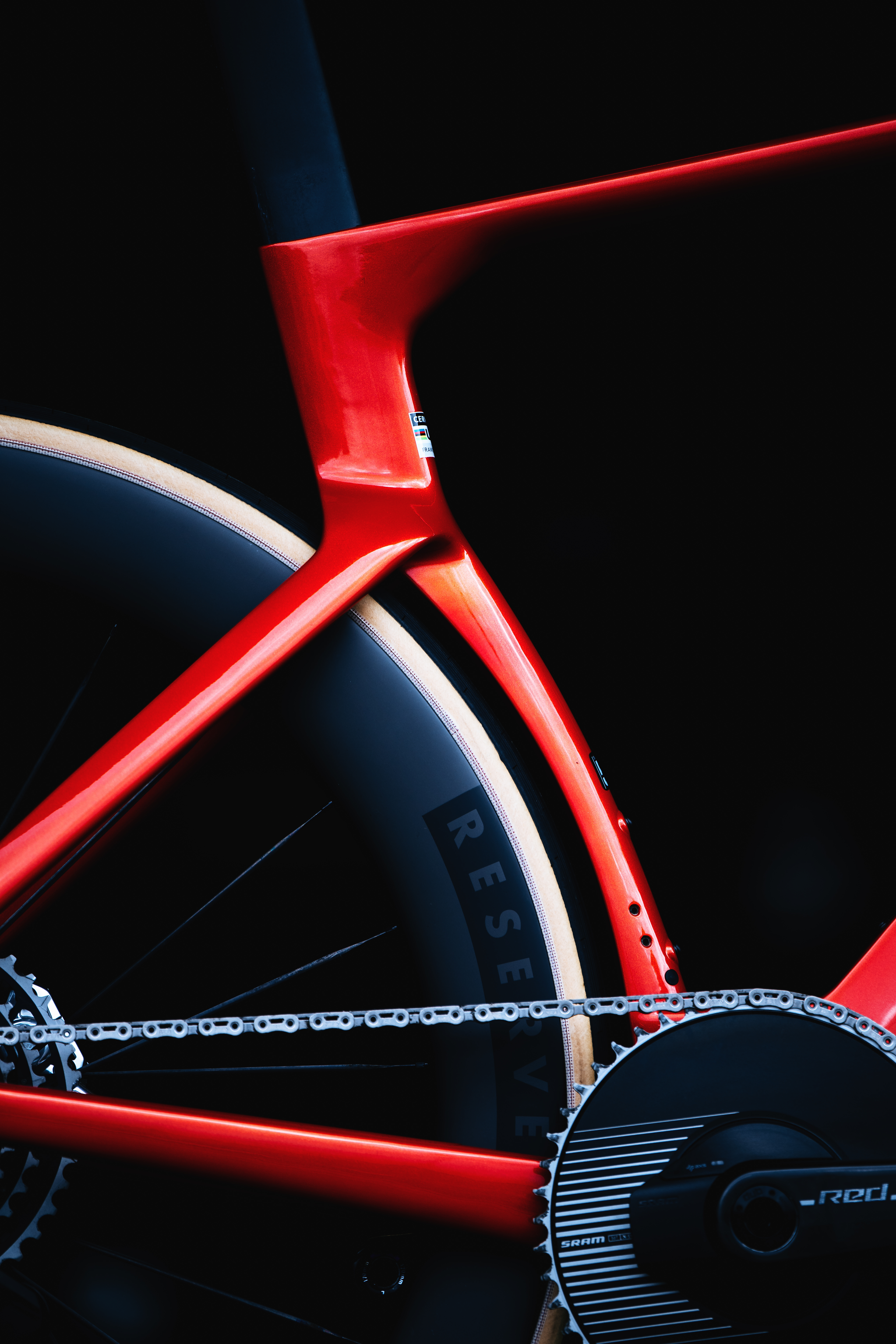
This bike features a far deeper bayonet fork design, while the handlebars have gone from the awkward two-piece design to a one-piece option with new grip options. It still looks undeniably like the S5 silhouette, but this new weapon of choice of both the women's and men's Visma-Lease a Bike teams appears to have stayed ahead of the curve in bike performance, given the plethora of results achieved upon it.
Cervélo says it's the "fastest aero bike in the peloton," a claim also made by Colnago at the launch of the Y1Rs, and Factor too, with the recent launch of the ONE.
To find out once and for all which is fastest, we took all three to the wind tunnel alongside the Ridley Noah Fast, the Van Rysel RCR-F, the Scott Foil and many more, for an aero bike wind tunnel shootout.
Long-time readers of Cyclingnews will have seen the results already, but if you're curious how the S5 stacks up against the competition, how the performance changes with our 'control' wheelset, and how many watts it can save against an old, budget-friendly rim brake bike, keep reading.
The test and protocols
If you want an in-depth overview of our testing protocol, head over to our aero bike wind tunnel shootout story, but here's a brief recap.
To start, we used the bike in its off-the-shelf specification, but with a couple of key standardisations to ensure data between bikes is more consistent.
We tested the bike in three conditions: bike-only, bike with rider, and bike-only with Enve SES 4.5 wheels.
All bikes have a size 56cm frame or equivalent, and their geometries were matched as identically as possible to other bikes on test.
In keeping with our empirical testing, a 25mm Continental GP5000 S TR front tyre was used for each test. As the first point of contact for the airflow, an equal tyre size and spec is a fair way to ensure progressive brands that spec 28 or 30mm tyres aren't unfairly punished for this.
In the test using the standardised Enve wheels, we fitted a pair of 28mm GP5000 S TR tyres as opposed to the 25mm option. The same inner tube valve length and tyre pressure were used across all tests.
Where a bike is designed with aero bottles, they are used, because if you buy the bike and have them, you're unlikely to remove them in favour of a slower, round bottle.
In the case of the Cervelo, which doesn't specify aero cages or bottles, Elite Vico Carbon bottle cages are used, with Elite Fly bottles, for a fair and standardised comparison that's reflective of how you'll use the bike in the real world. No computer mounts were fitted to the bikes though, because not all bikes come with one, and the leading edge will differ depending on your use of a Garmin, Wahoo, Hammerhead or other.
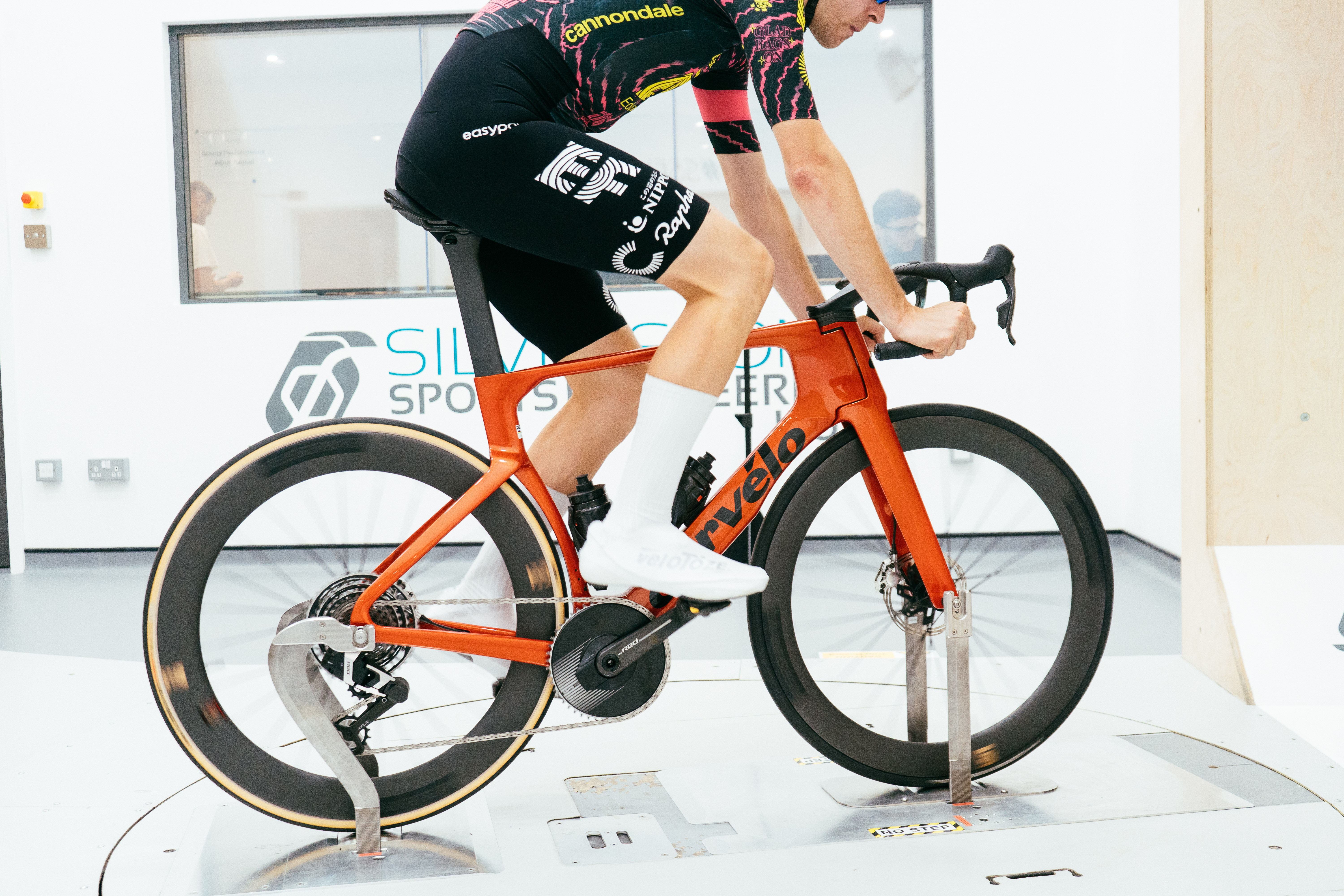
Our rider's test kit remained consistent across all testing, and the wind tunnel also neatly created an 'Edge' or ghost outline of the rider to ensure the same position is held from test to test.
Each test was conducted at 40km/h, representative of a faster pace for amateur riders, with yaw angles (essentially the angle of the bike compared to the wind direction) of -15°, -10°, -5°, 0°, 5°, 10° and 15°.
For bike-only tests, we captured for 10 seconds per run, and for bike-and-rider tests, 30 seconds per run at a pedalling cadence of 90 RPM.
Another note is that the confidence and margin for error on tests have also been calculated as follows:
Rider on bike |
Bike only |
|
|---|---|---|
CdA (+/-) |
0.0021m2 |
0.0004m2 |
Watts (+/-) |
1.73w |
0.33w |
The Results
Results: Bike only
Interestingly, for the bike-only test in its stock fit with Reserve wheels, the S5 was fast, but not the fastest. At zero degrees of yaw - essentially a direct headwind - the bike performed fastest of all with a CdA (Coefficient of Drag x Area) of 0.0736m², but as the wind angles grew wider - effectively becoming more of a crosswind, the drag increased faster than most.
After weighting the seven yaw angles appropriately to be more reflective of real-world wind conditions, and then averaging them for a single CdA measurement per bike, the bikes are ordered from most aerodynamic (and thus, fastest) to the least aerodynamic.
With an average CdA of 0.079m², the Cervélo S5 sits reasonably mid-table in our cohort of bikes on the day. It's marginally behind the Colnago Y1Rs, albeit within the error margin, and so the two are statistically equal.
Using those CdA measurements, we can then solve for watts, as we've done above. The order of bikes stays the same, but the difference is perhaps more comprehensible to cyclists.
The graph above shows that at 40km/h, the S5 required 65.06w of power to overcome the aerodynamic drag, about 3.5 watts slower than the fastest in this test but a good 36.73 watts faster than our 'baseline' bike; Josh's own 2015 Trek Émonda ALR, complete with shallow wheels and rim brakes.
Of course, bikes can't pedal themselves, so this is more for comparative purposes than any real-world application, but it helps us see which bike is fastest in isolation, with as few potential variables involved as possible.
Results: With a rider
When we put a rider on the bike, the story changes somewhat.
The S5 was 2nd fastest at zero degrees yaw (a direct headwind), but the fastest at both +/- five and +/- 10 degrees. At the higher +/- 15 degree yaw (more of a crosswind), the Cervelo falls back down the rankings again, as seen here by the green line climbing higher than some of the competitors.
Once again, we've weighted these datapoints and calculated the averages, and the S5 returns a CdA of 0.3318m². That's just 0.0001 lower (faster) than the Factor ONE overall, meaning it's technically the fastest bike we've ever tested, in this with-rider configuration, but with a couple of caveats.
The first of which is that the Factor ONE is close enough behind it that, when you consider our error margin, it too can lay claim to the top spot.
And the second is that we could only get our hands on a Cervélo S5 with the 1x SRAM Red XPLR groupset, meaning it was fitted with a single chainring and no front derailleur, whereas other bikes were fitted with Shimano Dura-Ace 2x groupsets.
Exactly what difference this made against a 2x groupset is unknown, but it is likely to have been to its advantage.
Solving for watts at 40km/h, this meant that the S5 required 273.12 watts to overcome its aerodynamic drag. That's 0.05w fewer than the Factor ONE, and just over 3.5w fewer than the Colnago Y1Rs.
Notably, it's also 12.12 watts better than the Bianchi Oltre RC, which was admittedly designed a few years prior, but it goes to show the spectrum of bikes being used in the pro peloton.
Results: Bike only, with standardised wheels
Given it's rare that any two different bikes are supplied with the same wheelset, we wanted to perform a second test to quantify how much of the aerodynamic performance could be attributed to the frameset itself, so we performed a second round of tests using a control wheelset, the Enve SES 4.5.
Upon swapping, the S5 was the fastest at zero degrees yaw, but at higher wind angles, the drop-off in performance was even more severe.
Given that Cervélo and Reserve are both under the same Pon Holdings parent company umbrella, it's logical that the S5 and the Reserve wheels are designed to work well together, and that's proven true here. With the Enve wheels, the S5 required 0.43 watts more to overcome the aerodynamic drag than when fitted with the Reserves.
Despite this, though, the S5 actually climbed a step in the rankings when compared to the earlier bike-only test. Or, more specifically, the Argon 18 Nitrogen Pro's performance worsened by a greater amount.
How many watts does a Cervélo S5 save against a cheap bike?
Looking at the bike and rider savings versus the Trek Émonda ALR, our 'baseline' control bike, chosen to let us see the difference between superbikes and the old bike you might have in your garage at home.
With a rider, the Cervélo S5 is the overall winner, saving 27.57w at 40km/h across an average of the yaw angles tested. According to our popular cycling training app, TrainerRoad, the average experienced user on its platform has an FTP of 266 watts, so while a fast bike is no replacement for consistent training, it's equal to a 10.3% bump in fitness.
As a bike alone, it performs comparatively poorly.
Comparing to our 2024 bike test
Long-time Cyclingnews subscribers will recall our first big bike test, which included the Tarmac SL8, Trek Madone, Canyon Aeroad CFR and more.
Another benefit of using the Trek Emonda ALR 'control' bike is that quantifying the watts saved against this baseline on each given testing day allows us to compare results over different tests.
In the bike-only test, it's the 7th fastest bike we've tested. Interestingly, it's two watts faster than the 2024 model S5, not the six watts claimed by Cervélo, and that's comparing against a second-tier model with SRAM Force too.
In the with-rider test, it is the fastest bike we have ever tested, albeit within the error margin, and therefore the Factor ONE can also lay claim to top spot. It's 4.9w faster than the do-it-all S-Works Tarmac SL8, and almost 10 watts faster than the Cannondale SuperSix Evo 4. Interestingly, it's 5.8 watts faster than the 2024 model S5, which is certainly close enough to that six-watt claimed saving for us to believe the brand's claims.
How does it compare
Based on our rider-on-bike tests, the Cervélo S5 is the fastest bike we've ever tested in our wind tunnel tests, with the Factor ONE sitting close enough behind to also have a claim to the podium's top step.
At 7.46kg (without pedals, bottles or cages) it's certainly not the lightest bike we've tested, but it's far from unreasonable for an out-and-out aero bike. The Factor ONE is 7.35kg but is devoid of any paint, which will take a few hundred grams off most frame weights. For comparison, the Tarmac SL8 weighed in at 7.18kg, but here we weighed with pedals, bottles and cages, so not a true apples-to-apples comparison.
Obviously, weight has not proven to be an issue on this bike for the professional riders using it. All but the tallest riders, such as Matteo Jorgenson, have been using the S5 exclusively. Presumably, this means in smaller sizes, it can get close to the UCI's 6.8kg weight limit, or close enough that the aero savings far outweigh the lower weight benefits of the R5, even on steeper gradients.
Another interesting consideration, though, is that we tested this bike as a 1x option with no front derailleur. This removes weight from the front mech and second chainring, but is worth approximately one watt of aerodynamic drag at speeds of 40km/h. This is the same setup used by the Visma-Lease a Bike men's team, even on some of the more mountainous stages. Also, that new bar/stem combo is going to be more difficult to tailor after sale than the previous two-piece offering.
A bonus of this new one-piece system though, is an increase in stiffness, as well as compliance, comfortable hand-hold positions, and a lower weight. All this likely contributes to why this bike was the bike of choice for racing, even with a potential lighter R5 option at the team's disposal.



Conclusion
Whether it could lay claim to the top spot with a 2x chainring as per the Factor ONE's groupset is unconfirmed, but based on testing and the way the bike has been used in the professional ranks, it's hard to argue against the Cervélo S5 being one of the fastest in the WorldTour right now.
It is the most aerodynamic offering we have tested with a rider onboard at 40km/h, and it has been used to win mountainous races, so weight is clearly not a limiting factor.
Cervélo offers it with bar widths of 36-40cm, as well as stems of 80-120mm in length. Having 40cm as the widest bar width is also a highly progressive move, although, unlike some brands which offer full customisation when buying, you are at the mercy of the bike shop you buy the bike from as to whether you can switch out for a different length and width combination.
And while the S5's £12,000 price point is an incredible amount of money, it's less than both Factor and Colnago are asking for their flagship aero race bike, and you even get a power meter as part of the package here. The likes of Cube and Elves offer significantly cheaper top-tier packages, but they are both heavier and slower if you want every ounce of performance from your bike.