AI feels like magic — largely because most of us don't understand how it really works.
Why it matters: This story will radically break down the process so this technology — which is becoming as commonplace as the Internet — feels more real and less magical.
- "My advice for you is to start from something that you have created with AI and walk backwards of how it works," Remi Raphael, the first-ever chief AI officer of the nonprofit Electric Power Research Institute, told me. "Bits and bites. Electrons to microchips."
Let's begin at the end: Whether it's a memo for your boss or a meme of your cat, it's all produced the same way. Let's focus on a cat image, because that's more fun.
- This — radically simplified — breakdown comes from my interview with Raphael and several others in the AI and energy nexus since I started.
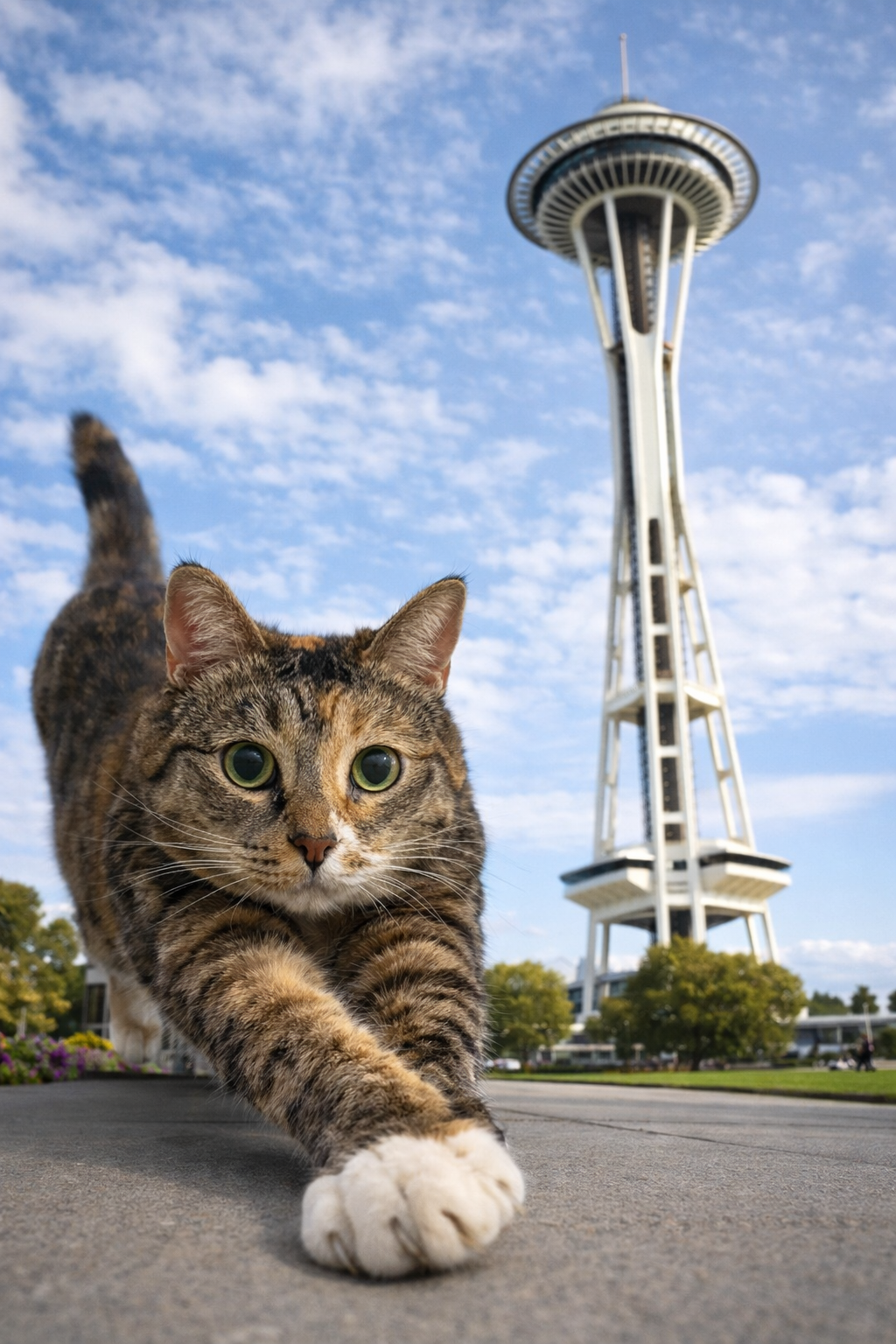
Step 8 (end goal): My giant Seattle cat image. I use an AI tool — like ChatGPT or Gemini — to write a prompt for an image of my cat made giant stretching next to Seattle's Space Needle.
- The platform delivers it to me, even though all the heavy lifting happens in a data center far away — just like the regular ol' Internet.
Step 7: The hardware doing the work. Inside a data center, the image I requested is crunched by powerful chips, most often GPUs (graphics processing units).
- These GPUs live in rows of computers that AI companies use — sometimes ones they buy, but often ones they rent from cloud giants like Amazon, Google and Microsoft.
- All this computing creates a lot of heat, so data centers need massive cooling systems, which use a lot of electricity. And the computers themselves draw huge amounts of power. (More on that in a moment.)
We're taking a small shortcut here, because not all computing is created equal. Generating that cat image actually involves two kinds of computation inside data centers:
- Training the model, which happens long before you ever ask for an image and requires far more energy.
- Responding to your request — a phase known as "inference," which is what happens when you actually generate the cat image.
Step 6: The hardware behind the hardware. The companies running these AI systems rely on GPUs built mainly by one company: Nvidia, which dominates the market.
- A GPU is a type of microchip — often just called a "chip" — designed to handle huge numbers of small calculations at once, which is exactly what AI needs.
Step 5: Software foundation. Those GPUs sit inside cloud infrastructure that large tech companies own and operate.
- These companies provide the software that lets AI systems actually run on all that hardware.
Step 4: Energy management. Because millions of people are using AI, data centers need huge amounts of electricity. (Indeed, as we've written about a lot: Global electricity demand from AI-optimized data centers is projected to more than quadruple by 2030.)
- Companies like startup EmeraldAI and longtime players like Schneider Electric work to make that energy use as efficient as possible — from smarter cooling systems to software that helps data centers avoid wasting power.
Step 3: Physical foundation. This is the world of companies that build and operate the data centers themselves.
- That includes standalone operators including Crusoe, which grew out of the energy sector, as well as Vantage Data Centers and Digital Realty, that host equipment for many different customers.
Step 2: Grid connections. This is where the data center from Step 3 connects to the electric grid.
- Key players here range from grid operators to utilities to firms acting as middlemen, like Cloverleaf Infrastructure, which help data center builders secure two scarce resources: land and power.
Step 1: Energy generation. This is the original energy source — a wind farm, nuclear power or natural gas plant that either indirectly powers data centers via the grid or (increasingly common) is directly connected to the data center.
- No matter how clean or dirty the power source is, the electrons themselves are the same — but the source determines the emissions profile and other features (like if it needs backup power or if it's stable).
The bottom line: AI's "magic" is actually a giant stack of energy, hardware and software working together so your computer can turn a few typed words into a giant cat sightseeing in Seattle.
What's next: Behold: the image itself!
This story has been updated with a new infographic.