Despite being a key player in the money making industry, back in 2001 Aberdeen-based Woollard & Henry was facing a financial crisis of its own.
At the time the family-run company focused on making dandy rolls, a specialist piece of equipment used by the paper industry to make watermarks on a range of high-security paper including banknotes. However, the turn of the millennium saw Woollard & Henry in increasing trouble as a result of the steady decline of the paper industry. The already gloomy scenario was compounded when the company's majority shareholder fell ill, forcing him to retire.
The result was that in 2001 the company's owners announced that they were calling it a day and the workforce, which at the time numbered 32, were sent redundancy letters. The 135-year-old company was all set to become just another victim of the declining paper industry, when just in the nick of time rescue came in the form of the Baxi Partnership, a private equity fund that specialises in promoting employee ownership.
Baxi had made contact with Woollard & Henry through Tullis Russell, an employee-owned paper mill in north-east Scotland and eventually it was decided that Woollard & Henry would restructure into another employee-owned business.
"To be honest given the perilous state of the paper industry and our own management crisis there weren't exactly a lot of people queuing up to buy the company," admits Fred Bowden, Woollard & Henry's managing director who joined the company from Tullis Russell in 2002.
"At the time we had very few options and, in all likelihood, without the buyout the company would have folded."
Baxi funded the buyout from Woollard & Henry's owners for £1.3m with Baxi taking 50% of the shares and the balancing 50% being placed in an employee benefit trust. In this way the workforce were able to become owners of the company without having to incur any personal debt.
Whilst Baxi had rescued Woollard & Henry from a near certain demise, Bowden still faced a monumental task of getting the ailing company back on track.
"Not only were we faced with having to rebuild the entire management structure virtually from scratch following the departure of the previous management team, we'd also lost a number of key clients after they'd heard that we were closing down," explains Bowden.
Crucially, though, the one key thing in Bowden's favour was that the workforce – who were now the new owners – were fired up and determined to make the business succeed.
Over the next decade the newly installed management team and the workforce rolled up their sleeves and set about resurrecting the company.
"We knew early on that the key to our long-term success would be to diversify away from Woollard & Henry's traditional core business of making dandy rolls. In this regard we've successfully moved into new niche products within the paper industry," says Bowen.
Now 11 years after the employee buy-out Woollard & Henry, which currently employs 42 staff, is operating on a far more secure footing.
"In 2011 our turnover was £5.6 million up from £900,000 at the time of the buyout and last year we made a profit of £630,000," says Bowen. "We've also been able to buy out Baxi so now we own 100% of the company's shares."
Significantly, the export market has proved to be instrumental in turning the business around.
"We're currently exporting to 23 countries, and this now accounts for 65% of our turnover," says Bowen. In fact, he and his team have been so successful in boosting their exports that in 2009 the company was awarded a Queen's award for international trade.
Given the success that Woollard & Henry is now enjoying, how much of this can be attributed to the employee ownership business structure? "What employee ownership has given us is a massive commitment from the workforce," replies Bowen. "They understand the importance of making sure that we give great customer service, remain competitive and that we continue to have a great product offering to bring to the market."
So having helped steer Woollard & Henry into employee-ownership, what's the most important lesson that Bowen has learned? "Never underestimate the importance of communicating with staff," replies Bowen. "We spend a lot of time and effort on internal communications as you need to bring your workforce with you and they need to know where you're going with the business."
And how did the workforce react to the move to employee ownership? "I was absolutely delighted," admits Craig Watson who has worked at Woollard & Henry for 24 years. "From being told that the company was finished to finding out that you would be an owner of the company was very exciting, not just for me but for the whole workforce."
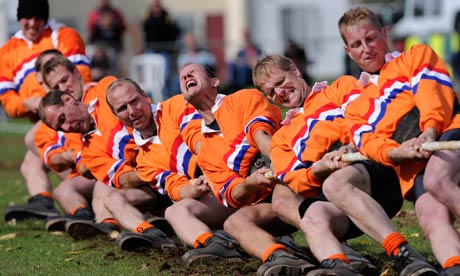
As one of Woollard & Henry's two employee directors, Watson is an enthusiastic advocate of employee ownership. "The old management operated very much a closed door policy whereas now it's very open and frank," says Watson. "Employee ownership gives you the drive to make the company successful because you're a part-owner. If you can help to make things work then you'll reap the rewards of being a successful company."
Depending on the amount of profit for a given year, these rewards take the form of cash bonuses, dividends on shares held by individual members of staff, and a free share issue scheme.
"There's a strong feeling that we're all pulling together," adds Watson. "If you pull together then you'll end up only going in one direction – and that's upwards."
• According to the Employee Ownership Association there are now over 100 employee-owned companies across the UK including some of the most well known companies in the country: Arup, John Lewis, Unipart and Waitrose. The latest research suggests that the combined annual turnover of employee-owned member companies may now be as high as £30bn. The Baxi Partnership has supported over 30 successful transitions to employee-ownership since 2001.
This content is brought to you by Guardian Professional. To join the social enterprise network, click here.