Brands need to reach their audience with precision and efficiency. Perhaps one of the most important tools that have emerged for that goal is a Demand-Side Platform or DSP. DSPs haven't just simplified how one buys ads. They've fundamentally changed how digital advertising works, letting advertisers access, analyze, and optimize in ways they just couldn't do before.
Automated Ad Buying
The biggest way in which DSPs have probably changed digital advertising is through automation. Before DSP, ad buying required many time-consuming negotiations with publishers directly. Advertisers had to manually choose websites that their ads would serve on, often causing inefficiency and wasted ad spending.
DSPs have automated this entire process via programmatic. Now, the advertiser has to input the particular criteria that define their target audience, and the rest is taken care of by the DSP. Websites propose ad placements and price range. DSPs take part in action and the higher bid wins. This real-time bidding system allows rapid, efficient ad placement and lets advertisers be sure they're getting the best possible ad placements for their money.
Precision Targeting
Another huge paradigm shift that DSP advertising brought in is precision targeting. Digital advertising, until a few years ago, remained completely based on broad demographics: location, age, gender, etc. DSPs, however, unlock a great number of more granular data points.
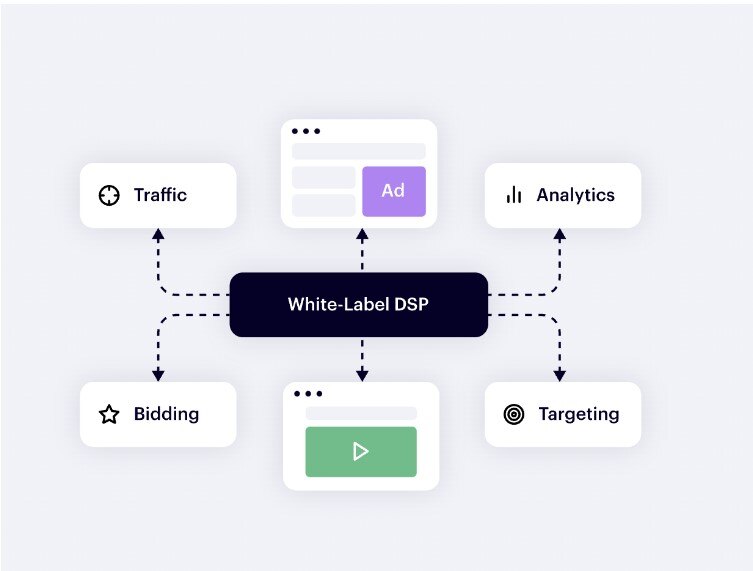
Image credit: Epom
With the volumes of third-party data and a certain amount of first-party data at their disposal, DSPs let advertisers reach extremely targeted audiences. Be it targeting users based on their browsing behavior, previous purchases, or even devices in use, DSPs can deliver ads to the perfect people who are most likely to convert. That level of targeting was never possible before and made advertising campaigns far more effective.
Real-Time Bidding and Cost Efficiency
One of the important features of a DSP is that it enables real-time bidding. The ad space, whenever a user opens up a webpage, gets auctioned off to the highest bidder automatically in real time. Here, the DSP evaluates the user's value based on the targeting criteria chosen by the buyer and then determines the bid price. If the bid is successfully won, the ad is presented to the user instantly.
Data-driven decisions
DSPs provide advertisers with a great mass of data about how their campaigns are going. Using that data, advertisers can work on fine-tuning their campaigns in real time.
For instance, if a certain audience segment is not engaging with the ads well, the advertiser can refine the targeting parameters to focus on a more responsive audience. If some creatives work better than others, advertisers can shift more budget toward those ads. This ability to make these types of adjustments is one of the key factors propelling the DSPs into such a priceless position within the world of digital advertising.
Cross-Channel Advertising
The modern multi-device landscape is where consumers jump between their phones, tablets, laptops, and even smart TVs constantly. It's an ongoing challenge for advertisers who want to make sure their ads reach the right people, regardless of what type of device they may be on.
DSPs solve this problem through cross-channel advertising. Through a single platform, advertisers are allowed to buy ad space across display ads, video ads, and social media to connected TV. This ensures the coherence of ad campaigns, whatever device the target audiences are working on. It will also be easier to track and measure performance across different channels, giving a better picture of what's working and what isn't.
The Role of AI and Machine Learning
While DSPs have made the purchasing of ads quite efficient, on the other hand, they have also opened a doorway for advanced technologies such as artificial intelligence and machine learning. These are helping in the optimization of advertising campaigns.
Machine learning algorithms can process bulks of data in real time and detect patterns and trends that no human would. These insights are then used by the DSPs to automatically optimize bids, targeting, and ad placements for maximum ROI. For example, if the AI recognizes certain times of day or user behaviors elicit higher conversions, it can automatically allocate more budget towards such opportunities.
Summary
DSPs revolutionized digital advertising by automating ad buying. Furthermore, it grants the deliverance of more targeting and data-driven insights than ever before. Be it a small-scale business or a big enterprise, these platforms can give way to reaching your audience more effectively, using your ad dollars wiser, and driving better results. As the future of digital buying and ad delivery continues to evolve, DSPs will be at the forefront.