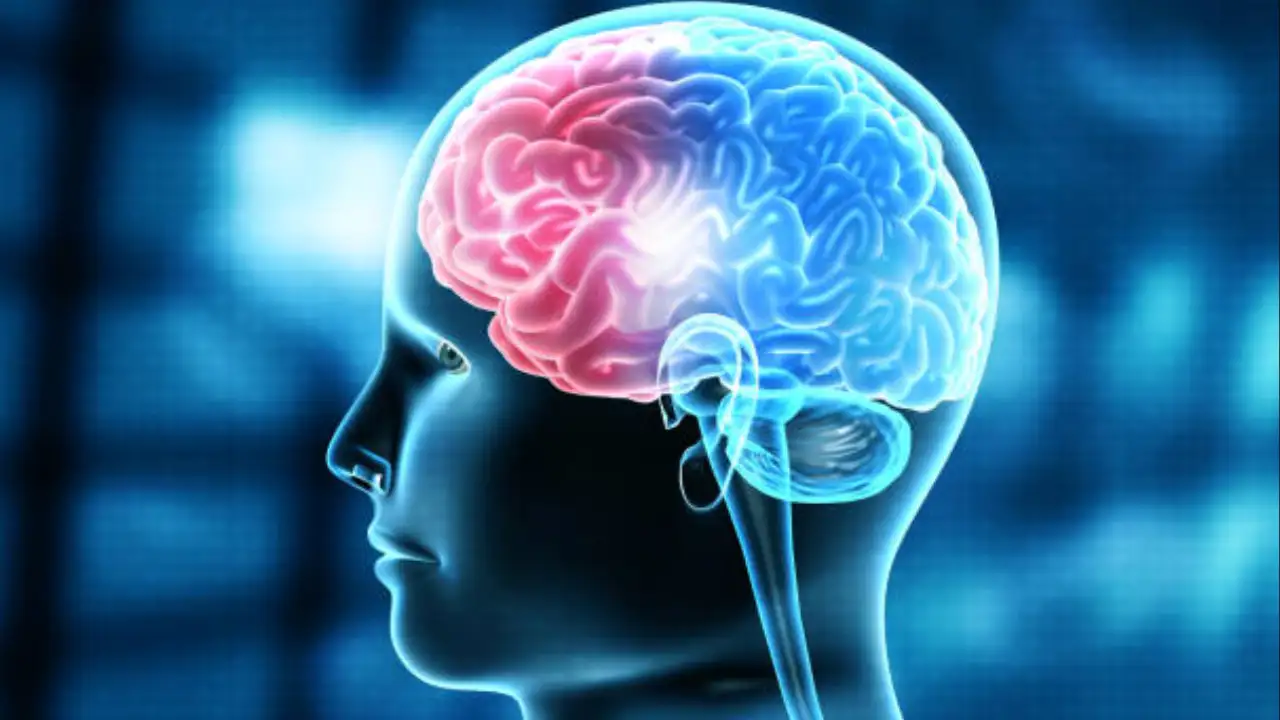
The human brain begins with just a single cell, yet it eventually develops into one of the most complex structures known to science. For decades, researchers have tried to understand how billions of cells find their proper place during development. New work from Cold Spring Harbor Laboratory offers a fresh perspective on that mystery. Reports suggest the answer may lie not only in chemical signals but also in family lineage between cells, as per a report by Science Daily.
Reports published in Neuron indicate that cellular lineage, working alongside chemical signals, could help explain how developing brains organize themselves on such a massive scale.
How do cells know where they belong?
Stan Kerstjens, a postdoctoral researcher in Professor Anthony Zador's laboratory, described the challenge in simple terms, as per a report by Science Daily.
"The only thing a cell 'sees' is itself and its neighbors," he explains. "But its fate depends on where it sits. A cell in the wrong place becomes the wrong thing, and the brain doesn't develop right. So, every cell must solve two questions: Where am I? And who do I need to become?"
The study, conducted by Kerstjens, Zador and collaborators from Harvard University and ETH Zürich, explores how those questions may be answered during development.
For many years, scientists believed chemical signals carried nearly all of the positional information needed by growing cells. That model works effectively in smaller biological systems. Yet the developing brain presents a much larger challenge, involving billions of neurons spread across an expanding structure.
Researchers have long questioned how signals that naturally weaken over distance could guide cells deep inside a growing brain.
Why might family lineage matter more than distance?
The new theory introduces another possibility. Kerstjens compared the process to the way human populations spread over generations.
"Consider how human populations spread across a country over generations," he says. "Descendants settle near their parents, so people who share ancestry end up in neighboring regions, producing large-scale geographic structures without long-range communication. We argue that a similar principle operates in the developing brain. Cells that descend from the same progenitor tend to remain near one another."
To investigate that idea, researchers developed what they called a "lineage-based model of scalable positional information."
The team first explored the concept through theoretical calculations. They then examined gene expression patterns in developing mouse brains, studying both individual cells and larger groups. Similar patterns later appeared in zebrafish, suggesting the mechanism could function across brains of very different sizes.
The findings point toward a partnership between inherited cellular relationships and traditional chemical signaling rather than an either-or explanation.
Could these findings reach beyond the brain?
The implications may extend well beyond neuroscience. According to the researchers, the same organizing principle could potentially apply to other developing tissues, including tumors. Understanding how cells inherit and maintain positional information might open new avenues for studying biological growth in general.
The work may also influence thinking about future artificial intelligence systems. The researchers suggest that if AI models one day pass information across generations, they could rely on organizational methods similar to those observed in living cells, as per a report by Science Daily.
For Kerstjens, however, the biggest questions remain tied to human intelligence itself. "The brain somehow makes us intelligent," Kerstjens says. "How did it manage to accumulate this capability, not just over its developmental time, but over evolutionary time? This is one piece in that big puzzle."
The research, with materials provided by Cold Spring Harbor Laboratory, offers a fresh way to think about one of biology's deepest mysteries, how a single cell ultimately builds the remarkable complexity of the human mind.
FAQs
What is the study's main finding?It suggests that related brain cells tend to stay near one another, helping organize the developing brain.
Which animals were examined in the research?
Researchers studied both mice and zebrafish to test the proposed model.