Risk, relationships and rampant passion are unexpected discussion topics for a group of not-for-profit organisation leaders. But they were key themes of the latest debate at NFP Interchange; a forum for non-executives directors (Neds) of not-for-profit organisations that was created by Grant Thornton and is held in partnership with the Guardian.
The debate, which tackled what makes a successful organisation, asked how not-for-profit leaders can ensure their organisations are winners and not runners-up in a challenging environment. It involved a panel discussion among four experts, with experience in the business and charity sectors, who then answered questions from the invited audience.
Roger Harrop, a speaker on international business growth, who was group chief executive of a FTSE high-tech group, kicked off the discussion by arguing that these days it is not enough for organisations to be good at what they do; they have to be exceptional. This is because technology has helped to level the playing field between those that are big and small and those based in different parts of the world.
As a result, he said, organisations needed to seize the opportunities technology offered, be “fleet of foot” and sometimes tolerate failure. He said: “It’s my view that in every organisation – profit, not-for-profit, charity – one of our core competencies has to be the ability to assimilate, adapt and adopt new technology incredibly quickly.”
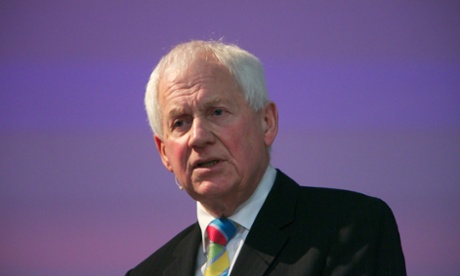
As well as being exceptional, organisations of all kinds needed to ensure they were great places to work, he said. They needed constantly to prospect, whether that meant touting for new customers, members or income-providers. And they needed to keep an eye on the bottom line, looking to improve productivity or efficiency, in terms of income divided by number of people, by 10% every year.
“If you can focus mercilessly on those basics of business,” he said. “I can guarantee you will win.”
But not everyone wanted to win.
“I find the concept of winning a bit difficult because it feels to me there must therefore be a loser and I’m not too sure about that,” said Alice Maynard, chair of Scope between 2008 and 2014, who was also on the panel. She preferred to focus on the idea of organisations “succeeding, thriving and delivering what they are there for”.
And panellist Sir Tom Shebbeare, chairman of Virgin StartUp, Virgin Money Giving and Spring Films and a former director of the Prince’s Trust and The Prince of Wales Charitable Foundation, said: “People who think that they have got to be gold, leaving other people in silver and bronze take a risk frankly.” He was satisfied for anything he was involved in to be “top quartile”.
He warned: “If you are so insistent on gold you risk a Lance Armstrong situation in which you are going to do things which cut corners.”
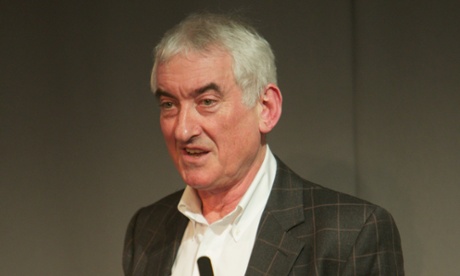
He said very few businesses managed to achieve gold and even fewer managed to stay there for long. The charitable foundation The Wellcome Trust and the BBC, he suggested, were two exceptions. Many, he said, appeared to achieve top status but then lost it due to a misplaced strategy, or poor judgment in responding to events, and often this was caused by the hubris of trying to be top.
The world of not-for-profits was very different from – and infinitely more complicated than – that of business, argued the final panellist, Nick Jenkins, who founded the greetings card website Moonpig and spent a year as chief executive of the educational charity Ark.
“As trustees of charities we have a responsibility to the net benefit of society,” he said. “If I am running a greeting card company and there are four other greeting card companies I will smash them into the ground, I will wipe out the competition. I can because all that really matters is that my company does well.”
That was not true of a sector that aimed to make the world a better place, where collaboration rather than competition could be more important.
What all the panellists agreed on was how important employees were to the success of both for-profit and not-for-profit organisations.
Harrop said it was important to hire the best – many of whom were likely to be from a young, tech-savvy, generation – while Jenkins stressed that the best person for the job did not necessarily mean the best qualified. When he started Moonpig he only hired people who could cycle to work. “I figured that if I hired people who’d had a three-hour commute there and back eventually they were going to get hacked off.”
When it came to senior management, said Maynard, the team needed to be suited to the context of the organisation, which could change. It needed to take into account the specific skills of every individual and everyone needed to know what these were, which was why social events and building constructive relationships were important.
“It’s not just about getting things done and on to the next thing,” she said. “Confidence in the face of criticism and the ability to challenge and support comes from knowing each other well.”
Everyone working for the organisation also needed to understand and support what it was trying to do, the panellists agreed. Maynard said: “It’s absolutely fundamental that an organisation needs to have clarity about what its vision and mission is. What kind of society does it want to create? What kind of organisation does it want to be?”
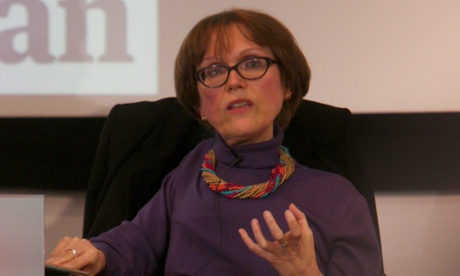
Every decision – however mundane – had to be taken in the light of that. For example, she said Scope’s mission was to create a society in which disabled people had the same opportunities as everyone else. That meant ensuring Scope’s high street shops were accessible enough for disabled people to work there, and that the taps fitted in the charity’s buildings were ones that everyone could operate.
All the panellists felt that offering a pleasant working environment was vital for attracting and holding on to good people. That included being tough on employees who were not pulling their weight. Harrop said recent research into what employees wanted from their employers had revealed that they put “discipline” in second place. “People don’t want soft management,” he said. “It’s unfair.”
But what about volunteers, asked Jenny Newton, a member of the audience, who chairs a university audit committee and is involved in community enterprises and arts associations. How do you attract and manage people who turn up regularly for no other reward than the belief that they are doing good?
Just like employees, Maynard replied. She said organisations needed a strategy for managing volunteers just as they did for paid workers, and managers had to be equally prepared to deal with any who were slacking.
Shebbeare said while it could be tricky to fire someone who was not being paid it was sometimes essential. “One person, disillusioned for some reason, who you find difficult to get rid of, can be very destructive,” he said.
Again, it came down to fulfilling the organisation’s mission. But it was also about fostering the passion behind it. The panellists agreed that a key trait of a successful organisation was that everyone involved vehemently believed in what it stood for.
“If your vision and mission don’t inspire passion then I don’t think as an organisation you are going to succeed,” said Maynard. She said the mission should inspire “a little frisson every morning as you leap out of bed”, although she warned that it needed to be disciplined. “It cannot be just a rampant passion.”
Yet nor should it be over-cautious. All the panellists agreed that successful organisations needed courage. “Organisations only move forward if you take risks,” said Harrop. Shebbeare said getting somewhere first could be crucial. He said Virgin Money Giving, which he chairs, and which helps charities to raise funds online, charges less than the similar organisation JustGiving but still trailed behind because it had come to the market later. Maynard said courage was about sticking to a decision as well as making it in the first place.
Finally, there was the issue of what a winner was in the not-for-profit world.
Jenkins said that success was relatively easy to measure in business because it was all about profit.
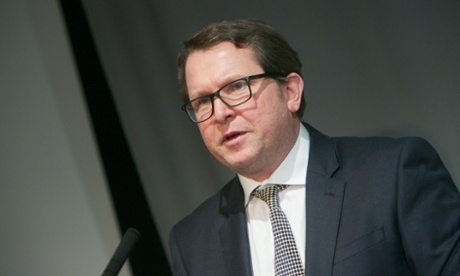
“In a charity you can’t measure profit – there is no profit – you are measuring social impact,” he said. “And the problem is that the social impact is vastly different depending on what you do.”
It was up to trustees to measure how their organisations were actually making a difference, he said, and to communicate this clearly to everyone involved in a way that made sense to them. Working out who the winners were – beneficiaries, donors or society in general – could be a challenge in itself.
On the panel
-
Carol Rudge (co-chair), partner and head of Not for Profit, UK and global, Grant Thornton
-
David Mills (co-chair), group account director, society and education, the Guardian
-
Alice Maynard, former chair of Scope
-
Roger Harrop, international business growth speaker; former group chief executive of FTSE-quoted group
-
Sir Tom Shebbeare, chair of Virgin StartUp, Virgin Money Giving and Spring Films
-
Nick Jenkins, founder of Moonpig.com and the Nick Jenkins Foundation
This content has been sponsored by Grant Thornton (whose brand it displays). All content is editorially independent. Contact Natalie Fox (natalie.fox@guardian.co.uk). For information on debates visit: theguardian.com/sponsored-content