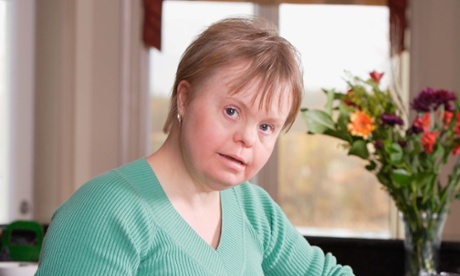
There’s nothing especially new about the care and support model known as Shared Lives. In fact, people have been opening their homes to disabled adults for at least 500 years. But in 2015 the time has come to prove its worth.
“We’re developing an outcomes tool that we hope to make available to the whole sector once it has been piloted,” says Alex Fox, chief executive of charity Shared Lives Plus. “It will record baseline referral data with six- or 12-month updates and we aim to aggregate the anonymised results nationally. We’re particularly interested in trying to capture things like friendship.”
It may seem perverse to try to identify and gauge the benefits of something as simple and selfless as inviting a stranger with support needs to live with you – a practice that can be traced back to the 15th century in the city of Geel, Belgium, where pilgrims with mental illness drawn to the shrine of St Dymphna are today still welcomed into people’s homes, often for years on end.
But Shared Lives is fast becoming a mainstream policy option for care commissioners seeking alternatives to costly residential accommodation – and it needs to be able to demonstrate its value. Some 12,000 adults with disabilities and older people are already living in host households across the UK, who are paid a fixed fee, and the concept’s profile is rising rapidly. To compete in the big league, however, it must show results.
“Without damaging the very personal and informal ethos of shared lives households, we can seek to measure the wellbeing of people who use our schemes and this can probably lead to some cost-benefit data around improved health and reduced use of medical services,” says Fox.

It’s more than 150 years since Florence Nightingale, as much a pioneer statistician as pioneer nurse, lobbied successfully for the uniform collection of patient treatment data that could be compared by hospital, region and even country. That first system remains the basis of the international classification of diseases codes used today. But other sectors have until now been slow to follow health’s lead.
In recent years, however, austerity has prompted commissioners of services to ensure they are getting the biggest bang for their shrinking buck. And with an estimated £120bn of public services now outsourced to private companies or not-for-profits, a growing portion of it via payment-by-results contracts, the onus is on providers to demonstrate the effectiveness of what they do.
For charities, moreover, it is no longer good enough merely to pursue a general mission: as the scandal surrounding Kids Company demonstrates so vividly, the imperative now is to show the impact of the spending of funds raised in terms of identifiable and measurable benefits for a client group.
Lynne Berry, chair of charity Breast Cancer Now and a visiting professor at Cass Business School, thinks that outcome and impact measurement help organisations focus on what they are trying to achieve. “Really understanding what impact you have – and don’t have – is vital if you want to be effective and make changes to lives, society and the economy,” she says. “That also means not over-claiming how effective you’ve been: most organisations will make a contribution to such changes, not do it all themselves.”
Measured evidence can be enhanced by case studies that illustrate benefit, Berry concedes. Indeed, facts and numbers may be too dry to enthuse and energise volunteers and donors. But she is clear that “stories and testimony are not enough of themselves”.
Producing outcome measures can be just the start of a bigger process, however. What such measures may reveal about an organisation is that it needs to change what it does in order to maximise its impact.
Dan Corry, chief executive of the NPC thinktank and consultancy, has argued that this can be far tougher than working through the measurement. “That means taking attitudes that are often extremely protective towards the current strategy and pet projects ... As we see very often in our work, this is not easy and it needs strong and inspiring leadership to see it through.”
Another consequence, as Berry suggests, is likely to be that measurement exposes the fact that one organisation cannot achieve decisive improvement on its own. As Corry observes: “It undoubtedly means that we need to work together much more, to share information – about what has not worked as much as what has – and develop theories of change and shared measurement approaches, so that charities and funders working on similar issues can co-ordinate better.”
A third lesson comes from Fox: don’t be under any illusion that having the measured evidence means you automatically win over the service commissioner. As chair of a government review of the role of voluntary, community and social enterprise organisations in improving health, wellbeing and care outcomes, Fox says: “The general message coming back from providers is that you have to have the evidence, because you are dammed if you don’t, but then you are too often ignored if you do.”
Berry cautions against becoming a total slave to outcome measures. “A focus on impact should not stop people giving it a go, trying something out,” she says. “Without such enthusiasm there will be neither innovation nor something that can engage and inspire. Just do it, but be clear what it is you are trying to achieve – and make sure there is a review point to check if you’ve done it.”
This article is part of the What’s it Worth? series from Guardian Society Professionals, making the case for public services